Last editorial review: September 8, 2026
Pension Lump Sum vs. Annuity: Key Differences

The best answer for pension lump sum vs annuity depends on whether you value flexible control or dependable lifetime income more. A lump sum gives you investable cash and spending…
14 min read
Practice investing with Finelo
Build practical investing skills with guided lessons, simulator practice, and structured challenges.
Want to learn more?
Build practical investing skills with guided lessons, simulator practice, and structured challenges.
Explore FineloExplore Finelo's 28-day challenges
Turn learning into a daily habit with guided challenge paths.
U.S. scope: This article discusses U.S. institutions, financial products, tax rules, and dollar examples unless stated otherwise. Rules and product terms may change; verify current official guidance for your situation.
Quick comparison answer
The best answer for pension lump sum vs annuity depends on whether you value flexible control or dependable lifetime income more. A lump sum gives you investable cash and spending flexibility. An annuity provides recurring income for life, with payment security tied to the issuer and applicable protections Schwab.
This comparison is for someone close to a pension election who understands the basics, but wants a clearer decision framework. The better question is not “Which option pays more?” It is “Which payout structure fits my spending needs, health, household obligations, tax picture, investing skill, and comfort with uncertainty?”
What is a pension lump sum?
A pension lump sum is a one-time payout instead of a stream of scheduled retirement checks. Some retirement plans may pay benefits as a single lump sum, payments over a set period, or an annuity with monthly lifetime payments U.S. Department of Labor.
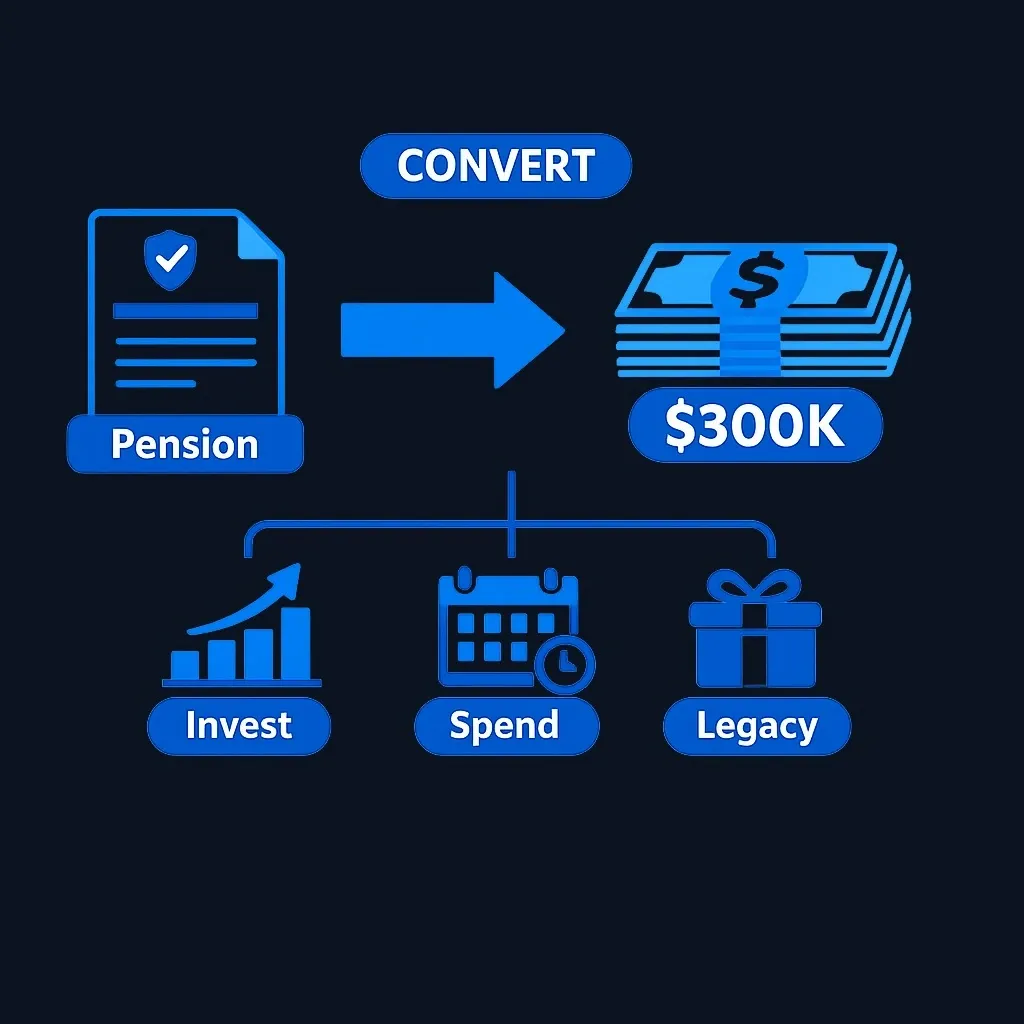
The main appeal is control. You decide how the money is invested, how quickly it is spent, and how it fits with other retirement assets. That control can matter if you need cash for debt, relocation, medical expenses, or a bridge before other income begins.
The tradeoff is responsibility. If you invest the money, you take on market risk, withdrawal planning, and behavioral risk. If withdrawals are too high early on, the pension asset may not last as long as you need.
Think of the lump sum as turning your pension into a portfolio problem. You need a plan for cash reserves, investments, withdrawals, taxes, and beneficiary goals. Without that plan, a large balance can create a false sense of safety.
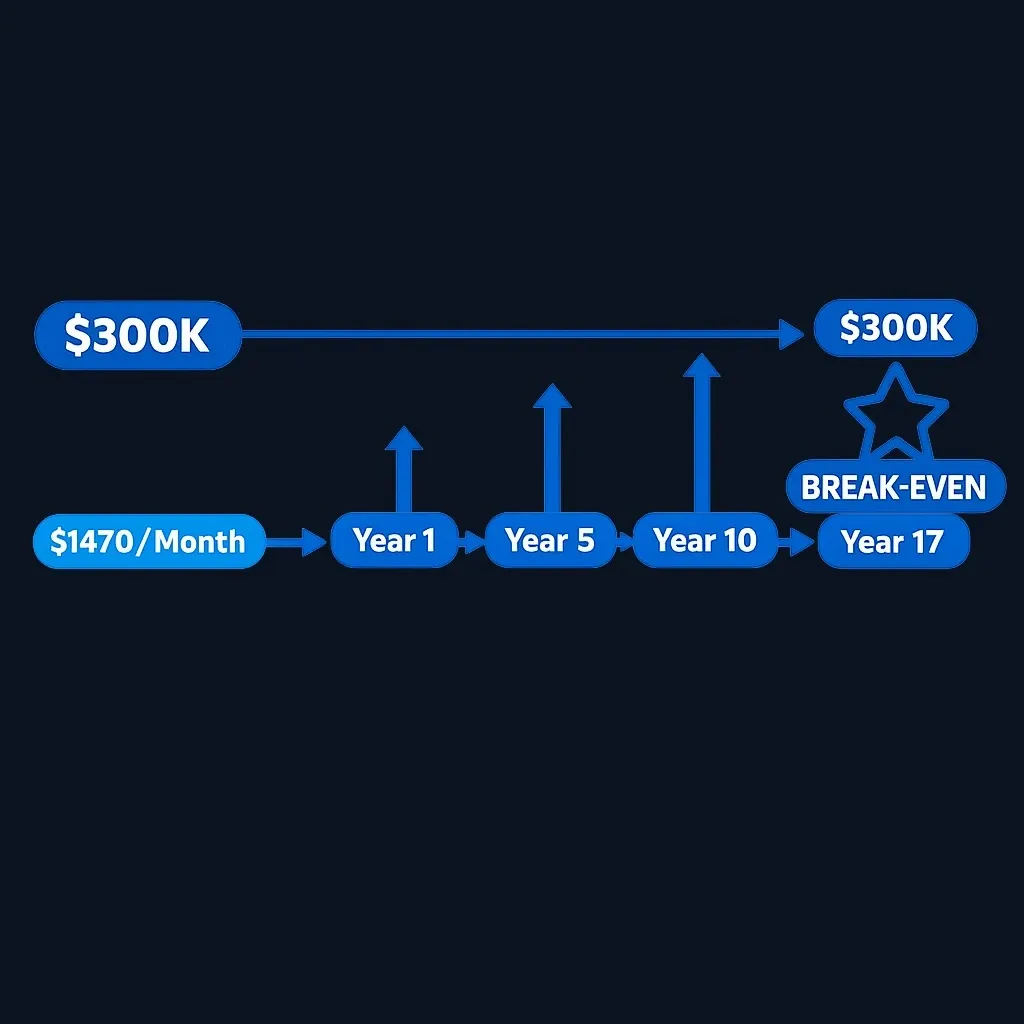
For example, Schwab describes a 65-year-old choosing between a single-life annuity of $1,470 per month, or $17,640 per year, and a $300,000 lump sum Schwab. Before taxes, returns, inflation, and survivor features, the annual payment would equal the original lump sum after roughly 17 years. That rough break-even point is only a starting screen.
A lump sum may feel attractive because the money is visible and portable. But visibility is not the same as lifetime income. The key test is whether you can turn the payout into a durable retirement spending plan.
What is an annuity?
An annuity pension option converts the pension benefit into recurring payments. Some annuity payments are designed to continue for life, and some options can extend payments to a spouse Schwab.
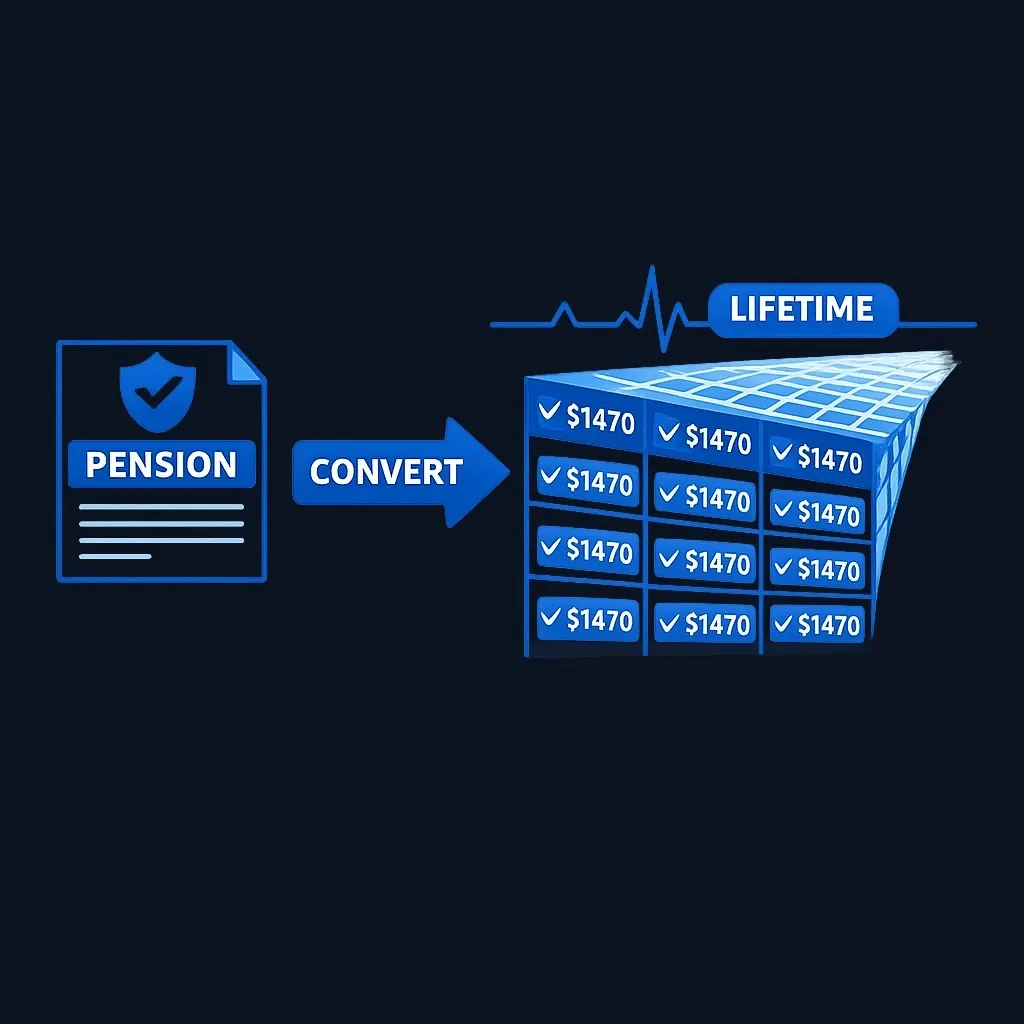
The central benefit is income certainty. You do not need to decide how much of the pension balance to sell each year. You also reduce the risk of outliving that portion of your retirement income. Schwab describes the pension annuity option as insurance against outliving a lump sum and against uncertain market returns Schwab.
The cost is reduced flexibility. Once you elect income, you may have limited access to a large cash amount from that pension decision. That can be uncomfortable if you expect major expenses or want unused assets to pass to beneficiaries.
Payment security also deserves careful review. Schwab notes that lifetime annuity payments depend on the issuer’s financial strength, claims-paying ability, and other protections Schwab. In other words, the promise is important, but it is not the same as money held in your own account.
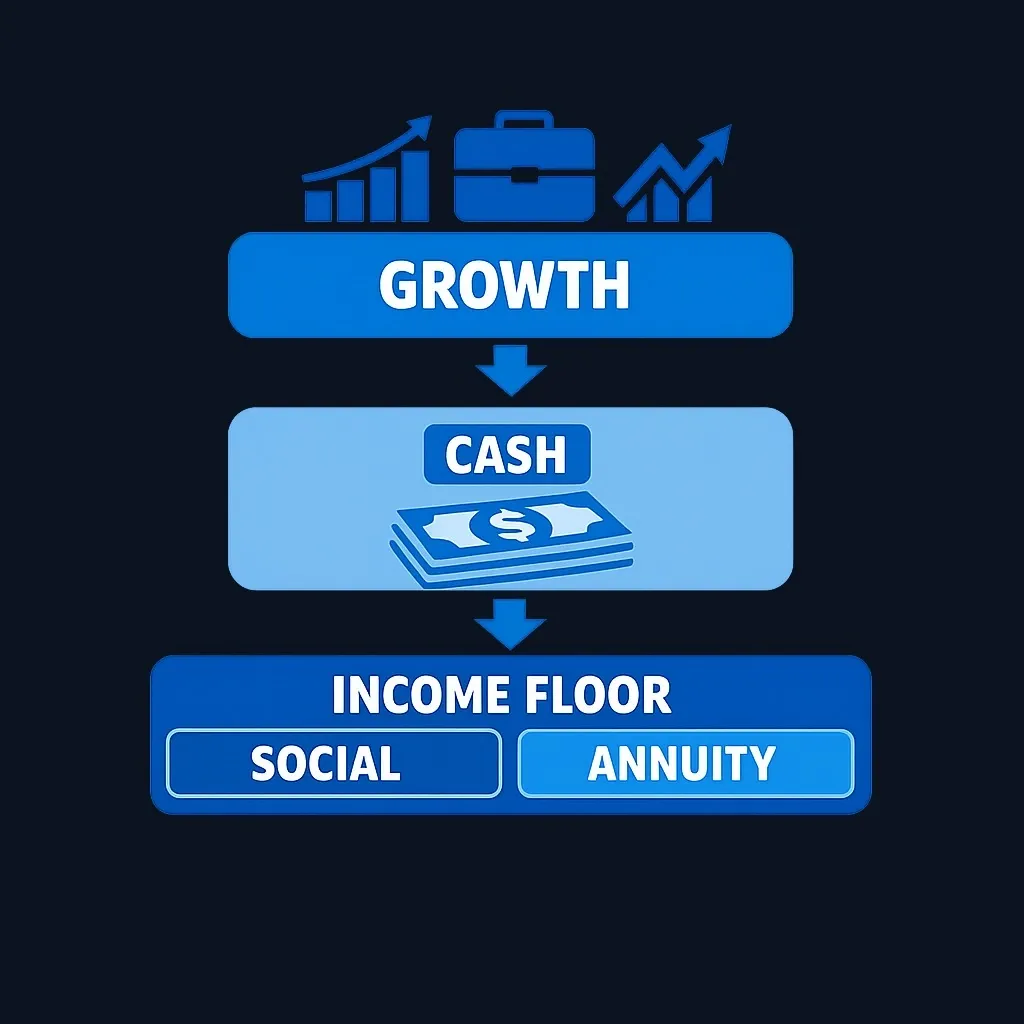
Think of the annuity as an income-floor tool. It can pair with Social Security, cash reserves, or other investments. It is usually less useful as a flexible capital source for large or unexpected expenses.
Side-by-side comparison table
| Decision point | Lump sum | Annuity |
|---|---|---|
| Payment structure | One-time payout; some plans may offer a single lump-sum benefit option U.S. Department of Labor | Recurring income; some plans may offer monthly lifetime annuity payments U.S. Department of Labor |
| Main advantage | Flexibility, control, and access to a pool of capital | Lifetime income and help managing longevity risk Schwab |
| Main risk | The money may be spent too quickly or invested poorly | You may give up flexibility for scheduled payments Schwab |
| Investment responsibility | You or your adviser manage allocation, withdrawals, and market risk | The income stream reduces the need to manage that pension asset directly |
| Longevity risk | Higher if withdrawals are too large or returns disappoint | Lower for the covered income stream, because payments can continue for life Schwab |
| Spouse considerations | Remaining assets may be available if not spent or lost | Some annuity options can extend payments to a spouse Schwab |
| Hybrid possibility | A portion of a lump sum can be used to buy an immediate fixed annuity Schwab | Can be paired with invested assets when only part of income needs to be guaranteed |
| Best fit | People who need flexibility and can manage withdrawals | People who prioritize stable income over capital access |
The table shows why this is not just a math problem. A larger-looking lump sum can still be a poor fit if it creates spending stress. A smaller-looking payment can still be valuable if it reliably covers core bills.
Decision criteria
1. Start with your retirement income floor
List essential expenses first. Include housing, food, insurance, utilities, basic transportation, and recurring health costs. Then compare those expenses with reliable income already available.
If dependable income already covers essentials, a lump sum may provide useful flexibility. If there is a gap, an annuity may reduce pressure by covering part of the floor. The goal is to match reliable income with nonnegotiable spending.
Use this simple framework:
- Estimate annual essential spending.
- Subtract reliable retirement income.
- Identify the gap.
- Decide whether the pension should fill that gap or serve another purpose.
This prevents a common mistake: comparing payout amounts before defining the job of the money.
2. Consider health, life expectancy, and household needs
Health matters because lifetime payments become more valuable when they last longer. Schwab notes that someone in poor health may find the lump sum more attractive Schwab. That is because a shorter payment period can reduce the practical value of lifetime checks.
Household needs can change the choice. A single retiree may evaluate the decision differently from someone supporting a spouse. Some annuity options can extend payments to a spouse, but those features can affect the income structure Schwab.
Avoid treating life expectancy as one exact guess. Test several scenarios instead. Ask how the choice feels if retirement lasts 10 years, 20 years, or longer.
3. Model break-even, then go beyond it
A break-even calculation compares the lump sum with cumulative annuity payments. Using Schwab’s example, a $300,000 lump sum compared with $17,640 in annual payments reaches the original lump sum after about 17 years, before other variables Schwab.
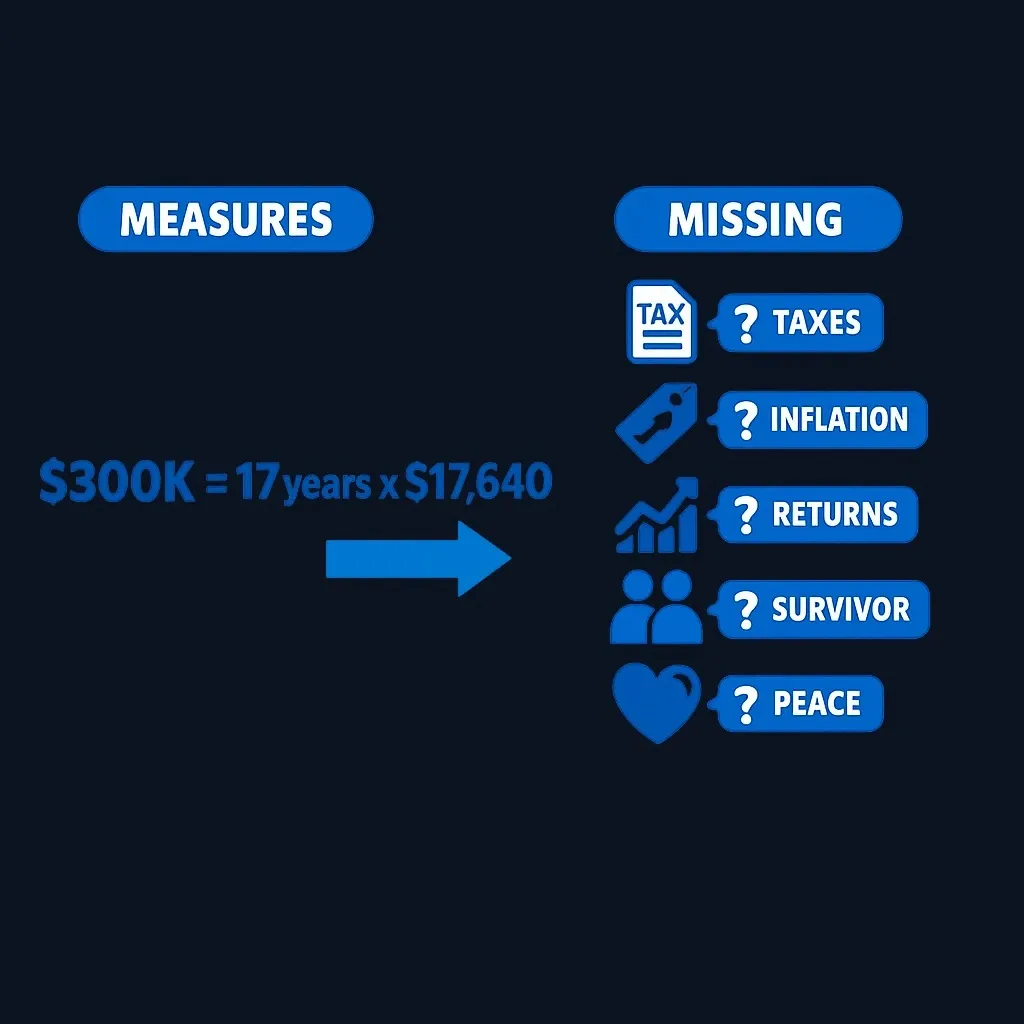
That number is useful, but incomplete. It does not settle taxes, inflation, investment returns, survivor options, or spending behavior. It also does not measure peace of mind.
Use break-even as a filter, not the final answer. If the break-even age seems unlikely for your situation, that matters. If it looks realistic, lifetime income may deserve more weight.
4. Stress-test inflation and market conditions
Inflation affects both options differently. A fixed payment can lose buying power if expenses rise faster than income. A lump sum may offer growth potential through investing, but it also exposes you to market losses.
The hardest period for a lump sum is often the early retirement phase. Large withdrawals during weak markets can reduce the base that future withdrawals depend on. That does not make the lump sum wrong. It means the withdrawal plan needs cash reserves and spending flexibility.
For an annuity, ask which expenses the payment is meant to cover. If it covers essentials, other assets may need to handle travel, emergencies, inflation-sensitive costs, or discretionary spending. A strong plan separates must-pay bills from flexible spending.
5. Review taxes before making the election
Taxes can change the practical value of either option. The useful question is not only “Which number is larger?” It is “How much after-tax income will I have, and when?”
Run scenarios for your current location and any likely relocation. Also consider how timing could interact with other retirement income decisions. A generic rule may not fit your pension type, rollover choices, withholding, residency, or household income.
This is a good place to involve a qualified tax professional. The decision may be difficult to reverse, and the after-tax picture can differ from the headline payout.
6. Evaluate the payer behind the promise
For an annuity, review who is responsible for making payments. Schwab explains that guarantees depend on the issuer’s financial strength, claims-paying ability, and other protections Schwab.
Ask what happens if the plan or issuer runs into problems. The Pension Benefit Guaranty Corporation has a resource for workers comparing annuity and lump-sum questions when PBGC takes over a pension plan PBGC.
This does not mean annuities should be avoided. It means you should verify the source of the guarantee before treating the income as risk-free.
When to choose each option
A lump sum may fit when flexibility is the priority
A lump sum may be more appealing if you already have enough dependable income for basic expenses. It may also fit if you have major planned expenses, shorter life expectancy concerns, or a disciplined investment plan.
It can also support legacy goals. If the money is not spent or lost, remaining assets may be available for beneficiaries. That flexibility can matter when family support is part of the plan.
But the lump sum only works well if there is a clear withdrawal system. A retiree who plans to “just be careful” may underestimate how fast irregular expenses add up. A better approach is to set guardrails before the money arrives.
For example, a hypothetical retiree with a paid-off home and strong non-pension income might take a lump sum to create a flexible reserve. That could help fund home repairs, delayed travel, or family support. The risk is that market losses or overspending could shrink the reserve faster than expected.
An annuity may fit when income stability is the priority
An annuity may be more appealing if your main concern is covering core expenses for life. It can reduce the need to manage withdrawals from that pension asset. It may also help if market swings would cause stress or poor timing decisions.
The fit is strongest when the payment covers essential bills that will not disappear. In that case, the pension becomes part of the retirement income floor. Other assets can then handle flexible spending, emergencies, and long-term growth needs.
For example, a hypothetical couple might choose an annuity option because one spouse has limited investing experience. The monthly income could simplify household budgeting. The tradeoff is reduced access to a large lump sum for emergencies or heirs.
A blended approach may fit when both risks matter
The choice is not always all-or-nothing. Schwab notes that someone can take a lump sum and use part of it to buy an immediate fixed annuity, while investing the remainder Schwab.
This approach can separate two jobs. The annuity portion can help cover fixed expenses. The invested portion can provide liquidity, growth potential, and beneficiary flexibility.
The mistake to avoid is buying complexity without a purpose. A blended strategy should answer one clear question: which dollars are for guaranteed income, and which dollars are for flexible use?
Practice investing with Finelo
Build practical investing skills with guided lessons, simulator practice, and structured challenges.
Tradeoffs and caveats
The “highest payout” may not be the best fit
A pension election is partly a risk transfer decision. With a lump sum, you accept more responsibility for investing and withdrawals. With an annuity, you transfer more longevity risk to the payer, but accept less flexibility.
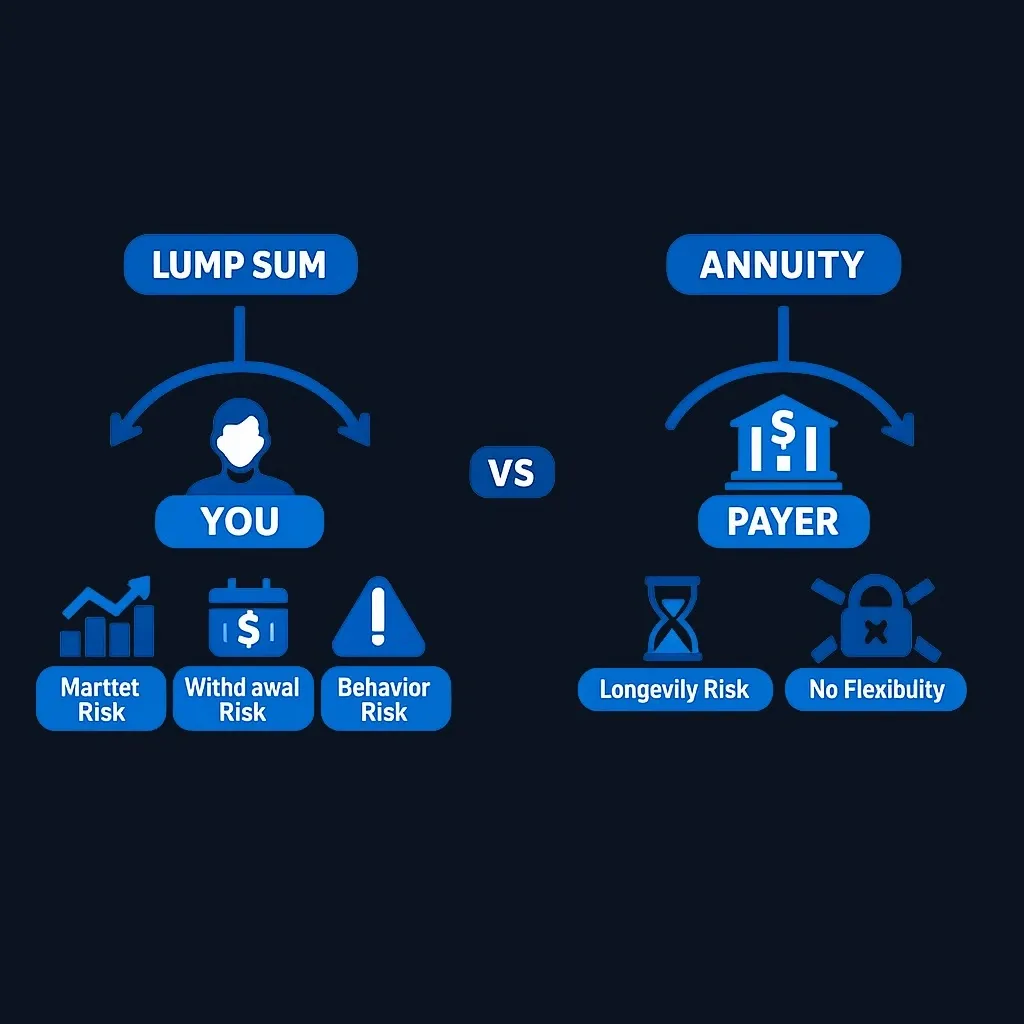
That tradeoff can be emotional. Some people feel safer seeing a large account balance. Others feel safer knowing a check is scheduled. Neither reaction is automatically right, but both should be tested against the actual plan.
A useful rule is to compare risks in plain language. For the lump sum, ask, “What happens if I spend too much or markets fall early?” For the annuity, ask, “What happens if I need cash or inflation erodes buying power?”
Irreversibility deserves extra caution
Pension elections can be hard or impossible to change after deadlines pass. Before making a choice, read the plan documents and confirm the election rules directly. Do not rely only on summaries, emails, or verbal explanations.
Make a checklist before signing:
- What payment options are available?
- Are survivor options available?
- Who is responsible for the payments?
- What happens if the plan changes hands?
- What tax withholding or rollover choices apply?
- What deadline controls the election?
If any answer is unclear, slow down. A short delay for clarification can prevent a permanent mismatch.
Behavioral risk is real
A lump sum can create temptation. Large balances can make early retirement feel more affordable than it is. Gifts, home upgrades, market speculation, and lifestyle creep can all weaken the plan.
An annuity has behavioral risks too. The steady payment may cause someone to under-save for emergencies or underestimate inflation. It can also create regret if a large expense appears after flexibility has been exchanged for income.
The practical fix is to assign every pension dollar a job. Essential bills, emergency reserves, discretionary spending, legacy goals, and long-term growth should not compete in one vague bucket.
Use education, but verify personal details
General education can help you ask better questions. Finelo is positioned as an investment learning and financial education resource Finelo’s learning hub. If you want a next step before speaking with professionals, use education resources to sharpen your understanding of risk, diversification, and retirement income tradeoffs.
Then verify your own pension numbers, deadlines, and tax treatment. The decision depends on plan documents, household needs, and personal constraints that broad comparisons cannot fully capture.
FAQ
What is the difference between a lump sum and an annuity?
A lump sum is a one-time payout that you manage. An annuity provides recurring payments, and some plans may offer monthly lifetime payments U.S. Department of Labor. The main difference is control versus income certainty.
How do I choose between a lump sum and an annuity?
Start by defining the job of the pension. If it must cover essential expenses for life, an annuity may deserve more weight. If your essentials are already covered and you need flexibility, a lump sum may be more useful.
Can I receive both a lump sum and an annuity?
In some situations, a hybrid approach is possible. Schwab gives the example of taking a lump sum, using part of it to buy an immediate fixed annuity, and investing the remainder Schwab. Your actual options depend on the plan and products available to you.
What happens if I outlive my lump sum?
If a lump sum is depleted, that pension asset no longer provides income. Schwab describes the annuity option as a form of insurance against outliving the lump sum and against uncertain market returns Schwab. This is why withdrawal planning matters.
Conclusion and next steps
The strongest pension lump sum vs annuity answer comes from matching the payout to its purpose. A lump sum emphasizes flexibility, control, and investment responsibility. An annuity emphasizes scheduled income, longevity protection, and reduced access to capital.
Before deciding, build a one-page comparison. Include essential expenses, other reliable income, health assumptions, spouse needs, tax questions, inflation concerns, and the payer behind the promise. Then test the choice under several retirement lengths and market environments.
Finally, verify the actual plan documents before making an election. Confirm deadlines, survivor options, rollover choices, and any protections that apply. A good decision is not the one that looks best in one scenario. It is the one that remains workable across several realistic futures.
Sources and Further Verification
More from Finelo
- Fixed Annuity vs. CD: Key Differences
- Immediate vs. Deferred Annuities: Key Differences
- Qualified vs. Nonqualified Annuities: Key Differences
Disclaimer
This article is provided by Finelo for educational and informational purposes only. Finelo does not provide financial, investment, tax, legal, or insurance advice. Consider your circumstances and consult an appropriately qualified professional before making financial decisions.
InvestingBeginner GuideFinancial Education
Practice investing with Finelo
Build practical investing skills with guided lessons, simulator practice, and structured challenges.
About the author
Finelo Team
The Finelo Team creates practical investing and trading education designed to help beginners learn faster with structured challenges, simulator practice, and bite-sized lessons.
Keep reading — Related articles

Investing
Yield to Call vs Yield to Maturity: Assumptions and Bond Risks
Yield to call (YTC) estimates a bond's yield if the issuer redeems it on an eligible call date; yield to maturity (YTM) estimates yield if it remains outstanding to final maturity.
Finelo Team

Investing
Will My Employer Know If I Take a 401(k) Loan?
Who this page is for: readers new to 401(k) loans who want a practical, privacy‑focused explanation — what your employer can see, how to limit visibility, and the financial tradeoffs to weigh.
Finelo Team
Investing
What Medical Expenses Qualify for a 401(k) Hardship Withdrawal?
Before you decide, confirm three things with your plan administrator:
Finelo Team


