Last editorial review: September 8, 2026
Joint Tenancy vs. Tenants in Common: Ownership, Taxes, and Inheritance
Quick answer: Joint tenancy and tenancy in common are two common ways people co‑own real property. Both create an undivided ownership interest in the whole property, but they differ in how…
8 min read
Practice investing with Finelo
Build practical investing skills with guided lessons, simulator practice, and structured challenges.
Want to learn more?
Build practical investing skills with guided lessons, simulator practice, and structured challenges.
Explore FineloExplore Finelo's 28-day challenges
Turn learning into a daily habit with guided challenge paths.
U.S. scope: This article discusses U.S. institutions, financial products, tax rules, and dollar examples unless stated otherwise. Rules and product terms may change; verify current official guidance for your situation.
Quick comparison answer
Joint tenancy and tenancy in common are two common ways people co‑own real property. Both create an undivided ownership interest in the whole property, but they differ in how ownership shares are treated and how title is handled for estate transfer — which affects what happens when an owner dies and how you can sell or mortgage your share IRS guidance on co‑ownership and estate‑planning overviews of joint ownership types. Read on for a head‑to‑head comparison, a decision checklist, realistic scenarios, and practical steps to evaluate the forms for your situation.
What is Joint Tenancy?
Joint tenancy: definition and core characteristics
Joint tenancy is a form of co‑ownership where two or more people hold an interest in the same property as co‑owners. In co‑ownership arrangements like joint tenancy, each co‑owner holds an undivided interest in the property (they each have rights to use the whole property) rather than a physical portion of it IRS guidance.

Typical advantages of joint tenancy
- Simplicity for co‑occupancy and shared use: each owner has the right to occupy the entire property (subject to agreement among owners) IRS guidance.
- Commonly used in estate planning to simplify transfer at death (see Decision criteria and examples below).
Joint-tenancy disadvantages and limits
- Joint arrangements can limit flexible ownership splits or separate sale without affecting co‑owners.
- Legal consequences (including how title transfers at death) depend on how the title is drafted and on state law; consult an attorney for definitive effects in your jurisdiction.
What is Tenancy in Common?
Tenancy in common: definition and core characteristics
Tenancy in common is another form of co‑ownership where multiple people hold undivided interests in the same property — each co‑owner has rights to use the entire property, rather than a defined piece IRS guidance. Tenancy in common is commonly listed alongside other joint ownership forms in estate‑planning discussions Fidelity overview.

Typical advantages of tenancy in common
- Greater flexibility in ownership arrangement and estate plans — tenants in common can be used when owners want to reflect different contributions or inheritance shares (see Decision criteria).
- Each owner can generally transfer or sell their interest independently (practical implications and limits depend on agreements and state law).
Tenancy-in-common disadvantages and limits
- Because each owner controls their interest, tenancy in common can lead to probate administration or fragmentation if an owner dies without a clear plan.
- Co‑owners should agree on use, maintenance, and financing to avoid disputes.
Side-by-side comparison table
Note: the table summarizes core distinctions readers typically consider. For specific legal effects in your state, consult a real estate attorney.
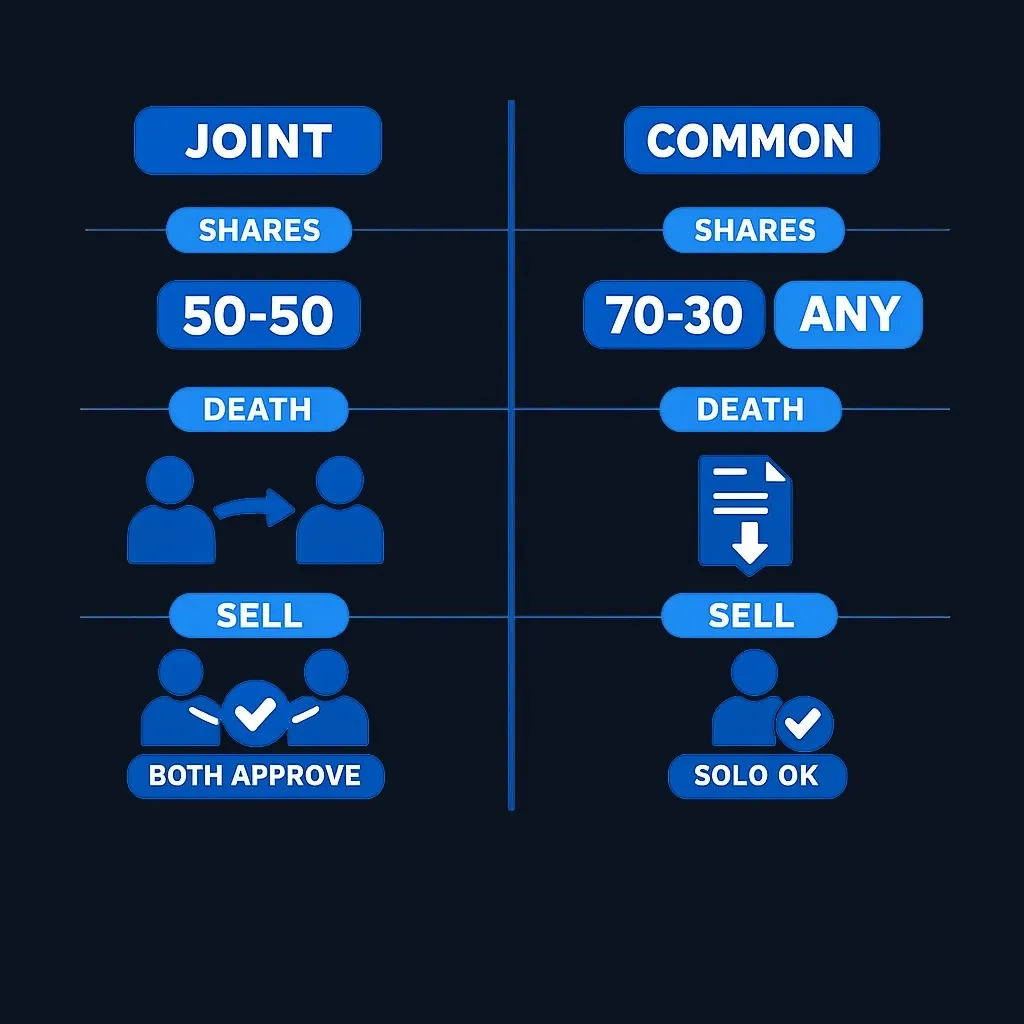
| Topic | Joint Tenancy | Tenancy in Common |
|---|---|---|
| Ownership interest | Undivided interest in whole property (co‑owners share use) — see IRS guidance. | Undivided interest in whole property (co‑owners share use) — see IRS guidance. |
| How shares are allocated | Often set up with equal shares when created (title language and state law govern specifics). | Allows flexible allocation of shares (practical note: owners can arrange different percentages via the deed; check state law). |
| Typical estate transfer outcome | Depends on title language and state rules; draft and local law control whether ownership passes automatically. | Owner’s interest can pass via will or intestacy to heirs; estate administration may be required. |
| Ease of selling a share | Selling may be constrained by co‑owner rights, agreements, or state rules; practical complications possible. | Generally easier for an owner to transfer or sell their undivided interest (subject to agreements). |
| Use in estate planning | Often used to simplify survivor transitions when intended. | Used to reflect unequal investments or to leave specific shares to different heirs. |
| Need for lawyer | Strongly recommended to ensure deed language matches intent and to address tax/estate consequences. | Strongly recommended to document shares, buy‑sell terms, and estate plans. |
(For legal specifics and how title language affects transfer at death, consult a local attorney. The notions above are consistent with how joint ownership types are discussed in estate‑planning resources Fidelity and IRS material on co‑ownership IRS.)
Decision criteria
What matters when choosing between these forms? Use this checklist to evaluate fit for your situation.
- Purpose of co‑ownership: Is your main goal shared residence, investment, or leaving specific shares to heirs?
- Desired flexibility of shares: Do owners need unequal percentages or the ability to sell independently?
- Estate transfer goals: Do you want ownership to pass automatically to the co‑owner(s) or to be controlled by a will?
- Relationship and trust: Joint arrangements (especially among non‑familial co‑owners) can create economic exposure if one co‑owner has debts.
- Tax and creditor exposure: Ownership structure can affect how creditors or tax obligations reach the property; consult a professional.
- Local law and deed language: State rules and how the deed is written determine many practical outcomes.
Educational note: This page is educational, not legal or financial advice. For binding legal and tax advice, consult a qualified attorney or tax advisor before changing property title or relying on a transfer method.
Quick checklist to run before you sign a deed
- Identify your objective (e.g., avoid probate vs. split proceeds to heirs).
- Confirm whether you need equal or unequal ownership shares.
- Decide who can sell or mortgage the property.
- Ask how the arrangement interacts with wills, trusts, and local probate rules.
- Have an attorney draft or review the deed and any co‑ownership agreement.
When to choose each option
When joint tenancy may fit
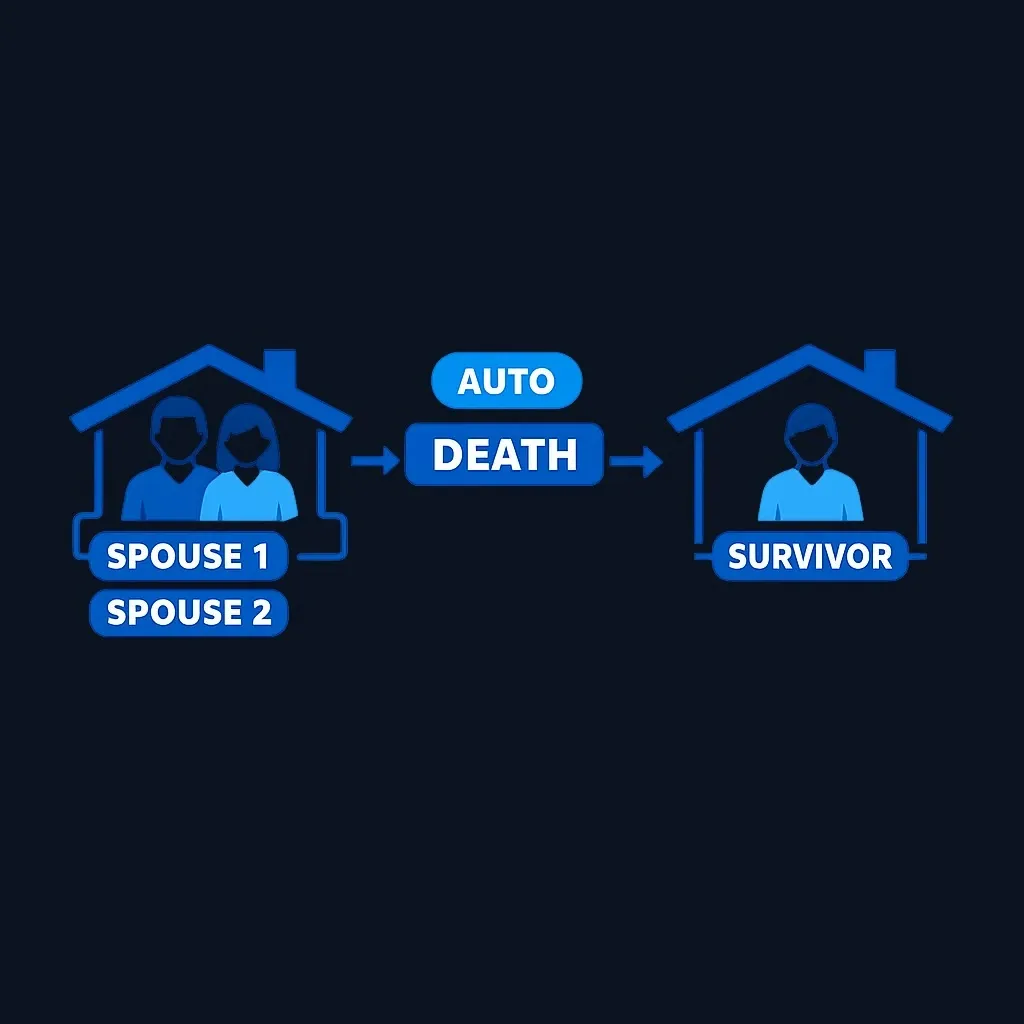
Choose joint tenancy when co‑owners (often spouses or very close partners) want a simple mechanism for holding property together and when their estate plan favors immediate transfer to surviving co‑owners. Joint forms are commonly used in planning where shared ownership and straightforward survivor transfer are priorities (see estate planning discussions of joint ownership types) Fidelity.
Example scenario: A married couple purchasing a home together who want a streamlined transition to the surviving spouse may consider a joint form of title, with legal advice to ensure documents match their wishes.
When tenancy in common may fit
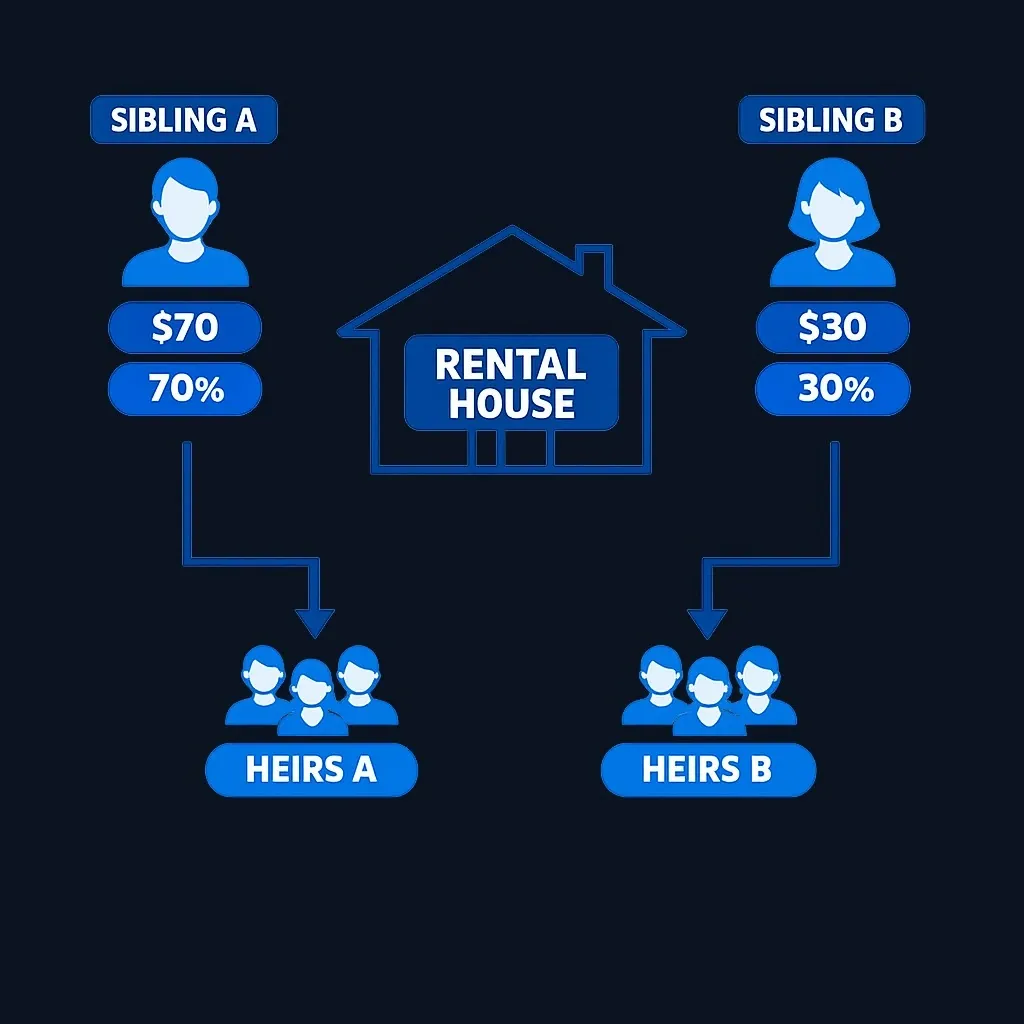
Choose tenancy in common when owners need unequal shares, want to leave their share to different heirs, or prefer the ability to transfer an interest without converting the entire property ownership. Tenancy in common is often useful for investment groups, inherited properties, or friends co‑buying where contributions differ.
Example scenario: Two siblings co‑purchase a rental property where one contributes 70% of the purchase price and the other 30%; tenancy in common lets title reflect those percentages and lets each sibling will their share independently.
Practice investing with Finelo
Build practical investing skills with guided lessons, simulator practice, and structured challenges.
Tradeoffs and caveats
- Title language matters: The exact words used on the deed and how you record title determine many outcomes; ambiguous language leads to disputes.
- Probate and estate planning: Different ownership forms interact differently with wills, trusts, and probate — planning ahead avoids surprises.
- Creditor and tax exposure: Co‑ownership can expose the property to a co‑owner’s creditors or tax liabilities; consider liability protection strategies.
- Changing title: Converting from one form to another usually requires a new deed and may have tax or mortgage consequences. Consult a lawyer before any change.
Legal recommendation: Because state law and deed wording are decisive, consult a real estate or estate‑planning attorney to draft or review title documents that reflect your goals.
FAQ
What is the main difference between joint tenancy and tenancy in common?
Both are ways to co‑own property and create undivided interests in the whole property IRS guidance. The practical differences relate to how ownership shares are allocated and how title is handled for transfers and estate planning; consult local law for precise effects.
How does joint tenancy affect property transfer when an owner dies?
The practical outcome depends on the deed language and the controlling state law. Many people use co‑ownership forms to make estate transitions smoother, but exact transfer mechanics require review by an attorney.
Can tenants in common have different ownership percentages?
Tenancy in common is commonly used when owners want flexible arrangements for shares and transfers; use deed language and documentation to record percentage interests and consult counsel to ensure enforceability.
Do I need a lawyer to set up joint tenancy or tenancy in common?
Yes — because the title wording, state law, and related estate documents determine outcomes, a lawyer prevents unintended consequences and ensures your ownership matches your goals.
Conclusion
Joint tenancy and tenancy in common both let multiple people own the same property, but they serve different goals: joint approaches often favor simple survivor transitions, while tenancy in common favors flexibility in shares and estate choices. Start by clarifying your objectives (equal vs. unequal shares, ease of transfer, creditor exposure), then have an attorney draft or review the deed and related estate documents to ensure the legal result matches your plan. For general overviews of joint ownership options, see estate‑planning resources such as Fidelity’s guidance on transferring assets Fidelity and the IRS overview on co‑ownership IRS.
Sources and Further Verification
More from Finelo
- 1031 Exchange vs. Opportunity Zone: Key Differences
- 83(b) Election: Deadlines, Tax Risks, and When Early Filing May Fit
- After-Tax 401(k) vs. Roth 401(k): Key Differences
Disclaimer
This article is provided by Finelo for educational and informational purposes only. Finelo does not provide financial, investment, tax, legal, or insurance advice. Consider your circumstances and consult an appropriately qualified professional before making financial decisions.
InvestingBeginner GuideFinancial Education
Practice investing with Finelo
Build practical investing skills with guided lessons, simulator practice, and structured challenges.
About the author
Finelo Team
The Finelo Team creates practical investing and trading education designed to help beginners learn faster with structured challenges, simulator practice, and bite-sized lessons.
Keep reading — Related articles

Investing
Yield to Call vs Yield to Maturity: Assumptions and Bond Risks
Yield to call (YTC) estimates a bond's yield if the issuer redeems it on an eligible call date; yield to maturity (YTM) estimates yield if it remains outstanding to final maturity.
Finelo Team

Investing
Will My Employer Know If I Take a 401(k) Loan?
Who this page is for: readers new to 401(k) loans who want a practical, privacy‑focused explanation — what your employer can see, how to limit visibility, and the financial tradeoffs to weigh.
Finelo Team

Investing
What Medical Expenses Qualify for a 401(k) Hardship Withdrawal?
Before you decide, confirm three things with your plan administrator:
Finelo Team