Last editorial review: September 8, 2026
Is an ESPP Worth It? Discounts, Taxes, Risks, and Decision Checklist
An employee stock purchase plan may offer a discount or lookback, but value depends on plan terms, taxes, fees, sale restrictions, cash flow, and employer-stock concentration risk.
13 min read
Practice investing with Finelo
Build practical investing skills with guided lessons, simulator practice, and structured challenges.
Want to learn more?
Build practical investing skills with guided lessons, simulator practice, and structured challenges.
Explore FineloExplore Finelo's 28-day challenges
Turn learning into a daily habit with guided challenge paths.
U.S. scope: This article discusses U.S. institutions, financial products, tax rules, and dollar examples unless stated otherwise. Rules and product terms may change; verify current official guidance for your situation.
Quick answer
An Employee Stock Purchase Plan (ESPP) may be valuable when its discount and lookback outweigh cash-flow constraints, fees, tax complexity, and employer-stock concentration. It is not automatically “worth it”: plan terms differ, the share price can fall before sale, trading windows may delay liquidity, and tax treatment depends on whether the disposition satisfies federal holding-period rules. Review the plan document and your personal constraints before enrolling.
Introduction to ESPPs
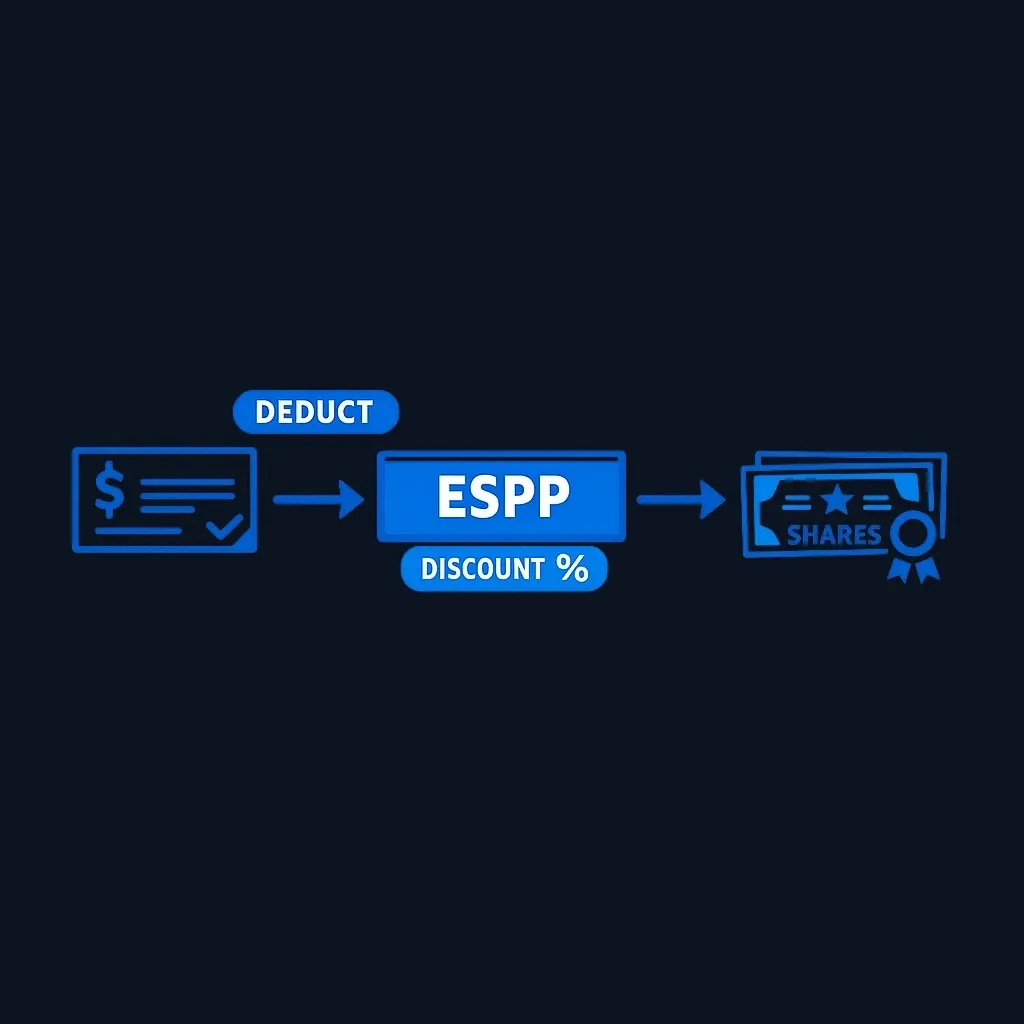
An Employee Stock Purchase Plan (ESPP) is an employer benefit that lets eligible employees buy company stock through payroll deductions, usually at a discount and sometimes with a lookback that uses the lower of the offering‑start or purchase‑date price to set the reference price (Fidelity). Plans are voluntary and vary widely in discount amount, contribution limits, purchase cadence, holding/qualifying periods, fees, and how pending contributions are treated if you leave employment.
Who this page is for
- Employees new to ESPPs who want a clear, practical decision framework.
- People weighing cash‑flow, concentration risk, and tax tradeoffs.
- Readers who want worked examples and simple rules to decide whether to enroll.
After reading you will be able to:
- Identify the plan features that create value.
- Run a simple worked example for likely pre‑tax outcomes.
- Use a short checklist to decide whether, and how much, to participate.
What to know before deciding
This section groups the core decision inputs you must evaluate: the benefits that create value, the principal risks that erode it, and the tax rules that change after‑tax outcomes.
Benefits of Participating in an ESPP
Main value drivers
- Discounted purchases. Most ESPPs give a discount off the reference price; that discount is the primary source of immediate expected value (Fidelity).
- Lookback provisions. When present, lookbacks use the lower of two prices (offering start or purchase date) to compute your discount, often raising the odds of an immediate gain (Fidelity).
- Automatic saving. Payroll deductions force regular purchases, which can help accumulate equity without manual trades or timing decisions.
Discount terms to verify
- ESPP discounts vary by plan. Use your official plan documents to verify the percentage, reference price, lookback terms, purchase dates, and any restrictions; do not infer your terms from another employer’s plan.
Worked pre-tax example (immediate sale)
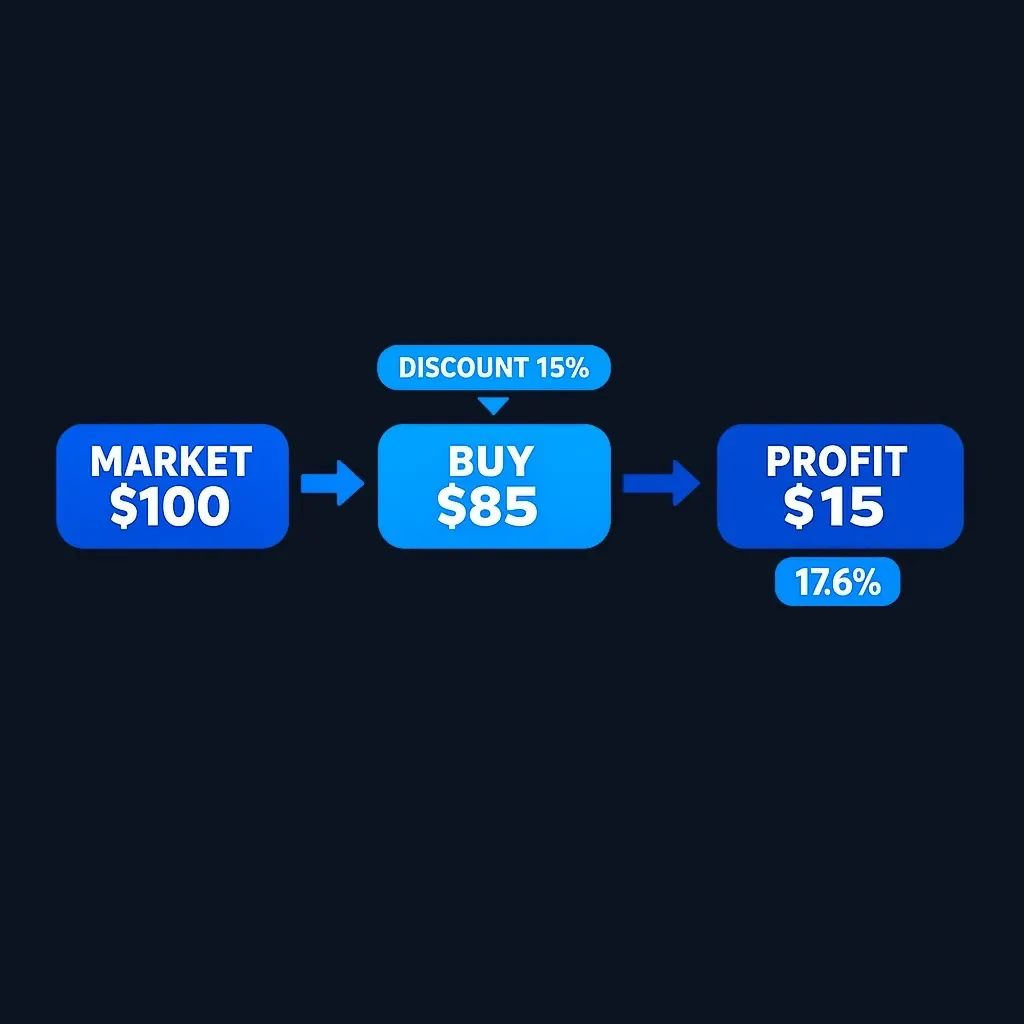
- If the reference market price is $100 and your plan discount is 15%, your purchase price is $85. Selling immediately at $100 yields a pre‑tax, pre‑fee gain of $15 per share — a 17.6% return on the $85 invested (15 / 85 ≈ 17.6%). Use your actual price and discount to repeat this math.
Practical tip
- If your plan has a lookback, calculate both the offering‑start and purchase‑date scenarios. Using the lower of the two often meaningfully increases expected upside.
Risks and Considerations
Primary risks that can reduce or outweigh the benefit
- Company concentration risk. ESPP purchases increase your exposure to the same company that pays your wages and benefits. A firm‑specific setback can hurt both income and investments simultaneously.
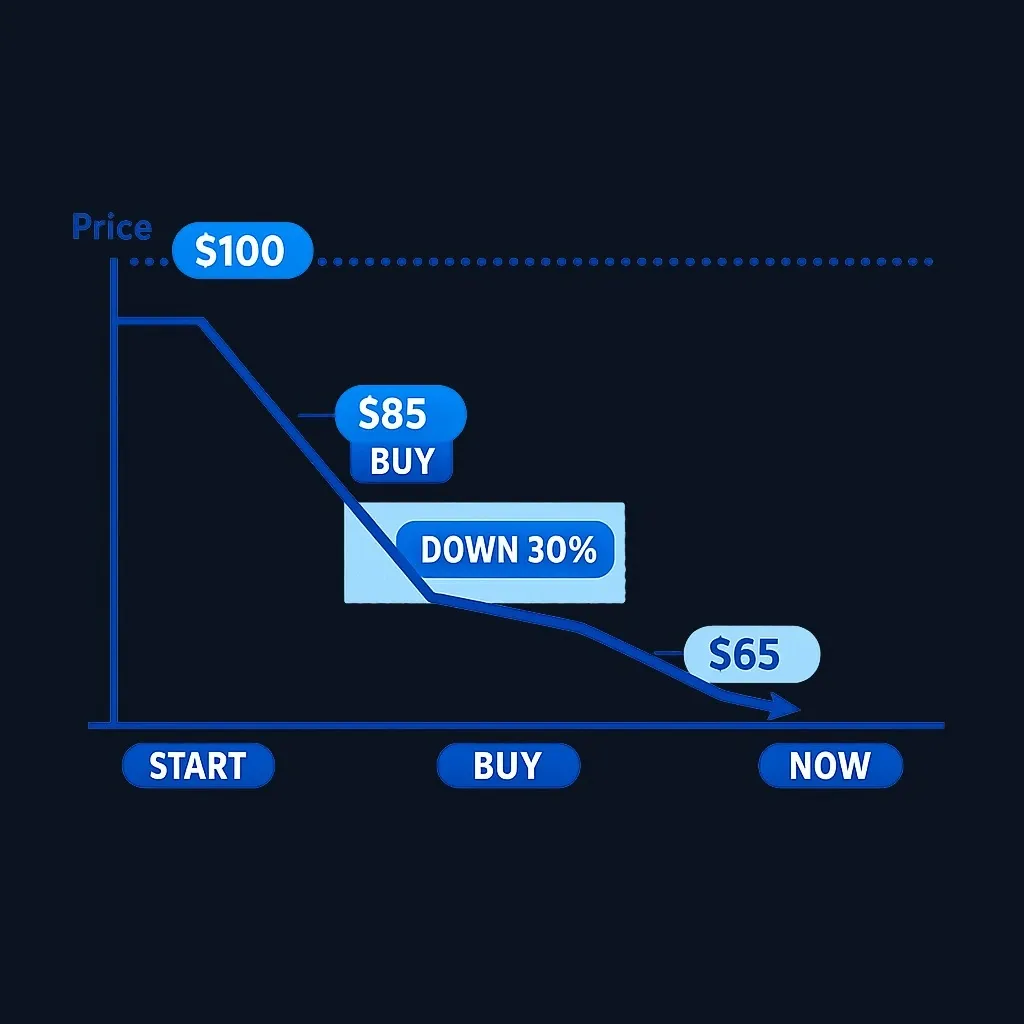
- Market volatility. A discount cushions loss but does not prevent large percentage declines in share value. If the stock drops materially, the discount may be insufficient to avoid losses.
- Holding-period and trading restrictions. Federal tax law does not require you to hold shares, but a sale must satisfy the statutory periods to receive qualifying-disposition treatment. A plan, insider-trading policy, or trading window can separately restrict sales.
- Opportunity cost. Money contributed to an ESPP is money not available for other priorities (emergency cash, high‑interest debt repayment, or tax‑advantaged retirement accounts).
- Fees and admin costs. Some plans charge transaction or administration fees that reduce net gains from discounts; check your plan’s fee schedule.
Hypothetical risk example
- Contributing heavily to an ESPP and then experiencing a 30–35% decline in stock value can produce a sizable loss despite an initial discount. That scenario highlights the need to limit concentration and maintain liquidity.
Practical risk controls
- Assess whether you have sufficient liquid emergency savings before making a large ESPP allocation.
- Compare ESPP contributions with other priorities, including any employer retirement match, high-interest debt, and near-term cash needs.
- Set a target cap for total employer‑stock exposure (for example, no more than X% of investable assets) and rebalance when you exceed it.
- Consider selling some or all ESPP shares soon after purchase to lock in the discount if that fits your risk tolerance and tax plan.
Tax Implications of ESPPs
High‑level tax rule that matters most
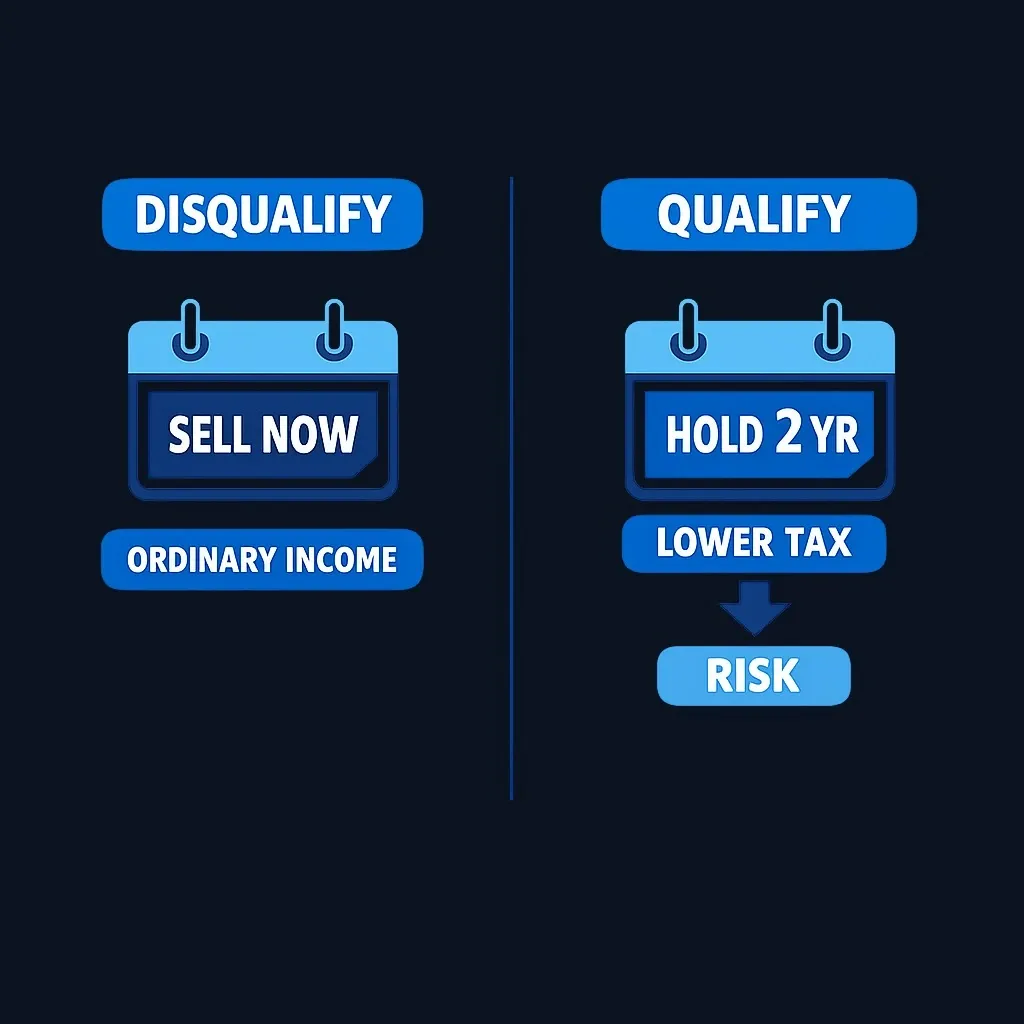
- Whether a sale is a qualifying or disqualifying disposition affects how ordinary income and capital gain or loss are calculated. IRS Publication 525 explains that qualifying treatment generally requires holding until the later of one year after the stock transfer and two years after the option grant (IRS Publication 525).
How the two sale types differ
- Disqualifying disposition: the ordinary-income component is calculated under the ESPP tax rules, with remaining gain or loss generally treated as capital. Do not assume it always equals the visible purchase discount.
- Qualifying disposition: after both statutory holding periods are satisfied, the ordinary-income and capital-gain components use a different formula. Qualifying does not mean the entire gain is capital gain or tax-free (IRS Publication 525).
Qualitative tax example
- An immediate sale is generally a disqualifying disposition. The ordinary-income component and any capital gain or loss depend on the plan's option price, fair market values, basis adjustments, and sale price. Holding long enough for qualifying treatment changes the calculation but adds market and concentration risk (IRS Publication 525).
Practical tax tip
- Ask your plan administrator what tax forms you’ll receive on purchase and sale and read the plan’s holding‑period language before committing to hold shares for tax reasons.
Educational note: this page is educational, not financial or tax advice. For tax consequences tailored to your situation, consult a tax professional.
Comparative Analysis of ESPP Features
This section compresses the most useful plan features into a single, actionable comparison and then explains how to use it. Where a plan document is available, verify every item there.
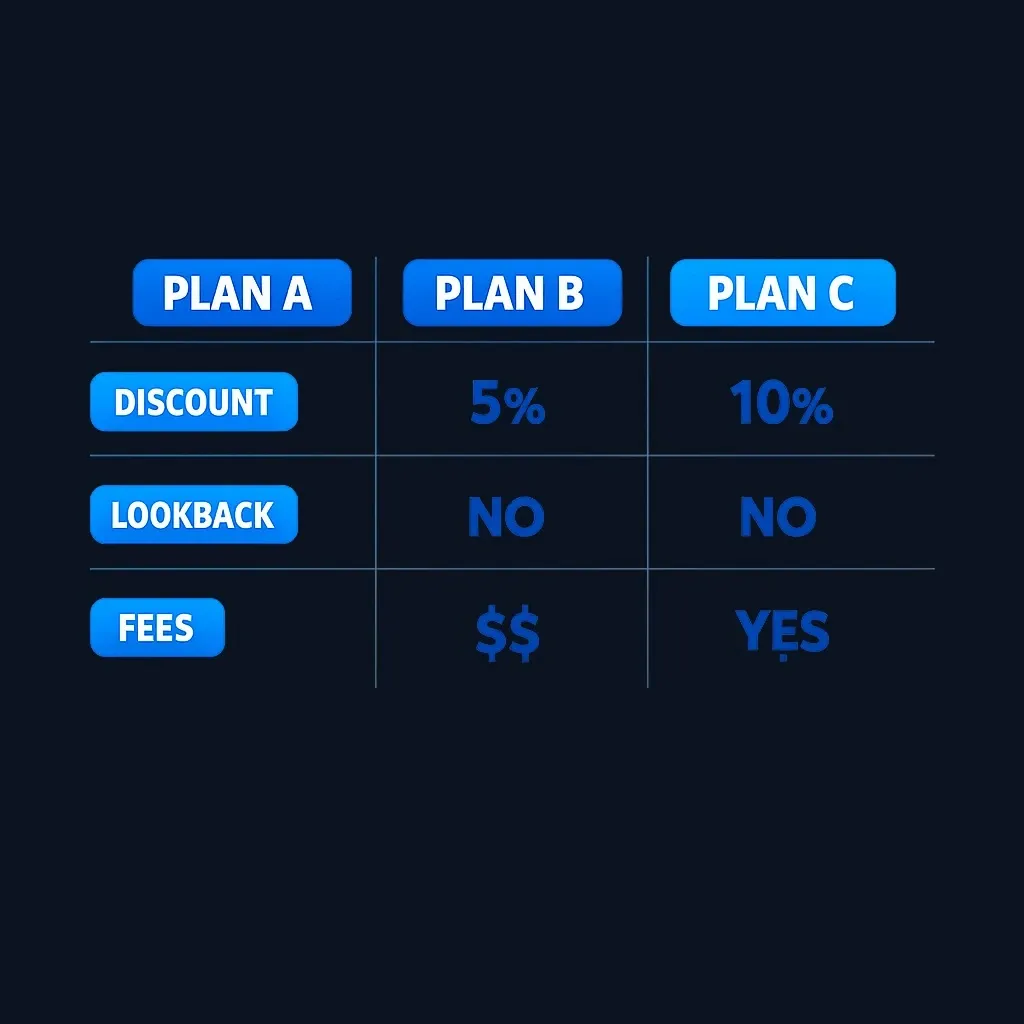
Illustrative comparison of three ESPP archetypes
- The rows show features you should compare; the columns present three realistic plan archetypes to illustrate how combinations affect value. These are illustrative, not company‑specific.
| Feature | Conservative plan (A) — low upside | Typical plan (B) — common mix | Generous plan (C) — high upside |
|---|---|---|---|
| Discount rate | 5% (small immediate cushion) | 10% (moderate cushion) | 15% (large cushion) |
| Lookback provision | No | Sometimes | Yes |
| Contribution limit | Low (e.g., small % of pay) | Moderate | High (higher % or dollar cap) |
| Fees | Possible per‑trade/admin fees | Low to moderate | Low fees or none |
| Holding/qualifying rules | Strict (longer required hold) | Moderate | Flexible |
| Termination treatment | May cancel pending purchases | Varies | Often completes purchases at termination |
How to read the table
- A plan like column C is more attractive for short‑term selling because a large discount plus a lookback increases expected immediate gains. Column A is still potentially useful but offers less cushion. Always compute after‑fee, after‑tax outcomes for your likely hold period.
Where these feature differences matter most
- Short‑term traders: discounts, lookbacks, and low fees are most important.
- Tax‑sensitive holders: favorable qualifying dispositions and clear tax reporting matter more.
- Long‑term holders: your view of employer prospects and your diversification plan are central.
Verification note
- The value of discounts and lookbacks is discussed in plan education materials (Fidelity). Verify the actual discount, lookback, fees, purchase dates, and holding rules in your plan documents.
Worked comparison example
- If Plan X has a larger discount, a lookback, and lower fees than Plan Y, it may create a larger pre-tax gain at purchase. Taxes, sale timing, and later market movement can change the final result.
Case Studies: Realistic outcomes (hypothetical)
These realistic, hypothetical narratives show how choices and market moves produce different outcomes. They are illustrative and designed to highlight tradeoffs.
Case A — Immediate sale to lock the discount
- Plan features: 15% discount + lookback. Employee contributes $1,000 for one purchase period. Lookback sets reference at $100, so purchase price = $85. Selling at $100 yields about $1,176 pre‑tax — roughly a 17.6% pre‑tax return on funds used. Outcome: captured immediate gain, reduced employer‑stock concentration, used proceeds to diversify.
Case B — Large allocation + market decline
- Plan features: 15% discount, no lookback. Employee channels a large share of spare cash to ESPP and holds for tax reasons. Stock falls 35% after purchase. Outcome: despite the discount, the participant’s net holding value drops significantly and household net worth is impaired. Lesson: discount does not immunize large concentrated positions.
Case C — A market loss offsets the potential tax benefit
- Plan features: 15% discount + lookback. Employee holds to meet qualifying disposition rules; during the required holding period, the stock declines. Outcome: preferred tax treatment applies, but decline in market value exceeds the tax savings, producing a net loss compared with an early sale. Tradeoff: tax planning vs. market risk.
Practical takeaway from the cases
- Selling soon after purchase can reduce market exposure, but taxes, fees, trading windows, and plan rules may affect the outcome. Holding longer adds market and concentration risk, even when the plan offers favorable purchase terms.
Practice investing with Finelo
Build practical investing skills with guided lessons, simulator practice, and structured challenges.
Decision framework
Complete this quick audit in 10–20 minutes to decide whether to enroll and how much to contribute. Each step is actionable.
Step 1 — Read your plan documents (5–10 minutes)
- Confirm discount percentage, whether a lookback exists, contribution limits, purchase cadence, holding/qualifying rules, fees, and termination/leave treatment. Plans with discounts and lookbacks materially raise baseline value (Fidelity).
Step 2 — Check your financial foundation (2–5 minutes)
- Do you have a 3–6 month emergency fund? Are you capturing any employer retirement match? Do you carry high‑interest debt? If not, prioritize these before allocating large sums to an ESPP.
Step 3 — Decide your time horizon and tax stance (2–5 minutes)
- Short horizon / want immediate gain: plan to sell soon after purchase, prioritize discount and low fees.
- Tax‑sensitive / ready to hold: ensure you understand qualifying‑disposition timelines and accept added market exposure.
Step 4 — Set a contribution limit
- Set a personal cap that reflects your income dependence on the employer, existing company-stock exposure, liquidity needs, and risk tolerance. Revisit the cap as your holdings or circumstances change.
Step 5 — Run a quick scenario calculation (5 minutes)
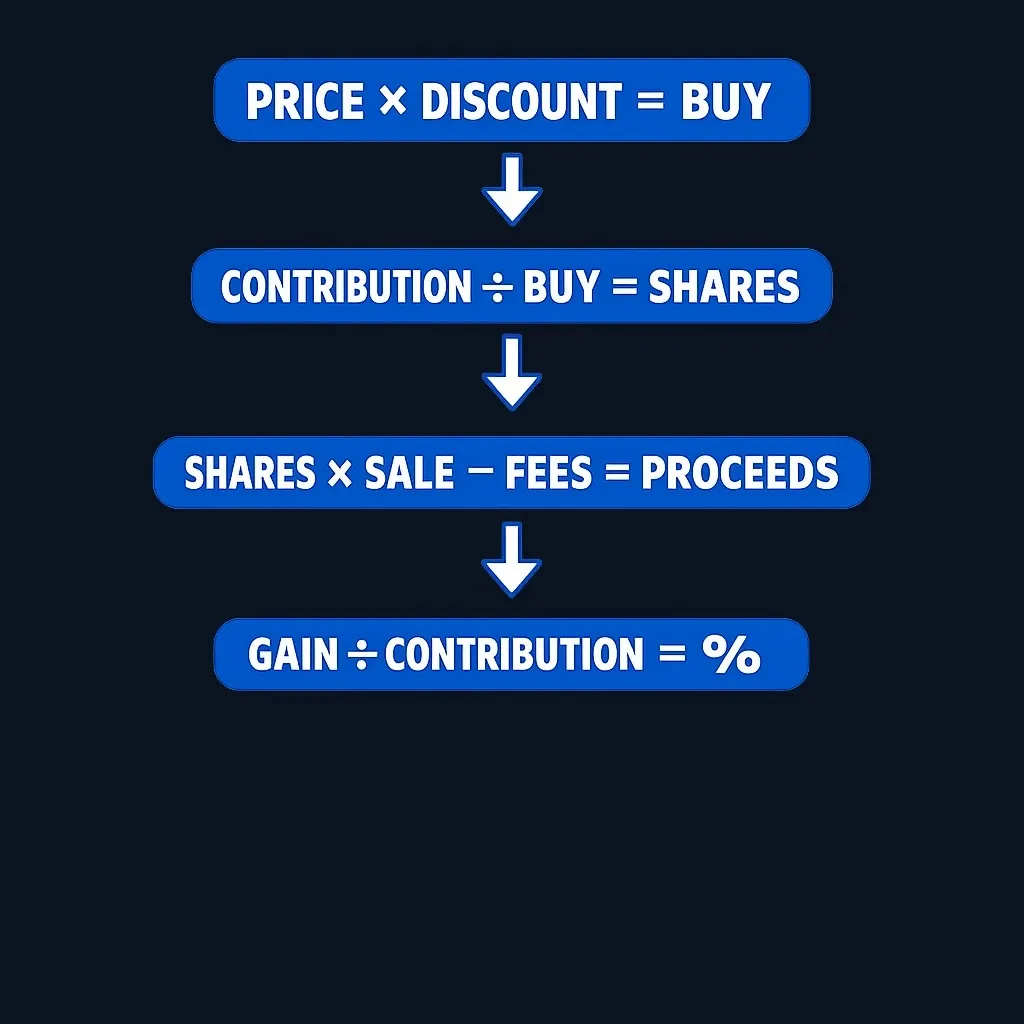
- Inputs: current price (or expected purchase price), discount, planned contribution for one purchase, and expected fees. Compute:
- Purchase price = reference price × (1 − discount).
- Shares = contribution / purchase price.
- Immediate sale proceeds = shares × reference price − fees.
- Pre‑tax percent gain ≈ (proceeds − contribution) / contribution.
- You can use the $100 / 15% example above to check the math, then substitute your plan’s actual contribution, discount, reference price, fees, and tax assumptions.
Step 6 — Make a plan for purchased shares
- Define a selling approach in advance, taking account of trading windows, taxes, fees, plan rules, and concentration risk. Use alerts or available plan tools to help track relevant dates and limits.
Common mistakes and how to avoid them
- Mistake: overconcentrating in employer stock. Fix: set a hard cap and rebalance.
- Mistake: evaluating an ESPP without comparing other workplace benefits. Fix: compare the ESPP with any employer retirement match, debt costs, and liquidity needs.
- Mistake: ignoring fees and taxes. Fix: compute after‑fee, after‑tax outcomes for your likely sale timing.
Conclusion: Is ESPP Worth It for You?
An ESPP can offer favorable purchase terms, but the net result depends on the plan's discount, lookback, fees, sale restrictions, share-price movement, tax treatment, and the employee's cash-flow and concentration risk. Use the framework above to compare those inputs rather than treating participation as a default choice.
There is no universal contribution or sale rule. An employee can instead set a written maximum contribution and employer-stock exposure based on their liquidity needs, plan restrictions, and risk tolerance, then review it with an appropriately qualified professional.
FAQ
What is an ESPP?
An Employee Stock Purchase Plan (ESPP) lets eligible employees buy their employer’s publicly traded shares via payroll deductions, often at a discount and sometimes with a lookback provision that uses the lower of two prices to compute the purchase price (Fidelity).
What happens to my ESPP if I leave the company?
Treatment of pending contributions and unpurchased funds varies by plan. Some plans cancel pending purchases on termination, others complete purchases at a prorated price. Read your plan’s termination/leave rules in the official plan document before enrolling.
Can I participate in both an ESPP and a 401(k)?
ESPP participation and retirement-plan contributions generally use separate plan rules. When cash flow is limited, compare the ESPP terms with any employer retirement contribution, vesting schedule, contribution limit, liquidity restriction, tax effect, and concentration risk. An employer contribution is conditional on the written plan terms and should not be described as a guaranteed return.
How do I calculate my potential gains from an ESPP?
Calculate the purchase price as reference price × (1 − discount), compute shares as contribution ÷ purchase price, and estimate proceeds as shares × sale price − fees. A 15% purchase discount corresponds to a gross gain of about 17.65% relative to the discounted purchase amount if the market price is unchanged and the shares can be sold immediately. Actual results depend on price movement, plan rules, taxes, and fees.
You can build a spreadsheet using the plan's actual discount, lookback rules, fees, contribution amount, and possible sale prices. Treat any after-tax result as an estimate until a tax professional confirms the applicable disposition and basis rules.
Sources and Further Verification
More from Finelo
- 1031 Exchange vs. Opportunity Zone: Key Differences
- 83(b) Election: Deadlines, Tax Risks, and When Early Filing May Fit
- After-Tax 401(k) vs. Roth 401(k): Key Differences
Disclaimer
This article is provided by Finelo for educational and informational purposes only. Finelo does not provide financial, investment, tax, legal, or insurance advice. Consider your circumstances and consult an appropriately qualified professional before making financial decisions.
InvestingBeginner GuideFinancial Education
Practice investing with Finelo
Build practical investing skills with guided lessons, simulator practice, and structured challenges.
About the author
Finelo Team
The Finelo Team creates practical investing and trading education designed to help beginners learn faster with structured challenges, simulator practice, and bite-sized lessons.
Keep reading — Related articles

Investing
Yield to Call vs Yield to Maturity: Assumptions and Bond Risks
Yield to call (YTC) estimates a bond's yield if the issuer redeems it on an eligible call date; yield to maturity (YTM) estimates yield if it remains outstanding to final maturity.
Finelo Team
Investing
Will My Employer Know If I Take a 401(k) Loan?
Who this page is for: readers new to 401(k) loans who want a practical, privacy‑focused explanation — what your employer can see, how to limit visibility, and the financial tradeoffs to weigh.
Finelo Team
Investing
What Medical Expenses Qualify for a 401(k) Hardship Withdrawal?
Before you decide, confirm three things with your plan administrator:
Finelo Team