Last editorial review: September 8, 2026
How to Choose an Investment Mentor: Credentials, Costs, and Red Flags
Quick answer: An investment mentor is an experienced investor who teaches decision-making, reviews your plans, and accelerates skill-building through feedback and accountability. Look for…
13 min read
Practice investing with Finelo
Build practical investing skills with guided lessons, simulator practice, and structured challenges.
Want to learn more?
Build practical investing skills with guided lessons, simulator practice, and structured challenges.
Explore FineloExplore Finelo's 28-day challenges
Turn learning into a daily habit with guided challenge paths.
U.S. scope: This article discusses U.S. institutions, financial products, tax rules, and dollar examples unless stated otherwise. Rules and product terms may change; verify current official guidance for your situation.
Quick answer: An investment mentor is an experienced investor who teaches decision-making, reviews your plans, and accelerates skill-building through feedback and accountability. Look for demonstrated process (not promises), clear communication, and alignment with your goals; beware anyone promising high returns or low risk. This page explains how to find, evaluate, and work with a mentor.
Quick answer
An investment mentor guides your learning, helps you avoid common mistakes, and coaches you to make better, repeatable investment choices. Start by clarifying your goals, then screen mentors for relevant experience, teaching ability, and transparency about fees and conflicts. Watch for red flags such as guaranteed high returns or pressure to move money quickly — these are classic warning signs Investor.gov.
Introduction to Investment Mentorship
An investment mentor is a person—often an experienced investor, advisor, or educator—who provides ongoing guidance to help you develop investing skills. Mentorship differs from hiring a financial advisor: mentors focus on teaching and skill transfer, not necessarily managing your assets. A good mentor helps you form a process (how you evaluate ideas, size positions, and manage risk), not just hand you trade ideas.
Who this page is for
- New and early-stage investors who want to learn how to invest prudently.
- Self-directed investors who want coaching to sharpen decisions and avoid emotional mistakes.
- People comparing mentorship models (one-on-one, group, program) and weighing cost vs. learning value.
What you’ll be able to do after reading
- Define what to expect from an investment mentor.
- Use a practical decision framework to shortlist and evaluate candidates.
- Recognize common red flags and set reasonable goals for a mentorship relationship.
What is an Investment Mentor?
An investment mentor teaches you the skills you need to evaluate opportunities, manage risk, and build a repeatable investing process. Unlike a discretionary advisor who executes trades for you, a mentor’s primary deliverable is learning: improved judgment, a documented approach, and ongoing feedback.
Typical mentor activities
- Reviewing your investment theses and decisions.
- Teaching frameworks for valuation, risk management, and portfolio construction.
- Sharing real-world experience and decision post-mortems.
- Acting as accountability partner for your learning goals.
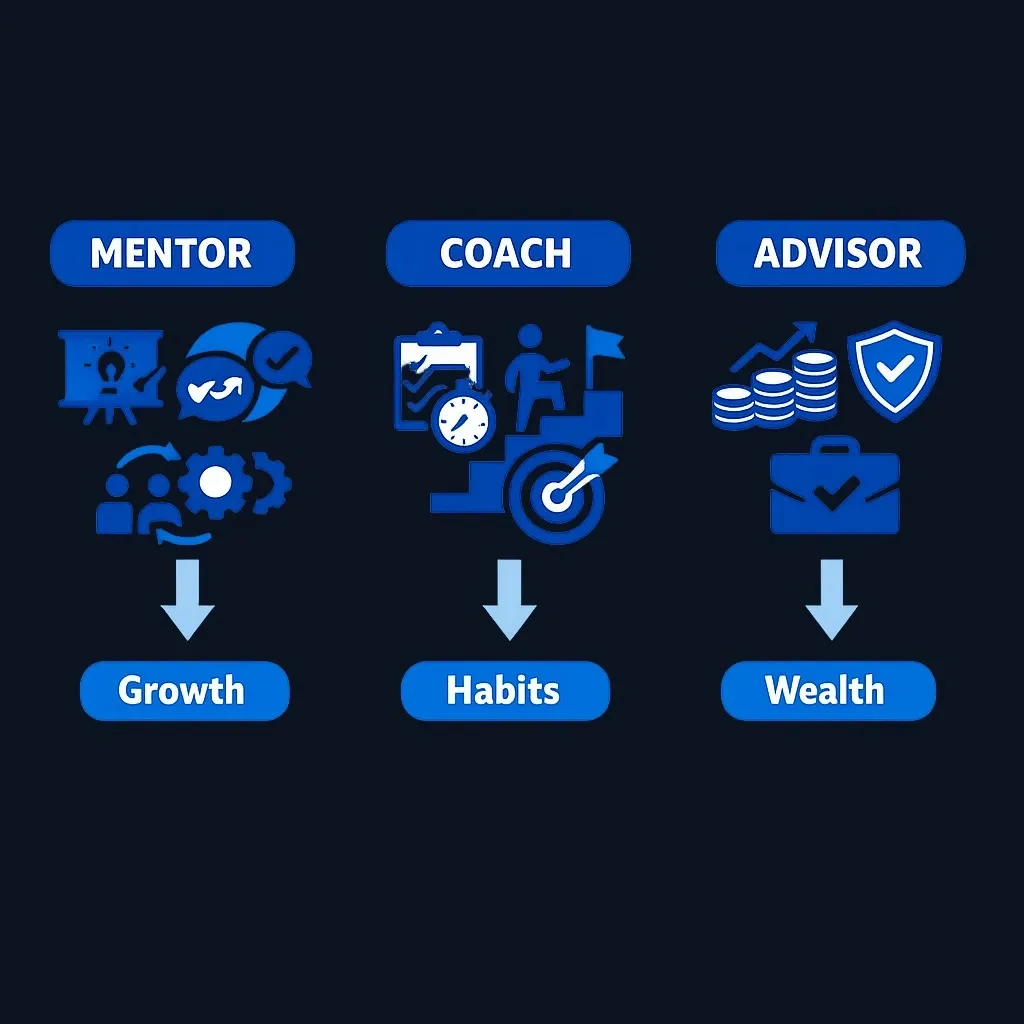
Mentor vs. coach vs. advisor
- Mentor: Focuses on long-term skill transfer and judgment; may be paid or informal.
- Coach: Often focuses on behaviors and habit formation; can be shorter-term.
- Financial advisor: Typically provides or executes financial advice and may manage assets; regulated duties and different legal obligations.
When mentorship makes sense
- You want to become a competent, independent investor rather than outsource decisions.
- You learn best from examples, critique, and regular feedback.
- You have time to study, practice, and apply lessons between sessions.
Practical takeaway: Treat mentorship as an education contract — set learning milestones, meeting cadence, and how progress will be measured.
Benefits of Having an Investment Mentor
Personalized learning
- Mentors tailor feedback to your experience level, risk tolerance, and time horizon. That avoids generic advice and helps you adopt a process suited to your needs.
Faster error correction
- A mentor spots recurring cognitive mistakes—such as anchoring, confirmation bias, or overtrading—and helps you correct them before they become costly habits.
Access to tacit knowledge
- Mentors provide “how it feels” guidance: how to respond to earnings surprises, when to trim positions, or how to research obscure companies. This tacit knowledge is hard to get from books alone.
Confidence and accountability
- Regular check-ins build discipline. Candidates who track decisions and write short post-mortems learn faster.
Portfolio decision quality: an illustration
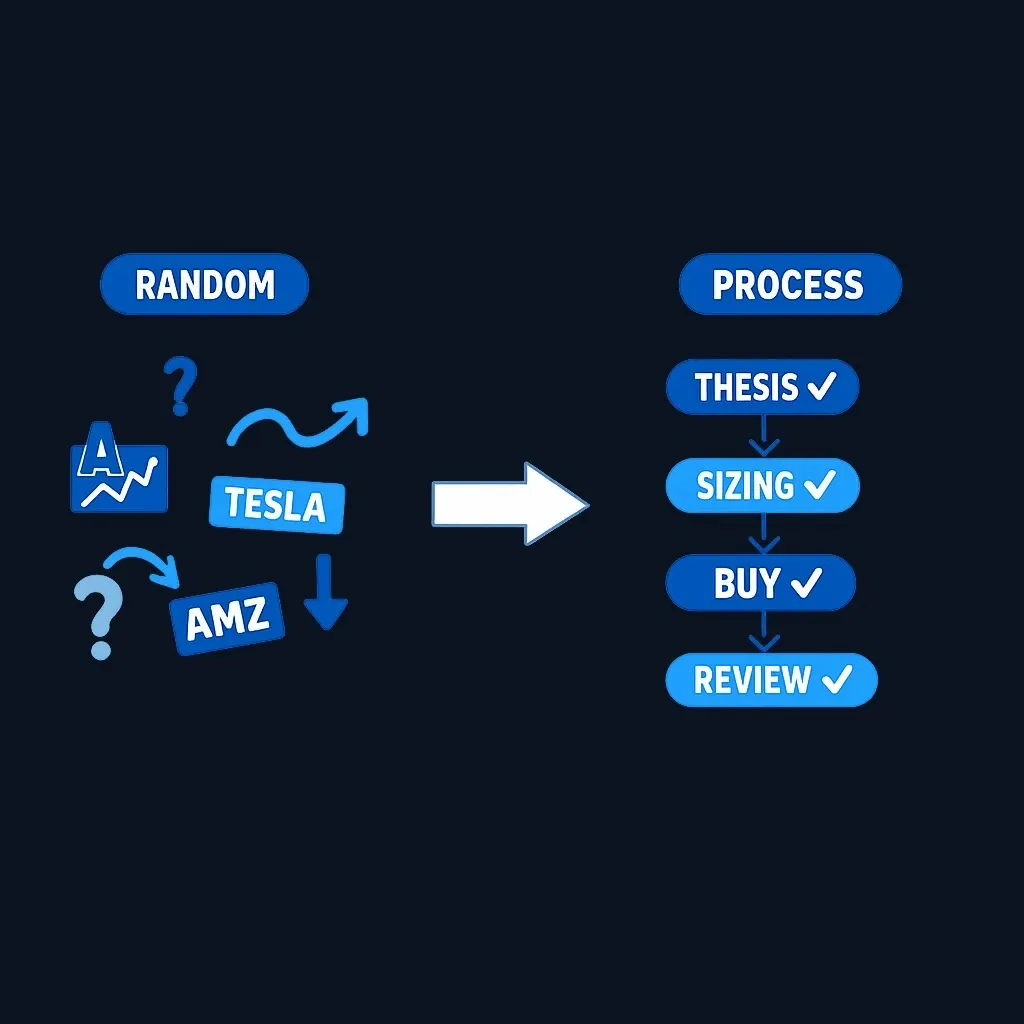
- Example: If you move from making ad-hoc purchases to following a written thesis + sizing rules, you convert random outcomes into deliberate experiments. Over time, the mentor helps you refine that experiment, increasing your signal-to-noise ratio in decisions.
Cost-benefit considerations
- Mentorship is an investment in your human capital. Expect trade-offs: time spent learning + fee (if any) versus the avoided cost of repeated mistakes and the value of better decisions.
Common pitfalls mentors help avoid
- Chasing “hot tips” without process.
- Risking too much on single ideas.
- Overreacting to short-term market noise.
Practical takeaway: Frame mentorship goals in terms of skills (what you should be able to do) and behaviors (habits you want to form), not guaranteed portfolio outcomes.
How to Find the Right Investment Mentor
Start with goal-first sourcing
- Clarify your objectives: learn stock selection, build a long-term diversified portfolio, trade options, or analyze private deals. Your target skill set narrows the right mentor pool.
Where to look
- Professional networks and investor meetups.
- Online mentorship marketplaces and programs.
- Local investment clubs or alumni groups.
- Content creators and authors whose approaches you already follow (evaluate teachability).
Using mentorship platforms
- Some mentorship platforms publish starting fees and mentor profiles. Treat listed prices as a screening input, then verify current fees, included services, renewal terms, and cancellation rules directly with the platform or mentor. (Note: platform prices vary by mentor and offering; always confirm directly.)
Approach and screening steps
- Read their public materials: articles, podcasts, or investment write-ups.
- Ask for a short intro call to test teaching style and chemistry.
- Request examples of how they teach process (case studies, frameworks).
- Ask about typical mentee outcomes and timeframes for learning milestones.
How to approach mentors politely
- Keep initial messages short and specific: state your goals, current level, and a 1–2 sentence ask (e.g., a 20–30 minute exploratory call). Respect their time and be prepared with clear questions.
Short outreach template
- “Hi [Name], I’m learning value-oriented stock selection and would appreciate 20–30 minutes to ask how you structure theses. I’m currently studying X and want feedback on Y. Would you be available for a brief call?”
Practical takeaway: Prioritize clarity about your goals and respect for the mentor’s time—this increases response rates and leads to better matches.
Evaluating Potential Mentors
Core evaluation criteria
- Relevant experience: Have they repeatedly applied the approach you want to learn?
- Teaching ability: Can they explain concepts clearly and give actionable feedback?
- Process documentation: Do they have a repeatable process to share and teach?
- Availability and cadence: Do their meeting rhythms match your needs?
- Conflicts and transparency: Are they open about potential conflicts of interest or other roles that affect recommendations?
Behavioral and compatibility checks
- Communication style: Do they use clear frameworks or rely on anecdotes?
- Feedback style: Does their critique feel constructive and testable?
- Learning fit: Do they prefer hands-on exercises, reading lists, or observational learning?
Practical screening questions to ask a prospective mentor
- “Can you share one example where you changed your process after a bad outcome?” (tests humility and learning)
- “How do you measure mentee progress?” (tests structure)
- “How do you handle conflicts of interest or personal investments?” (tests transparency)
Red flags to watch for
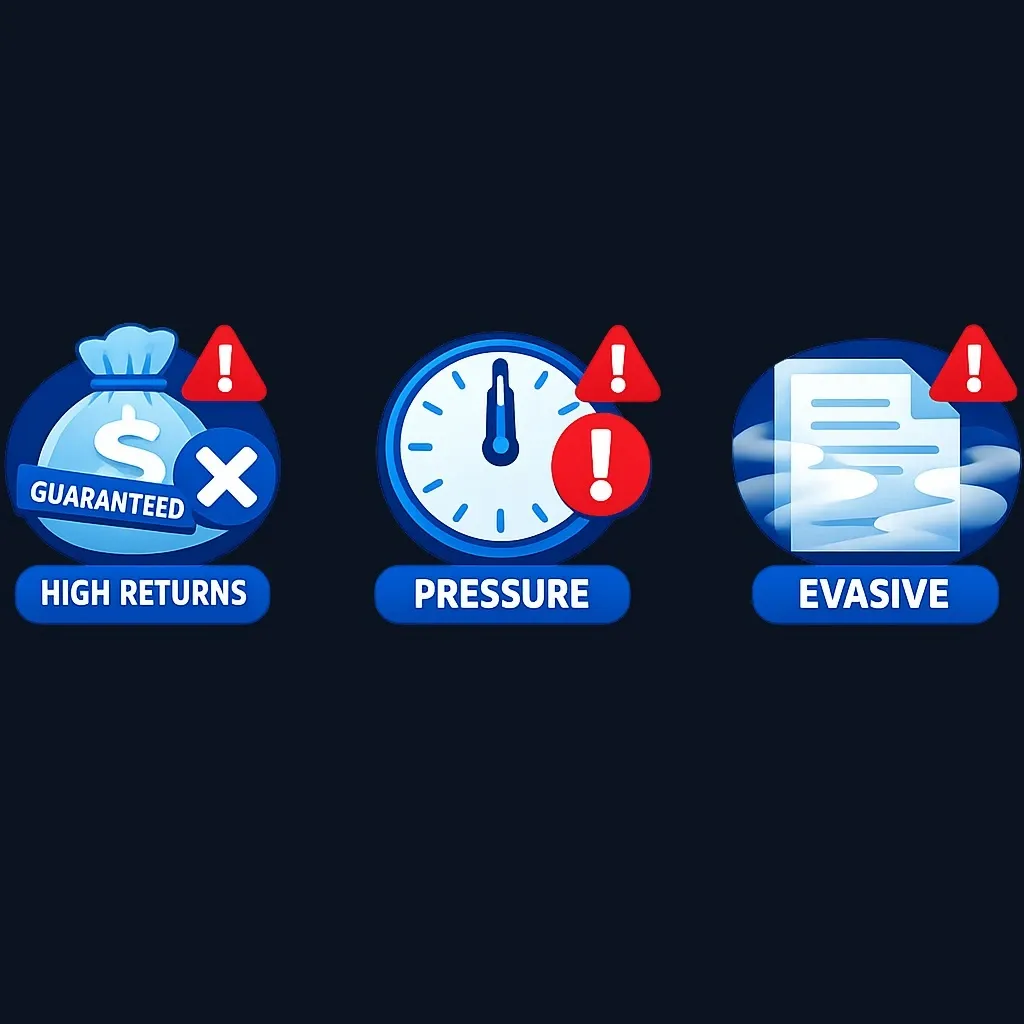
- Promises of guaranteed high returns or “low-risk” fast money — these are warning signs and match investor-protection advice about too-good-to-be-true claims Investor.gov.
- Pressure to invest immediately with a specific product or manager.
- Evasive answers about process or performance (teaching should be shareable; results are not guarantees).
Verification steps
- Ask for references or anonymized examples of past mentee work.
- Verify public claims by checking published pieces and documented thought processes.
- If a mentor is also selling proprietary products, understand how they are compensated.
Practical takeaway: Prefer mentors who articulate a teachable process and who are transparent about incentives and limits.
What to know before deciding
Educational note: This content is educational, not financial advice. Investing involves risk, including loss of principal. Evaluate any mentor and their recommendations in light of your goals, time horizon, and risk tolerance.
Decision costs and timelines
- Mentorship is usually a multi-month commitment to learn a repeatable skill. Set realistic milestones (for example, produce five documented investment theses and a monthly post-mortem).
Price awareness
- Mentorship pricing varies widely across informal arrangements, paid one-on-one coaching, and platform subscriptions. Ask the mentor or platform for current written fees, cancellation terms, and included services before committing.
Risk and consumer protection
- Be wary of anyone promising returns or minimizing market risk. The SEC-style consumer guidance flags promises of high returns with little or no risk as a red flag Investor.gov.
Data privacy and fiduciary concerns
- Clarify whether the mentor has any fiduciary duty or regulatory obligations. Many mentors are educators, not licensed advisors; that difference matters for legal protections. Ask whether they are a registered professional if you require that safeguard.
Practical takeaway: Define the learning contract clearly (deliverables, cadence, fees, confidentiality), and keep written notes of agreements.
Practice investing with Finelo
Build practical investing skills with guided lessons, simulator practice, and structured challenges.
Decision framework
Use this short framework to choose a mentor. It compresses the decision down to goal fit, teaching fit, transparency, and logistics.
Step 1 — Define the objective
- Skill outcome: What you must be able to do (e.g., write a valuation, size positions).
- Timeframe: Weeks, months, or years.
- Commitment: Hours per week for study and practice.
Step 2 — Match mentor types to objectives
| Mentor model | Best for | Pros | Cons |
|---|---|---|---|
| One-on-one mentor | Deep skill transfer, tailored feedback | Highly personalized; faster learning | Higher cost; depends on chemistry |
| Group mentorship / cohort | Learning alongside peers | Cheaper; peer feedback; shared accountability | Less individual attention |
| Course + occasional mentor | Structured curriculum + targeted help | Balance of content and mentorship | May lack ongoing accountability |
| Informal mentor (volunteer/network) | Early exploration, low cost | Low cost; flexible | Less structure; inconsistent feedback |
(Use this table to match your objective to the model. For example, if you need hands-on thesis review, one-on-one is usually best.)
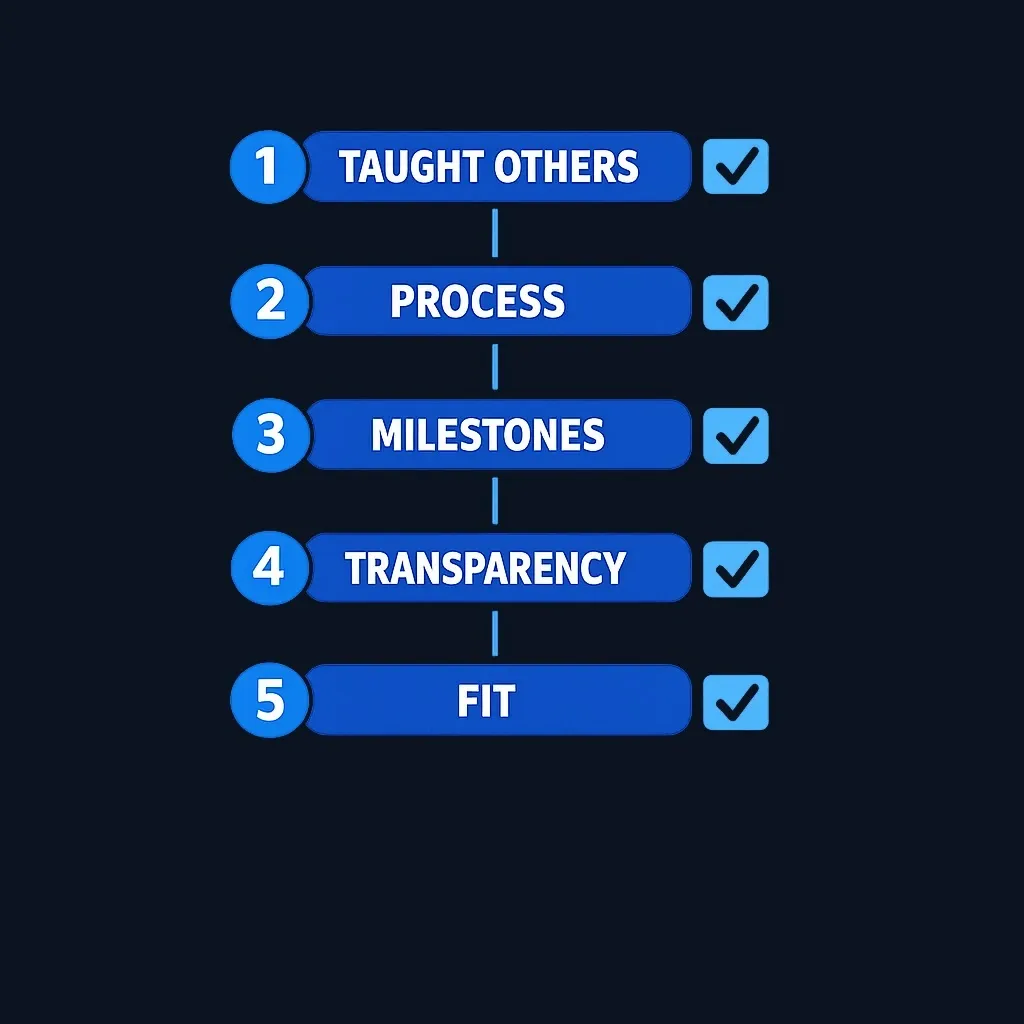
Step 3 — Screen with a 5-question checklist
- Has the mentor taught others the exact skills you want?
- Can they show a repeatable process (not just results)?
- Do they set measurable learning milestones?
- Are they transparent about fees, conflicts, and time commitments?
- Do you feel comfortable with their feedback style after a trial call?
Step 4 — Negotiate a pilot period
- Start with 4–8 sessions to test fit. Define one or two deliverables for that pilot, such as writing three theses for review.
Step 5 — Evaluate progress and adjust
- After the pilot, review whether your decision quality and confidence have improved. If not, decide whether to change mentors, adjust the format, or extend the pilot.
Practical takeaway: Use a short pilot and measurable milestones to reduce risk and confirm fit.
Common Misconceptions About Investment Mentorship
Myth: Mentors guarantee better returns
- Reality: Mentors teach process and judgment; they cannot guarantee market outcomes or profits. Always treat mentorship as education.
Myth: The more experienced the mentor, the better teacher they are
- Reality: Technical experience does not equal teaching skill. Prioritize demonstrable teaching ability and evidence of past mentee learning.
Myth: Mentorship is only for beginners
- Reality: Investors at all levels use mentors to learn new strategies, transition between styles, or remove emotional biases.
Myth: Paid mentors are always better than free ones
- Reality: Fee is not a proxy for teaching efficacy. Evaluate the mentor’s track record in teaching and the alignment of incentives.
Practical takeaway: Evaluate mentors on teachability and alignment, not reputation alone.
Case Studies: Success Stories of Mentorship
Note: The examples below are anonymized composite scenarios that illustrate typical mentorship pathways and lessons learned.
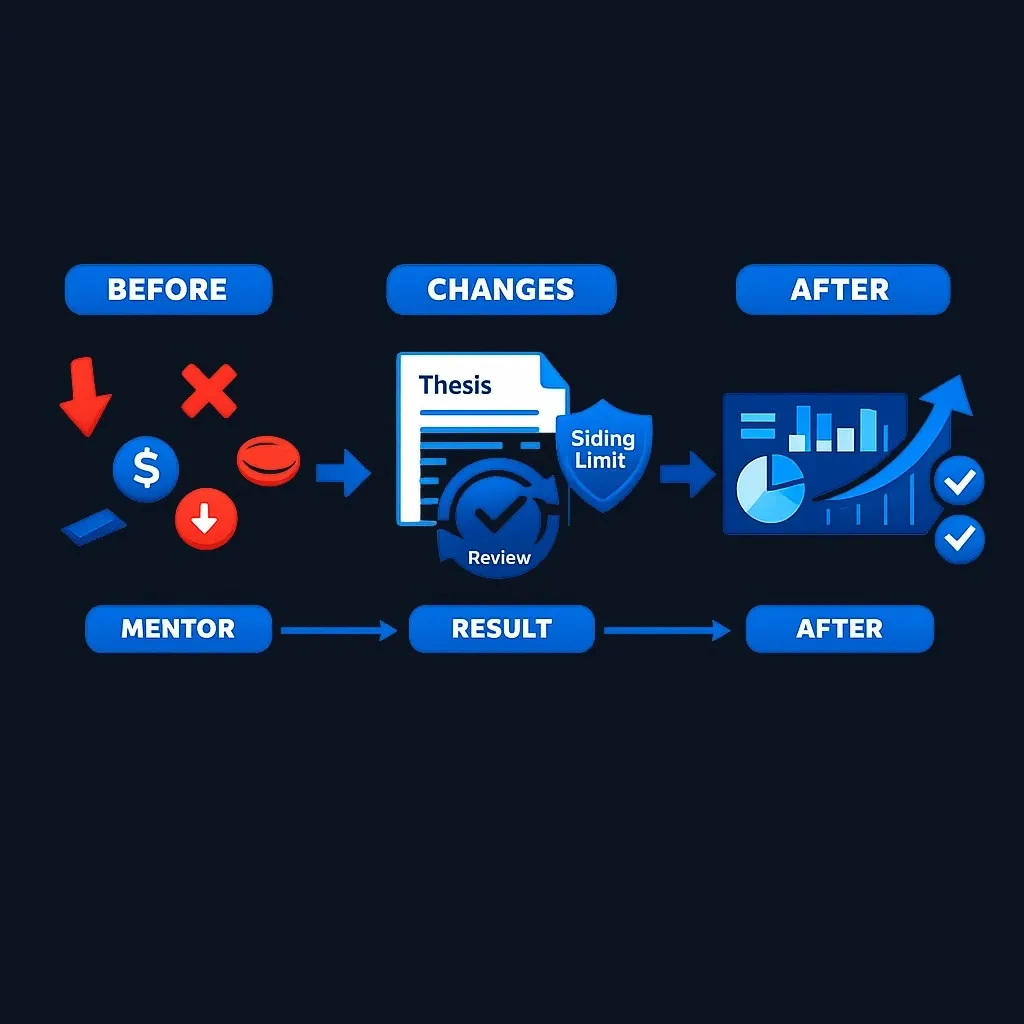
Case study A — From fragmented trades to a disciplined process
- Situation: A new investor made ad-hoc stock purchases and suffered churn and losses.
- Mentor approach: Regular reviews, a simple thesis template, and a predefined position-sizing limit.
- Resulting change: The mentee began documenting hypotheses, limiting position size, and running short post-mortems. The more structured process made each decision easier to explain and review.
- Key lesson: Simple constraints (position sizing + thesis writing) with regular feedback produce measurable behavior change.
Case study B — Learning a valuation framework for concentrated ideas
- Situation: An investor wanted to learn deep fundamental analysis for concentrated bets.
- Mentor approach: Shared valuation templates, two mock analyses with critique, and a final joint post-mortem after real positions were closed.
- Resulting change: The mentee learned how to build sensitivity tables, read financial statements, and use conservative assumptions.
- Key lesson: Hands-on assignments plus critique accelerate skill adoption more than passive listening.
Case study C — A group cohort uses peer review
- Situation: Several early investors joined a cohort with weekly group critiques.
- Mentor approach: Each member presented theses and received structured peer and mentor feedback.
- Resulting change: Faster exposure to diverse ideas and higher accountability; members improved both research and presentation skills.
- Key lesson: Cohorts can scale learning affordably but are less individualized.
Practical takeaway: A clear structure, short feedback loops, and actionable assignments are the core success drivers in mentorship.
Conclusion and Next Steps
Summary
- An investment mentor can speed skill-building, reduce repeated mistakes, and help you form a repeatable investing process. Look for someone who demonstrates both relevant experience and teaching ability. Avoid anyone claiming that profits are certain or pressuring immediate investments Investor.gov.
Next steps you can take today
- Write a one-paragraph learning goal describing the skill you want to gain.
- Identify three possible mentor sources (network, platform, cohort).
- Arrange short exploratory calls and run a 4–8 session pilot with explicit milestones.
One small action: start a shortlist of five candidates and schedule a 20–30 minute intro call with at least two. That will reveal teaching style and fit quickly.
FAQ
What does an investment mentor do?
An investment mentor is an experienced investor who teaches you how to evaluate opportunities, manage risk, and develop a repeatable investment process. Mentors focus on skill transfer and accountability rather than managing your assets.
How can a mentor help me with my investments?
A mentor provides personalized feedback, corrects recurring mistakes, and teaches frameworks for research and portfolio construction. Over time, the goal is improved decision quality and greater confidence in your process.
How do I find a mentor?
Start with your professional and alumni networks, local investment groups, and mentorship marketplaces. Prepare a clear one-paragraph learning goal and request a short introductory call to test fit. If a platform lists prices or mentor credentials, verify the current terms and claims directly before paying.
How long should mentorship typically last and how will I know it’s working?
Mentorship often runs for several months with measurable milestones. Use a pilot period of 4–8 sessions and track concrete outputs, such as the number of documented theses, improved post-mortems, or demonstrable changes in position sizing. If decision quality and confidence aren’t improving, reassess format or fit.
If you’re ready to get practical, draft your 1-paragraph learning goal now and use the screening checklist above during your first introductory calls.
Sources and Further Verification
More from Finelo
- Art Investing for Beginners: Costs, Liquidity, Valuation, and Risks
- Business Development Companies: Yields, Fees, Risks, and How to Evaluate BDCs
- Crypto Staking for Beginners: How It Works, Costs, Rewards, and Risks
Disclaimer
This article is provided by Finelo for educational and informational purposes only. Finelo does not provide financial, investment, tax, legal, or insurance advice. Consider your circumstances and consult an appropriately qualified professional before making financial decisions.
InvestingBeginner GuideFinancial Education
Practice investing with Finelo
Build practical investing skills with guided lessons, simulator practice, and structured challenges.
About the author
Finelo Team
The Finelo Team creates practical investing and trading education designed to help beginners learn faster with structured challenges, simulator practice, and bite-sized lessons.
Keep reading — Related articles
Investing
Yield to Call vs Yield to Maturity: Assumptions and Bond Risks
Yield to call (YTC) estimates a bond's yield if the issuer redeems it on an eligible call date; yield to maturity (YTM) estimates yield if it remains outstanding to final maturity.
Finelo Team
Investing
Will My Employer Know If I Take a 401(k) Loan?
Who this page is for: readers new to 401(k) loans who want a practical, privacy‑focused explanation — what your employer can see, how to limit visibility, and the financial tradeoffs to weigh.
Finelo Team
Investing
What Medical Expenses Qualify for a 401(k) Hardship Withdrawal?
Before you decide, confirm three things with your plan administrator:
Finelo Team


