Last editorial review: September 8, 2026
Real Estate Crowdfunding vs. REITs: Costs, Liquidity, and Risks
Real estate crowdfunding lets investors buy stakes in specific properties or loans through online platforms; it often offers more direct control and the potential for higher project-level…
9 min read
Practice investing with Finelo
Build practical investing skills with guided lessons, simulator practice, and structured challenges.
Want to learn more?
Build practical investing skills with guided lessons, simulator practice, and structured challenges.
Explore FineloExplore Finelo's 28-day challenges
Turn learning into a daily habit with guided challenge paths.
U.S. scope: This article discusses U.S. institutions, financial products, tax rules, and dollar examples unless stated otherwise. Rules and product terms may change; verify current official guidance for your situation.
Quick comparison answer
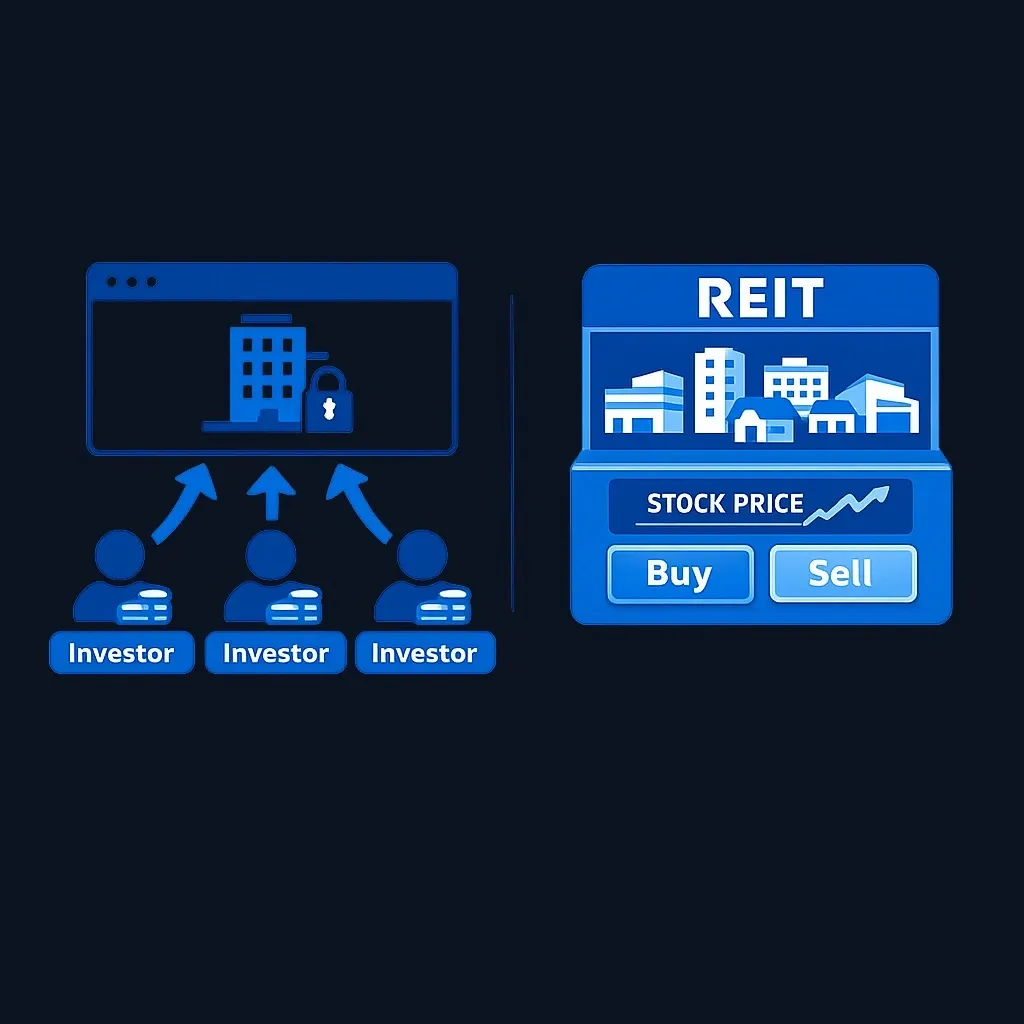
Real estate crowdfunding lets investors buy stakes in specific properties or loans through online platforms; it often offers more direct control and the potential for higher project-level returns but usually has longer lock-ups and platform risk Investor.gov. REITs are companies that own or finance property and trade like stocks, giving easier liquidity and passive exposure to diversified real estate portfolios Fidelity.
Note (educational): This content is educational, not financial advice. Investing involves risk, including loss of principal; verify costs, platform terms, and suitability before investing.
Side-by-side comparison table
| Criterion | Real estate crowdfunding | REITs |
|---|---|---|
| Typical liquidity | Often limited by project holding periods; any secondary-market option depends on the platform and offering. | Publicly traded REITs can be bought and sold on an exchange; non-traded and private REITs can be less liquid. |
| Minimum investment | Varies by platform and offering; some offerings also limit participation based on investor eligibility. | Public REITs can generally be purchased through a brokerage for the price of a share; REIT funds and ETFs have their own share prices and account minimums. |
| Fees | Platform, sponsor, acquisition, servicing, or disposition fees may apply; verify the offering documents. | A REIT has operating expenses, while a REIT fund or ETF also charges a stated expense ratio. |
| Return profile | Depends on a specific property, loan, sponsor, financing structure, and exit; projected returns are not guarantees. | Depends on property income, financing, management, and market prices; dividends and returns are not guaranteed. |
| Investment control | Many platforms allow investors to select a specific property or loan. | Investors select the REIT or fund but do not choose each underlying property. |
| Regulation and disclosure | Many offerings are securities and may use an SEC crowdfunding exemption; the disclosure regime depends on the offering Investor.gov. | Publicly traded REITs file public reports, while non-traded and private REITs have different liquidity and disclosure considerations Investor.gov. |
(Verify current minimums, fees, eligibility rules, and redemption terms in the official offering documents.)
Key differences, compressed
- Liquidity: Publicly traded REIT shares are generally easier to buy or sell; crowdfunding investments commonly have project holding periods.
- Control versus diversification: Crowdfunding can provide exposure to a specific asset, while many REITs hold multiple properties.
- Fees and structure vary widely by platform, REIT, and fund. Check the official fee schedule, prospectus, and offering documents.
What is Real Estate Crowdfunding?
Real estate crowdfunding is a way for multiple investors to pool capital online to finance property loans or equity stakes in specific projects. Many platforms offer access to single-property equity, development projects, or commercial mortgages, packaging each offering as a security that investors can buy Investor.gov.
How it works (mechanics)
- A sponsor or developer lists a deal on a platform and sells ownership shares or debt interests to investors.
- Investors review offering materials and (if they choose) commit capital to a single deal or a diversified portfolio the platform offers.
- Returns depend on the deal type: equity investors typically benefit from rent and appreciation; debt investors receive scheduled interest and principal repayments if the project performs.
- Some offerings require accredited-investor status, while others may be available to non-accredited investors under specific rules. Verify eligibility in the offering documents.
Practical example (worked-through scenario)
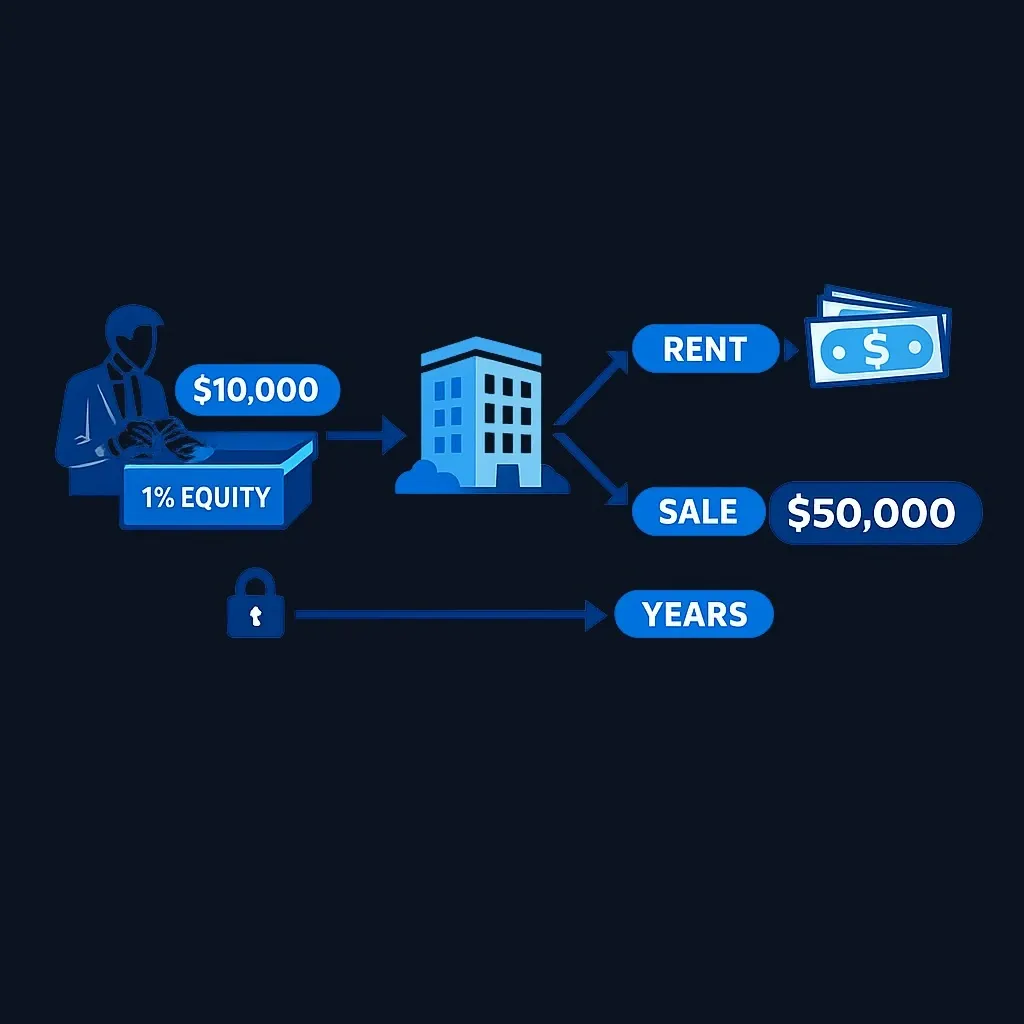
If a platform lists a redevelopment equity deal and you buy 1% of the equity, your cash flows depend on project-level rental income distributions and any sale proceeds after fees and debt service. Unlike a traded REIT position, your ability to exit before a liquidity event depends on the platform’s secondary market (if any) or sponsor buyout terms Investor.gov.
What are REITs?
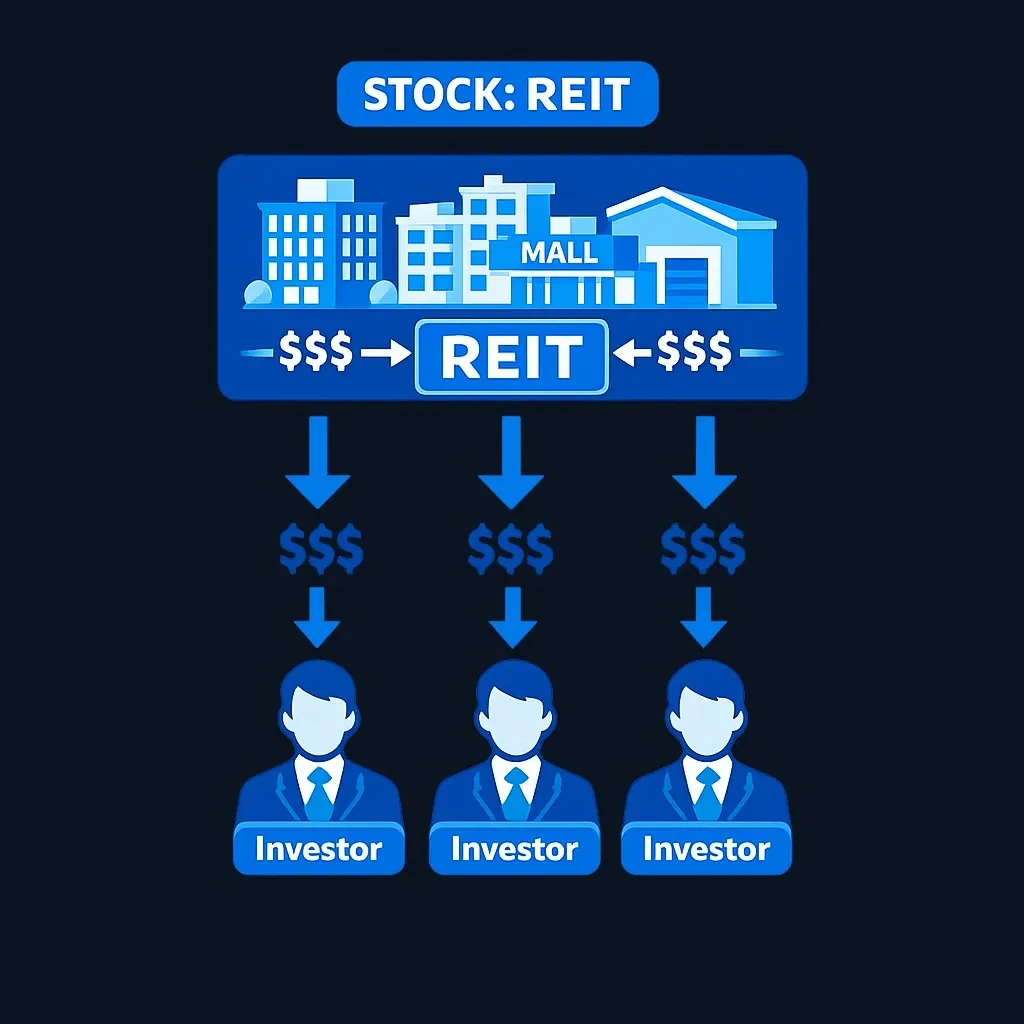
A Real Estate Investment Trust (REIT) is a company that owns, operates, or finances income-producing real estate. REITs let investors gain exposure to real estate without directly buying or managing properties; many trade on stock exchanges and are purchased like shares of any company Fidelity.
How REITs operate (high level)
- A REIT pools capital to buy or finance property and typically distributes income to shareholders.
- Publicly traded REITs must meet company and securities regulations and provide ongoing public disclosures; private REITs and non-traded REITs follow different regulatory and liquidity profiles Fidelity.
- Investors can access REIT exposure through individual shares, funds, or ETFs that hold baskets of REITs.
Investment Control and Transparency
Crowdfunding: many platforms let investors choose which projects to back, giving project-level control and visibility into the sponsor’s business plan, pro forma cash flow, and deal documents — but the depth and format of disclosures vary greatly by platform and offering Investor.gov.
REITs: public REITs provide standardized reporting and market-based pricing, which makes performance and governance information easier to compare across firms; investors have little to no say in the choice of underlying properties beyond selecting which REITs or funds to buy Fidelity. For investors who value active, deal-level selection, crowdfunding offers greater granularity; for those who prefer passive exposure and standardized disclosure, REITs are typically easier to monitor.
Minimum Investment Requirements
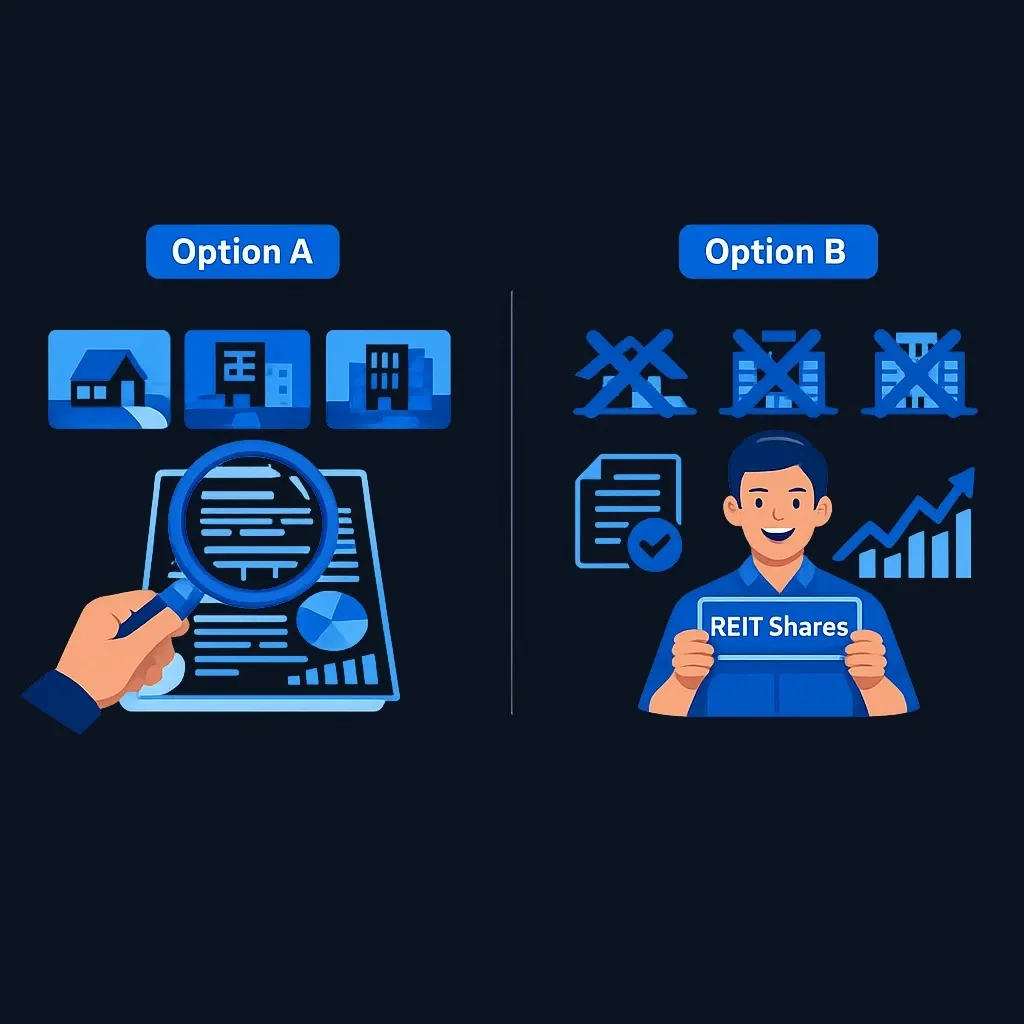
Minimums vary by product and platform, and some offerings require accredited-investor status. Public REITs and REIT ETFs can generally be purchased through a brokerage for the cost of one share, although brokerage and fund fees may apply. Verify current minimums, fees, and eligibility directly in the product’s official documents.
Risks and Considerations
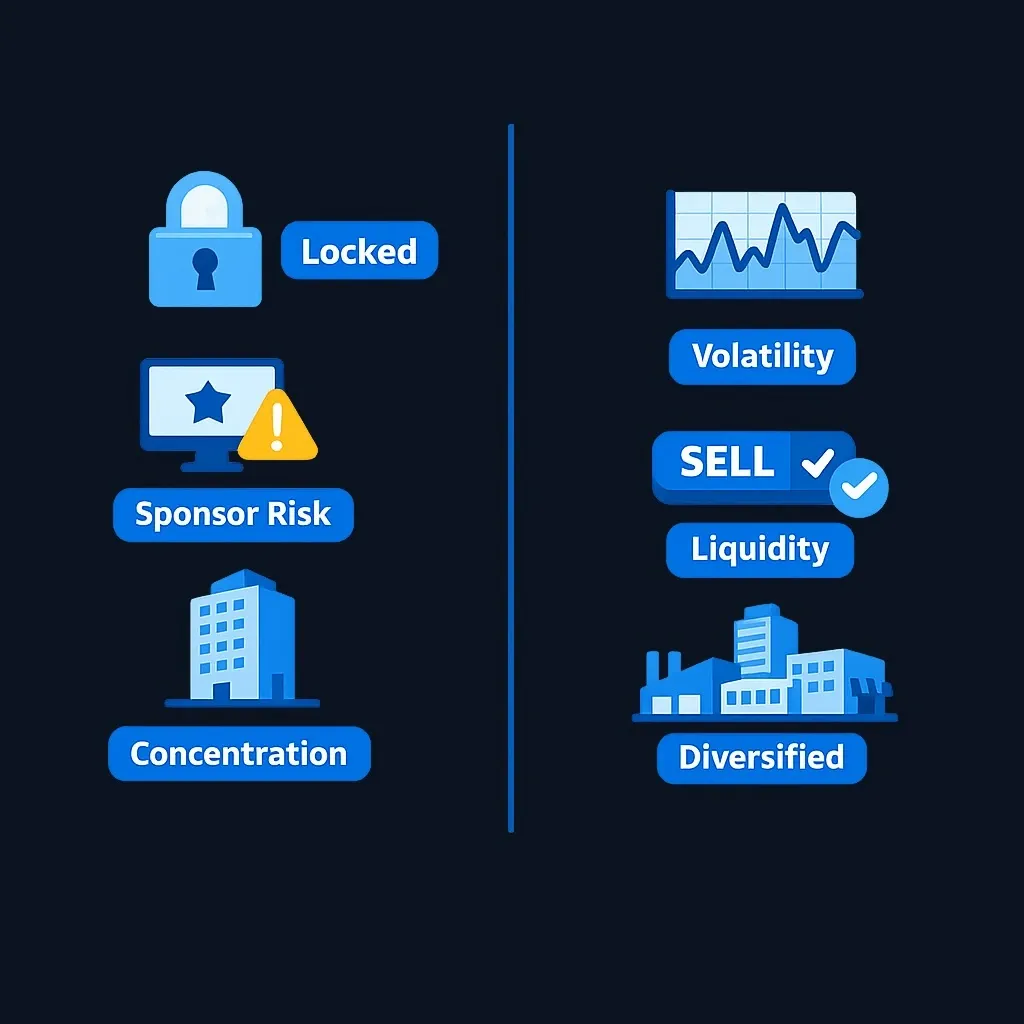
- Liquidity risk: Crowdfunding deals commonly have multi-year holding periods and limited secondary markets; public REITs are generally more liquid but remain subject to market volatility.
- Platform and sponsor risk: Crowdfunding depends on the platform and deal sponsor’s underwriting and execution; platform failure or poor sponsor performance can impair returns Investor.gov.
- Concentration risk: A single-project crowdfunding investment can be concentrated; many REITs hold broader portfolios, although sector or geographic concentration may remain.
- Fee and structure differences: Crowdfunding platforms and managers can charge fees that materially affect net returns; compare the official fee schedules closely.
- Regulatory differences: Crowdfunding offerings are securities and subject to SEC rules in many cases; public REITs follow public-company disclosure standards Investor.gov, Fidelity.
Practice investing with Finelo
Build practical investing skills with guided lessons, simulator practice, and structured challenges.
Decision criteria
Use these criteria as a checklist when evaluating which path fits your goals:
Liquidity needs
- If near-term access to cash is important, compare the exchange liquidity of a public REIT or REIT ETF with the stated holding and redemption terms of a crowdfunding offering.
Control and specificity
- Crowdfunding may provide more direct choice of a property type, location, or sponsor, while a REIT leaves property selection to management.
Diversification and portfolio fit
- Compare the number and type of underlying properties. A diversified REIT may spread property-specific risk more broadly than a single crowdfunding project.
Minimum capital and cost sensitivity
- Compare the current share price or account minimum with each crowdfunding offering’s minimum, fees, and eligibility rules.
Risk tolerance and time horizon
- Crowdfunding often requires a longer holding period and tolerance for project-specific risk. Public REITs can be easier to exit but remain exposed to market and real-estate cycles.
When to choose each option
Use these conditional scenarios to decide:
Crowdfunding may fit the comparison if
- You want project-level exposure and are comfortable with multi-year lock-ups, sponsor/platform risk, and concentrated positions Investor.gov.
- You can evaluate the sponsor, financing, fees, and deal economics and accept that projected returns may not occur.
REITs may fit the comparison if
- You need liquidity, passive management, and easier diversification across properties and geographies; publicly traded REITs provide exchange liquidity and standardized disclosure Fidelity.
- You prefer to access real estate through publicly reported vehicles and want easier price discovery and the ability to buy through tax-advantaged accounts.
(These are conditional educational scenarios, not investment recommendations.)
Tradeoffs and caveats
- Crowdfunding projections can be optimistic and are not guarantees; evaluate the assumptions, sponsor history, financing, and exit plan in the offering documents.
- REIT returns and dividends vary with property performance, financing costs, and market conditions; compare consistent time periods and methodologies.
- Fee transparency matters: crowdfunding platforms and private managers may charge acquisition, management, servicing, or disposition fees that reduce net returns.
- Regulatory and accreditation rules affect which offerings are available to you; confirm whether an offering requires accredited status and read the offering memorandum or prospectus Investor.gov.
FAQ
How does real estate crowdfunding work?
Real estate crowdfunding pools capital from multiple investors through an online platform to fund property purchases, developments, or loans. Many offerings are securities and fall under SEC-related disclosure and investor-protection rules Investor.gov.
Is real estate crowdfunding safe?
“Safe” depends on deal quality and your risk tolerance. Crowdfunding exposes investors to project, sponsor, and platform risks and often limited liquidity; review offering documents and platform disclosures carefully before investing Investor.gov.
How much do I need to start investing in crowdfunding or REITs?
Minimums vary by platform and offering, and some products require accredited-investor status. Public REITs can generally be purchased through a brokerage for the price of one share, plus any applicable brokerage or fund fees. Verify current terms in official product documents.
What are the advantages of investing in REITs?
REITs offer a way to gain diversified real estate exposure with professional management and, for publicly traded REITs, market liquidity and standardized reporting. They are often used for passive income and portfolio diversification Fidelity.
If you want a concise checklist to apply to a specific platform or REIT you’re considering, say which options you’re comparing and I’ll return a tailored decision checklist and questions to ask the sponsor or fund manager.
Sources and Further Verification
More from Finelo
- 1031 Exchange vs. Opportunity Zone: Key Differences
- 83(b) Election: Deadlines, Tax Risks, and When Early Filing May Fit
- After-Tax 401(k) vs. Roth 401(k): Key Differences
Disclaimer
This article is provided by Finelo for educational and informational purposes only. Finelo does not provide financial, investment, tax, legal, or insurance advice. Consider your circumstances and consult an appropriately qualified professional before making financial decisions.
InvestingBeginner GuideFinancial Education
Practice investing with Finelo
Build practical investing skills with guided lessons, simulator practice, and structured challenges.
About the author
Finelo Team
The Finelo Team creates practical investing and trading education designed to help beginners learn faster with structured challenges, simulator practice, and bite-sized lessons.
Keep reading — Related articles

Investing
Yield to Call vs Yield to Maturity: Assumptions and Bond Risks
Yield to call (YTC) estimates a bond's yield if the issuer redeems it on an eligible call date; yield to maturity (YTM) estimates yield if it remains outstanding to final maturity.
Finelo Team

Investing
Will My Employer Know If I Take a 401(k) Loan?
Who this page is for: readers new to 401(k) loans who want a practical, privacy‑focused explanation — what your employer can see, how to limit visibility, and the financial tradeoffs to weigh.
Finelo Team

Investing
What Medical Expenses Qualify for a 401(k) Hardship Withdrawal?
Before you decide, confirm three things with your plan administrator:
Finelo Team


