Last editorial review: September 8, 2026
REIT ETFs for Beginners: Costs, Risks, Income, and How to Compare Funds
A REIT ETF is an exchange-traded fund that pools shares of Real Estate Investment Trusts (REITs), giving investors liquid, diversified exposure to property income and capital returns through…
9 min read
Practice investing with Finelo
Build practical investing skills with guided lessons, simulator practice, and structured challenges.
Want to learn more?
Build practical investing skills with guided lessons, simulator practice, and structured challenges.
Explore FineloExplore Finelo's 28-day challenges
Turn learning into a daily habit with guided challenge paths.
U.S. scope: This article discusses U.S. institutions, financial products, tax rules, and dollar examples unless stated otherwise. Rules and product terms may change; verify current official guidance for your situation.
Quick answer
A REIT ETF is an exchange-traded fund that pools shares of Real Estate Investment Trusts (REITs), giving investors liquid, diversified exposure to property income and capital returns through a single ticker. Some REIT ETFs track broad REIT indexes while others are actively managed; at Schwab you can buy and sell REIT ETFs online with $0 commission as an example of how they trade like stocks Charles Schwab.
Introduction to REIT ETFs
A REIT ETF holds a basket of REIT stocks instead of individual companies, so one trade buys exposure to many property owners, operators, or real-estate-related firms. That bundling makes REIT ETFs a convenient way to access rental-derived income and real-estate price movements without owning or managing physical buildings. Some REIT ETFs replicate a stated index (passive) and others use portfolio managers to pick holdings (active); both deliver dividends and price returns determined by the underlying REITs minus the fund’s fees Charles Schwab.
What are REITs and How Do They Work?
Real Estate Investment Trusts (REITs) are companies that own, operate, or finance income-producing real estate. Many REITs specialize by sector—residential, industrial (warehouses, logistics), retail, office, healthcare, data centers, and specialized property types—and they earn revenue primarily from rents, leases, and property services.

How REIT ETFs turn REIT holdings into a fund
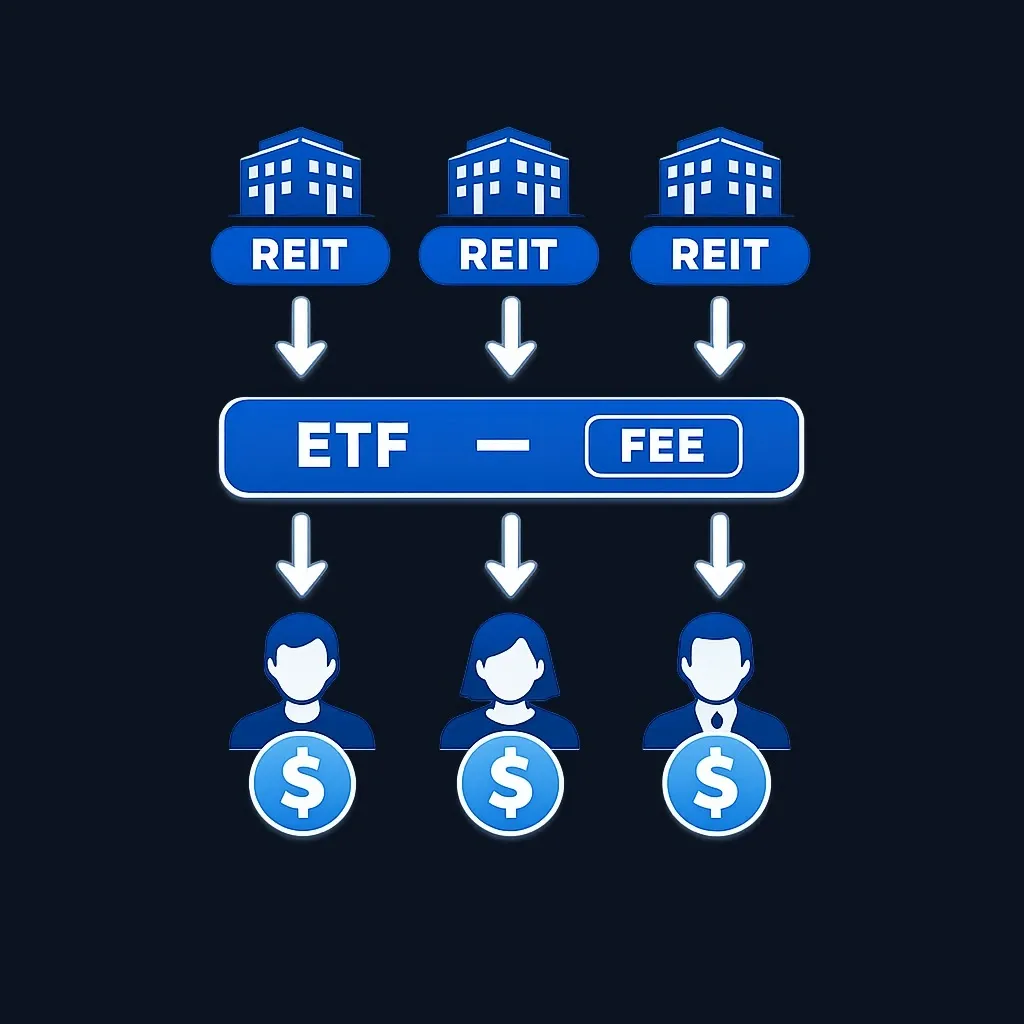
- The ETF holds shares of multiple REITs; shareholders own a slice of the pooled holdings. The ETF’s price moves with the aggregate performance of those REITs.
- Distributions from the underlying REITs are passed to the ETF and then usually to ETF shareholders as periodic dividends, after the ETF deducts its fees and expenses.
- Passive REIT ETFs follow an index by defined rules (market-cap weighting, caps, eligibility). Active REIT ETFs let managers select and weight holdings based on research and views about property fundamentals; each approach changes costs, turnover, and concentration risk.
Why investors use REITs and REIT ETFs
- Income: REITs typically generate regular dividend payments because their business models center on collecting rental and lease cash flows.
- Diversification: REITs offer exposure to assets (real estate) that often behave differently than broad equity markets.
- Access and liquidity: REIT ETFs trade intraday on exchanges, giving easier entry and exit than piecing together individual REIT positions.
For practical trading context, major brokerages support listed REITs and REIT ETFs—Schwab, for example, highlights REIT ETFs as tradable ETFs on its platform Charles Schwab.
What to know before deciding
This section groups the most important advantages, principal risks, and the tax considerations you should weigh before adding REIT ETFs to a portfolio.
Benefits investors commonly seek
- Diversified real-estate exposure in one trade: A single REIT ETF typically holds dozens to hundreds of REITs, reducing single-stock concentration risk compared with buying one REIT.
- Liquidity and intraday pricing: REIT ETFs trade like stocks, enabling market orders, limit orders, and intraday rebalancing.
- Income orientation: Because many REITs distribute large portions of cash flow as dividends, REIT ETFs tend to deliver higher regular distributions than many non-real-estate equity ETFs.
- Easy portfolio fit: REIT ETFs can be used in taxable accounts or tax-advantaged accounts and layered for sector or geographic tilts.
(Example source on ETF-format and trading: Charles Schwab) Charles Schwab.
Principal risks to understand
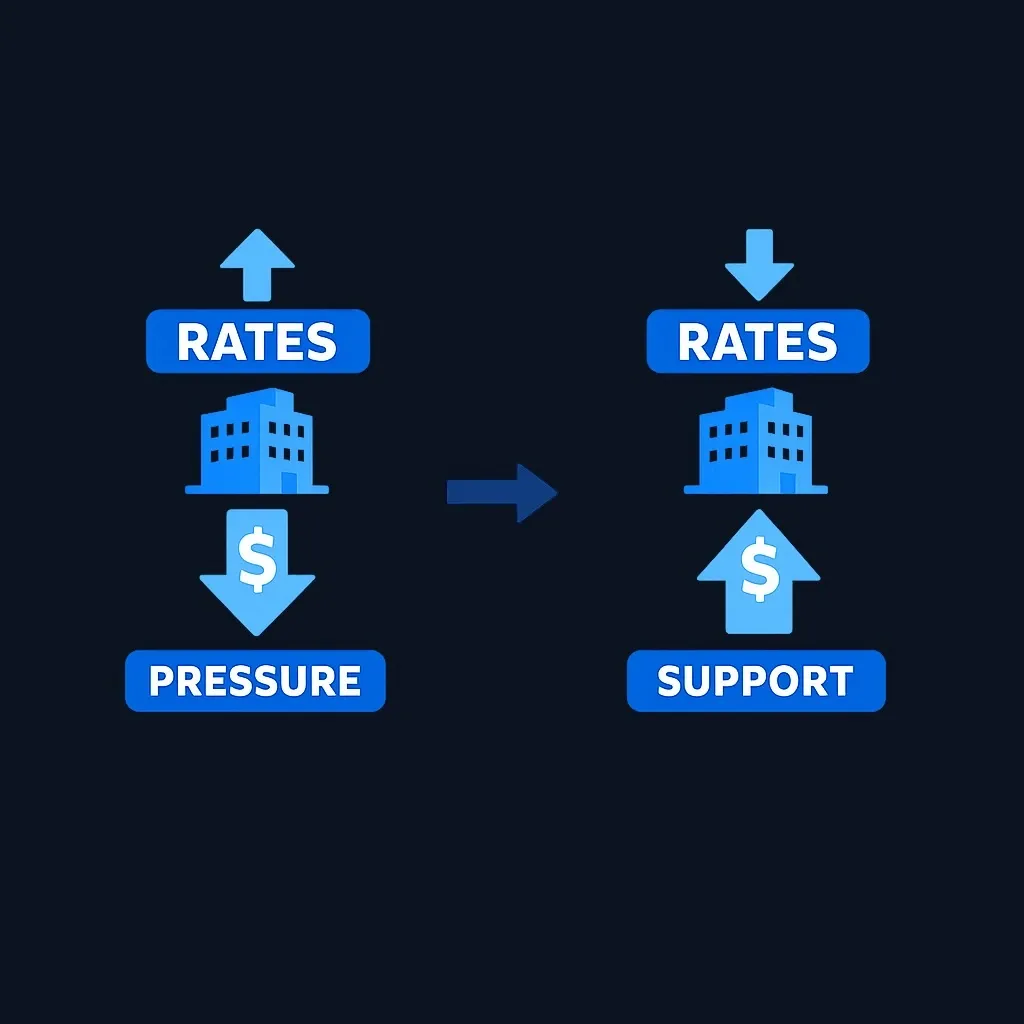
- Interest-rate sensitivity: REIT valuations can react to changes in interest rates because financing costs and competing yields may change. Review the interest-rate and real-estate risks in each fund’s official prospectus, such as the documents linked from the iShares IYR product page.
- Economic and sector cyclicality: Different property types perform differently across economic cycles—industrial and data-center REITs can behave very differently from office or retail REITs.
- Leverage and credit risk: Many REITs use debt to acquire properties; when cash flow weakens, leverage can amplify downside. Review the leverage and real-estate risk disclosures in each fund’s current prospectus, available through the issuer’s official page—for example, the Global X SRET fund page.
- Concentration and manager risk: Sector or actively managed REIT ETFs can concentrate holdings, increasing idiosyncratic risk if a manager’s bets underperform.
- Tax considerations (see next subsection): High distribution funds held in taxable accounts may have less tax efficiency than some other ETF types.
Tax considerations (educational)
REIT dividends can have different U.S. tax treatment from qualified stock dividends. Account type can therefore affect when and how distributions are taxed, but the result depends on the investor and the fund. Review the fund’s official tax documents and current IRS rules, and consider qualified tax advice for an individual decision. Investor.gov’s REIT overview summarizes the general tax distinction.
Educational note: This page is educational content from Finelo and not financial or investment advice. Investing involves risk of loss; verify fees, tax treatment, and fund suitability before acting.
Practical mistakes and how to avoid them
- Mistake: Chasing headline yields without checking payout sustainability. Fix: Read fund reports and study underlying occupancy and earnings.
- Mistake: Overconcentrating in a single property sector (e.g., office). Fix: Use a broad REIT ETF for core exposure or combine sector funds for diversification.
- Mistake: Holding a high-turnover active REIT ETF in a taxable account without reviewing tax docs. Fix: Check historical turnover and the fund’s tax reporting before placing it in a taxable account.
REIT ETF Examples and Categories to Research
The table combines nine named U.S.-listed fund examples with five broader categories for further research. It is not a ranking. Verify current expense ratios, yields, holdings, risks, and distribution schedules on each issuer’s official fund page and prospectus.
| Fund (ticker) | One-line focus |
|---|---|
| Vanguard Real Estate ETF (VNQ) | Broad U.S. equity REIT exposure |
| Schwab U.S. REIT ETF (SCHH) | U.S. equity REIT index exposure |
| iShares U.S. Real Estate ETF (IYR) | U.S. real-estate companies and REIT exposure |
| State Street Real Estate Select Sector SPDR ETF (XLRE) | U.S. real-estate sector exposure |
| State Street SPDR Dow Jones REIT ETF (RWR) | U.S. publicly traded REIT exposure |
| iShares Select U.S. REIT ETF (ICF) | Selected U.S. REIT exposure |
| iShares Global REIT ETF (REET) | Global REIT exposure |
| iShares Core U.S. REIT ETF (USRT) | Broad U.S. REIT exposure |
| Global X SuperDividend REIT ETF (SRET) | Global, income-oriented REIT exposure |
| Sector-focused REIT ETFs | Targeted exposure (industrial, data center, healthcare) |
| International / regional REIT ETFs | Non-U.S. property market exposure |
| Small-cap or factor-tilt REIT ETFs | Smaller-cap or value-tilted REIT exposure |
| Actively managed REIT ETFs | Manager-selected REIT holdings and sector tilts |
| ESG / sustainability REIT ETFs | REITs screened by ESG or sustainability criteria |
How to use this table
- Use each fund issuer’s official fact sheet and prospectus to confirm current expense ratio, top holdings, distribution frequency, and index methodology.
- Do not infer an index methodology from a fund name. Confirm the benchmark, eligible holdings, exclusions, and rebalancing rules in the issuer’s current prospectus and fact sheet.
Practice investing with Finelo
Build practical investing skills with guided lessons, simulator practice, and structured challenges.
Decision framework
This section helps you choose between active vs passive REIT ETFs and gives a step-by-step framework plus a worked example.
Active vs. Passive REIT ETFs: trade-offs
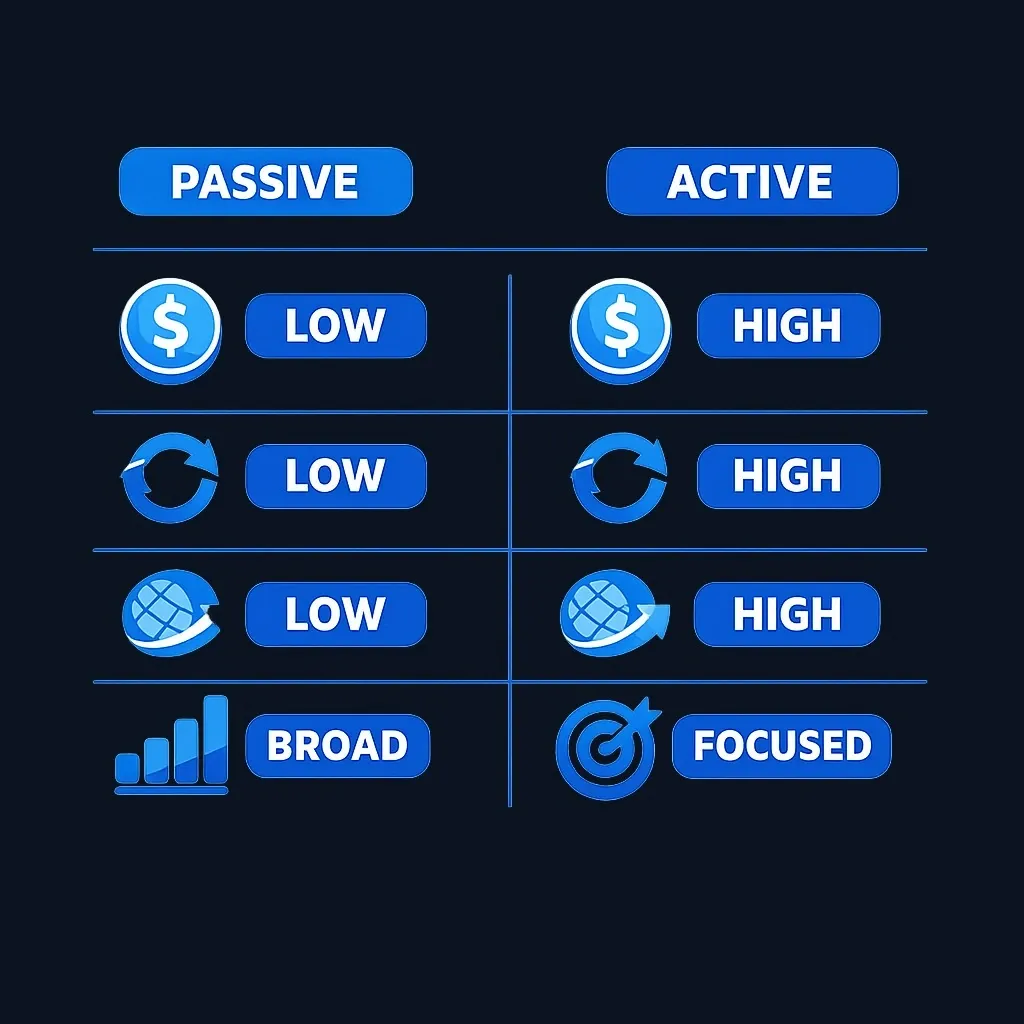
- Fees: Passive REIT ETFs typically have lower expense ratios; active ETFs charge more for managerial research. Compare the current expense ratio on the fund’s fact sheet before deciding.
- Turnover and tax efficiency: Active funds often show higher turnover, which can generate realized capital gains; passive funds generally have lower turnover and better tax efficiency in the fund wrapper.
- Concentration and potential outperformance: Active managers can overweight favored sectors or REITs, increasing potential outperformance or underperformance relative to an index.
- Suitability: Passive ETFs suit investors seeking low-cost, broad exposure; active ETFs suit investors willing to pay for manager skill or thematic tilts.
(See issuer disclosures and fund prospectuses for fee and turnover details.)
Practical decision checklist
- Clarify objective: current income, total return, or diversification? Income focus pushes toward higher-yielding funds; total-return focus suggests lower-cost broad-market funds.
- Define exposure: U.S. vs global, equity REITs vs mortgage REITs, sector tilts (industrial, healthcare, data centers).
- Compare costs: expense ratio, typical bid/ask spread, and trading liquidity. Lower net cost compounds over time.
- Distribution characteristics: monthly vs quarterly payouts; how distributions are taxed.
- Liquidity and tracking: check average daily volume and how closely passive funds track their index.
- Time horizon and tolerance for rate-driven volatility: REITs can be rate-sensitive; longer horizons often smooth short-term swings.
Worked example
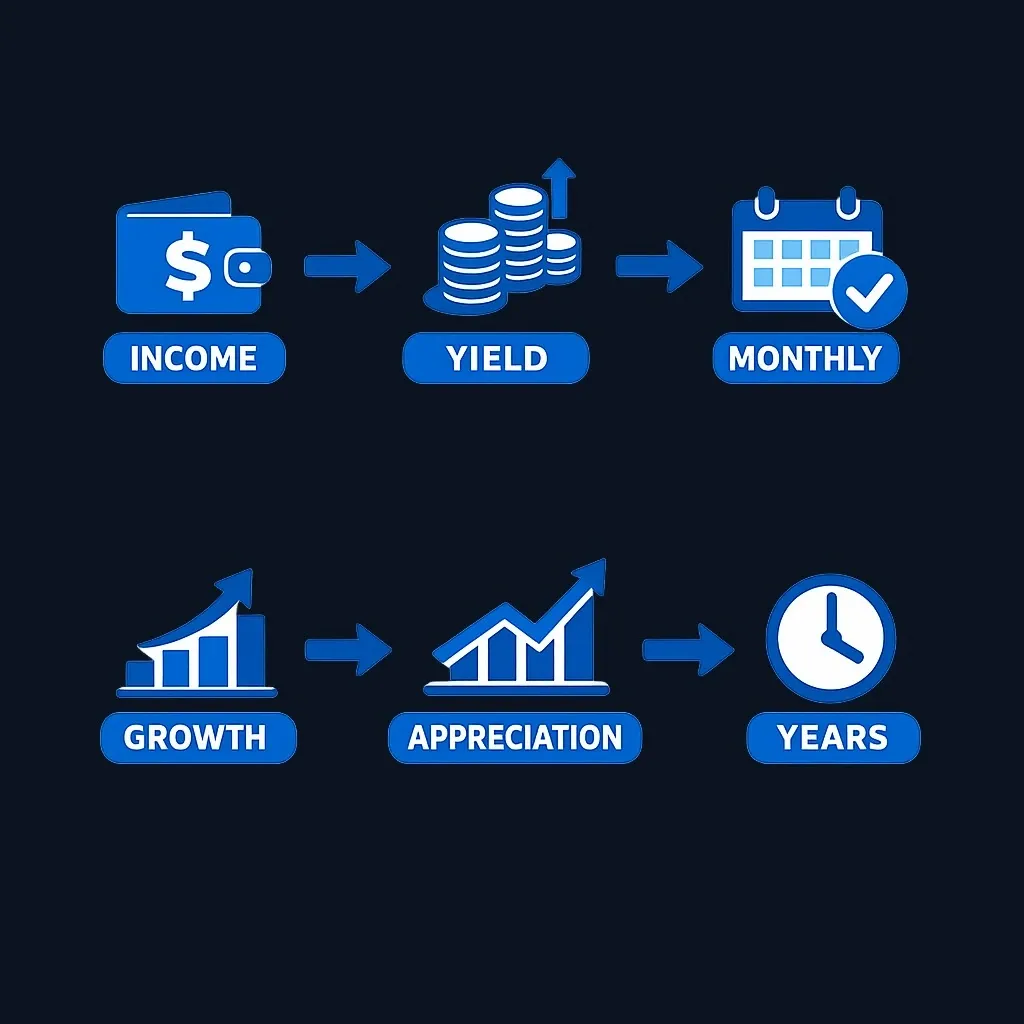
- Income-focused reader (shorter horizon): Compare broad and income-oriented REIT ETFs by distribution composition, consistency, underlying leverage, fees, and drawdowns. Evaluate account-level tax treatment separately for the investor’s circumstances.
- Long-horizon growth investor: Use a low-cost, broad REIT ETF (passive) for a core allocation, allowing property cycles and capital appreciation to compound over time.
Common mistakes and fixes
- Chasing highest yield: Check sustainability—look at occupancy, rental spreads, and payout coverage.
- Ignoring sector concentration: Combine a broad fund with a targeted sector fund only when you understand the correlation and risks.
- Overlooking tax character: Review fund tax documents and consider tax-advantaged wrappers for high-distribution funds.
FAQ
What is a REIT ETF?
A REIT ETF is an exchange-traded fund that invests in a basket of REIT stocks, providing diversified exposure to income-producing real estate through a single exchange‑traded ticker Charles Schwab.
How do REIT ETFs compare to owning physical real estate?
REIT ETFs provide liquidity, diversification, and lower operational complexity compared with direct real-estate ownership. They do not require property management but deliver exposure to the same economic drivers—rents and occupancy—filtered through public-market valuations and fund fees. Verify fund holdings and sector mix on the issuer’s fact sheet before assuming equivalence.
What are the main risks of investing in REIT ETFs?
Key risks include interest-rate sensitivity, sector cyclicality, leverage in underlying REITs, and manager or concentration risk for active or sector funds. Read each issuer’s current prospectus, holdings, and risk disclosures before comparing products.
How should I pick the best REIT ETF for my portfolio?
Start by defining your objective (income vs total return), desired exposure (U.S., global, sector), cost sensitivity (expense ratio and trading costs), and tax location (taxable vs tax-advantaged account). Use the decision checklist above and confirm current metrics on each fund’s official fact sheet and prospectus before investing.
Actionable next step: before buying, open the official fund fact sheet and prospectus for any REIT ETF you’re considering to confirm current expense ratio, holdings, distribution cadence, and index methodology.
Sources and Further Verification
More from Finelo
- Currency-Hedged ETFs: Costs, Risks, and When Hedging May Fit
- Private REIT vs. Public REIT: Key Differences
- REIT vs. Rental Property: Costs, Income, Liquidity, and Key Trade-Offs
Disclaimer
This article is provided by Finelo for educational and informational purposes only. Finelo does not provide financial, investment, tax, legal, or insurance advice. Consider your circumstances and consult an appropriately qualified professional before making financial decisions.
InvestingBeginner GuideFinancial Education
Practice investing with Finelo
Build practical investing skills with guided lessons, simulator practice, and structured challenges.
About the author
Finelo Team
The Finelo Team creates practical investing and trading education designed to help beginners learn faster with structured challenges, simulator practice, and bite-sized lessons.
Keep reading — Related articles

Investing
Yield to Call vs Yield to Maturity: Assumptions and Bond Risks
Yield to call (YTC) estimates a bond's yield if the issuer redeems it on an eligible call date; yield to maturity (YTM) estimates yield if it remains outstanding to final maturity.
Finelo Team

Investing
Will My Employer Know If I Take a 401(k) Loan?
Who this page is for: readers new to 401(k) loans who want a practical, privacy‑focused explanation — what your employer can see, how to limit visibility, and the financial tradeoffs to weigh.
Finelo Team

Investing
What Medical Expenses Qualify for a 401(k) Hardship Withdrawal?
Before you decide, confirm three things with your plan administrator:
Finelo Team