Last editorial review: September 8, 2026
Rule of 55 vs. 72(t): Access Rules, Taxes, and Key Differences
For a rule of 55 vs 72t comparison, the central difference is flexibility: the Rule of 55 may fit certain recent job separations, while 72(t) uses a strict scheduled-payment method.
12 min read
Practice investing with Finelo
Build practical investing skills with guided lessons, simulator practice, and structured challenges.
Want to learn more?
Build practical investing skills with guided lessons, simulator practice, and structured challenges.
Explore FineloExplore Finelo's 28-day challenges
Turn learning into a daily habit with guided challenge paths.
U.S. scope: This article discusses U.S. institutions, financial products, tax rules, and dollar examples unless stated otherwise. Rules and product terms may change; verify current official guidance for your situation.
For a rule of 55 vs 72t comparison, the central difference is flexibility: the Rule of 55 may fit certain recent job separations, while 72(t) uses a strict scheduled-payment method.
Quick comparison answer
The separation-from-service exception can remove the 10% additional early-distribution tax for qualifying distributions from a qualified employer plan when separation occurs during or after the calendar year the employee reaches age 55. It does not apply to IRAs, and separate, earlier thresholds can apply to certain public-safety employees and private-sector firefighters (IRS exceptions table). The plan must still permit the distribution. Rule 72(t), also called a SEPP arrangement, can provide a different penalty-exception path through substantially equal periodic payments, but it requires a prescribed payment schedule under IRS rules (IRS SEPP guidance).
Educational note: this comparison is for financial education, not financial or investment advice. Retirement withdrawals can create taxes, reduce future retirement assets, and involve loss.
How the Rule of 55 and 72(t) work
The Rule of 55 and Rule 72(t) solve the same broad problem: accessing retirement money before the usual penalty-free retirement age. They work in very different ways. The Rule of 55 is tied to employer retirement plan access after a qualifying job separation, while 72(t) uses substantially equal periodic payments under IRS rules IRS.
This page is for someone who already knows early withdrawals can be costly. You are comparing which exception might fit a retirement transition, career break, layoff, or income bridge. After reading, you should be able to evaluate eligibility, withdrawal flexibility, tax exposure, calculation complexity, and the mistakes that can turn a penalty exception into an expensive problem.
The short version: Rule of 55 is narrower but often more flexible. Rule 72(t) is broader in account access but more rigid once payments begin.
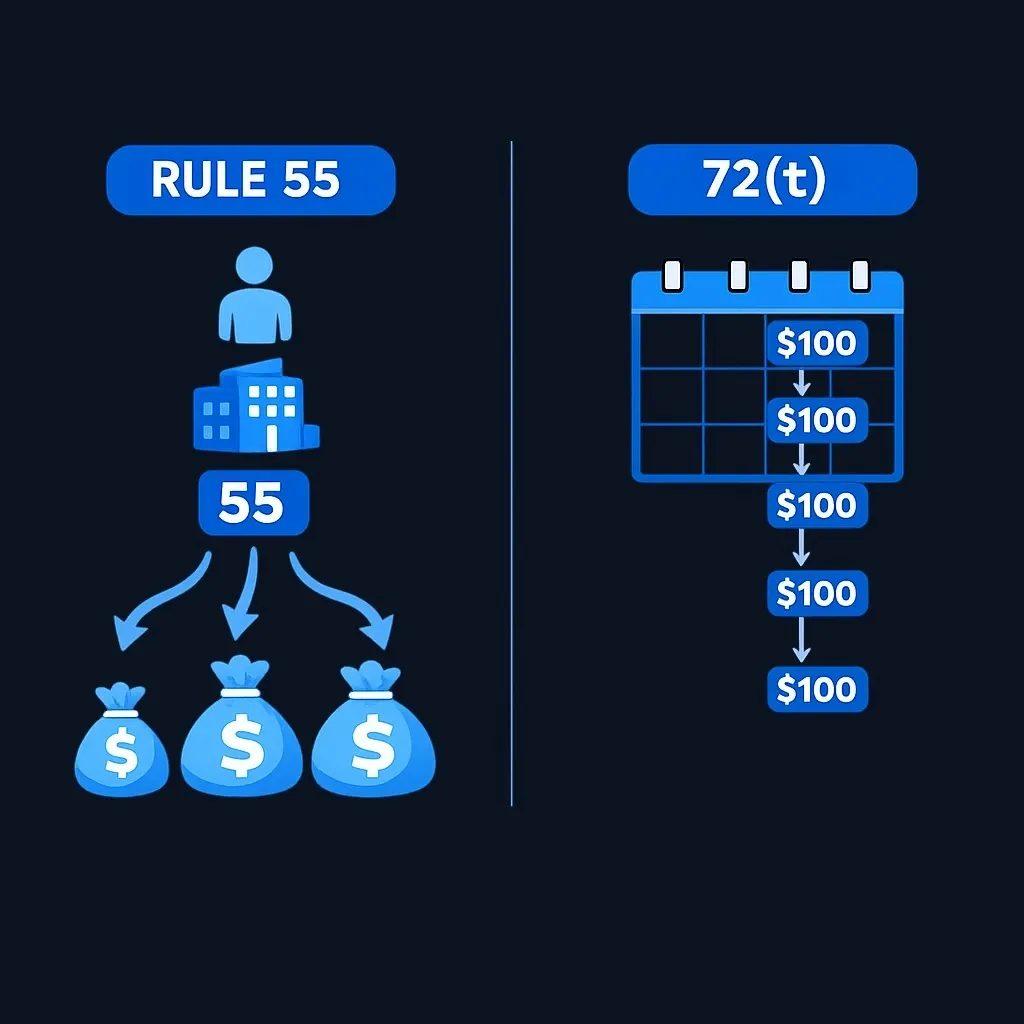
Side-by-side comparison table
| Decision point | Rule of 55 | Rule 72(t) / SEPP |
|---|---|---|
| Core purpose | Allows qualifying withdrawals from an employer retirement plan after a qualifying separation from service, as described in Fidelity’s Rule of 55 discussion Fidelity | Allows substantially equal periodic payments under IRS 72(t) rules IRS |
| Best fit | Someone who left a job in or after the year they turned 55 and has money in that employer plan Fidelity | Someone who needs structured early access and can follow a required payment schedule IRS |
| Account focus | Employer plan withdrawals, commonly discussed with 401(k) access Fidelity | Retirement accounts using substantially equal periodic payments under IRS rules IRS |
| Payment flexibility | Depends heavily on the employer plan’s distribution rules Fidelity | Payments must follow a SEPP calculation and schedule IRS |
| Calculation burden | Usually less calculation-heavy for the taxpayer, because plan rules drive distribution access Fidelity | More calculation-heavy; IRS examples use account balance, life expectancy, and method rules IRS |
| Main risk | Assuming the plan permits the withdrawal before confirming plan rules Fidelity | Modifying or stopping payments in a way that breaks SEPP rules IRS |
| Tax result | The penalty exception does not make the withdrawal tax-free; Fidelity notes federal and state income taxes can apply to taxable retirement amounts Fidelity | The SEPP structure addresses the early-distribution penalty, not whether taxable retirement income exists IRS |
The practical difference is control. With the Rule of 55, the first question is whether your employer plan allows the distribution. With 72(t), the first question is whether you can live with a calculated payment stream for the required period.
Decision criteria
Eligibility comes first
Start with the source of the money. If the assets are in the employer plan connected to a qualifying separation from service, the age-55 exception may be relevant. It does not extend to an IRA merely because money was rolled there, and the employer plan's distribution terms still control whether and how a payment is available (IRS exceptions table).
For 72(t), the defining feature is not a job separation. The defining feature is a series of substantially equal periodic payments under IRS rules IRS. That makes it useful for people who do not fit the Rule of 55 path, but it also creates a tighter compliance burden.
A useful first filter is simple: “Did I leave a job at the right time, and is the money in that employer plan?” If yes, investigate Rule of 55 first. If no, compare whether 72(t)’s rigidity is acceptable.
Withdrawal mechanics are very different
Under the Rule of 55, the employer plan controls the distribution process. That means you need the plan’s actual rules before assuming you can take partial withdrawals, repeated withdrawals, or a specific timing pattern Fidelity. A plan administrator can explain the process, but written plan language is more reliable than a phone summary.
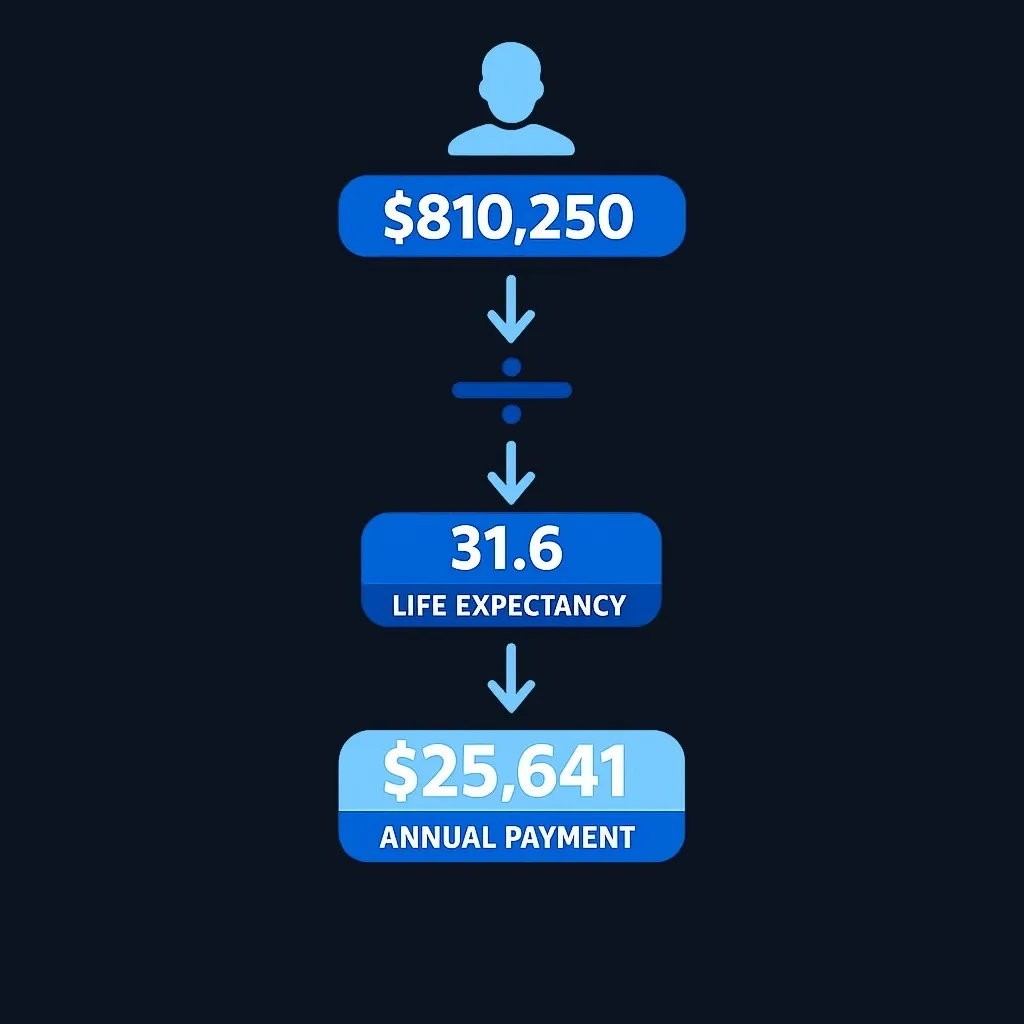
Under 72(t), the central issue is calculation. The IRS gives examples using account balance and life expectancy factors to determine an annual amount IRS. The IRS example in the supplied guidance uses an account balance of $810,250 and a single life expectancy of 31.6 for age 55 IRS.
Using only those example figures, the annual payment would be roughly $25,641 before taxes: $810,250 divided by 31.6. That is an illustration of the mechanics, not a recommended withdrawal amount. Your own calculation would depend on your balance, age, method, and current IRS guidance.
Taxes can still apply
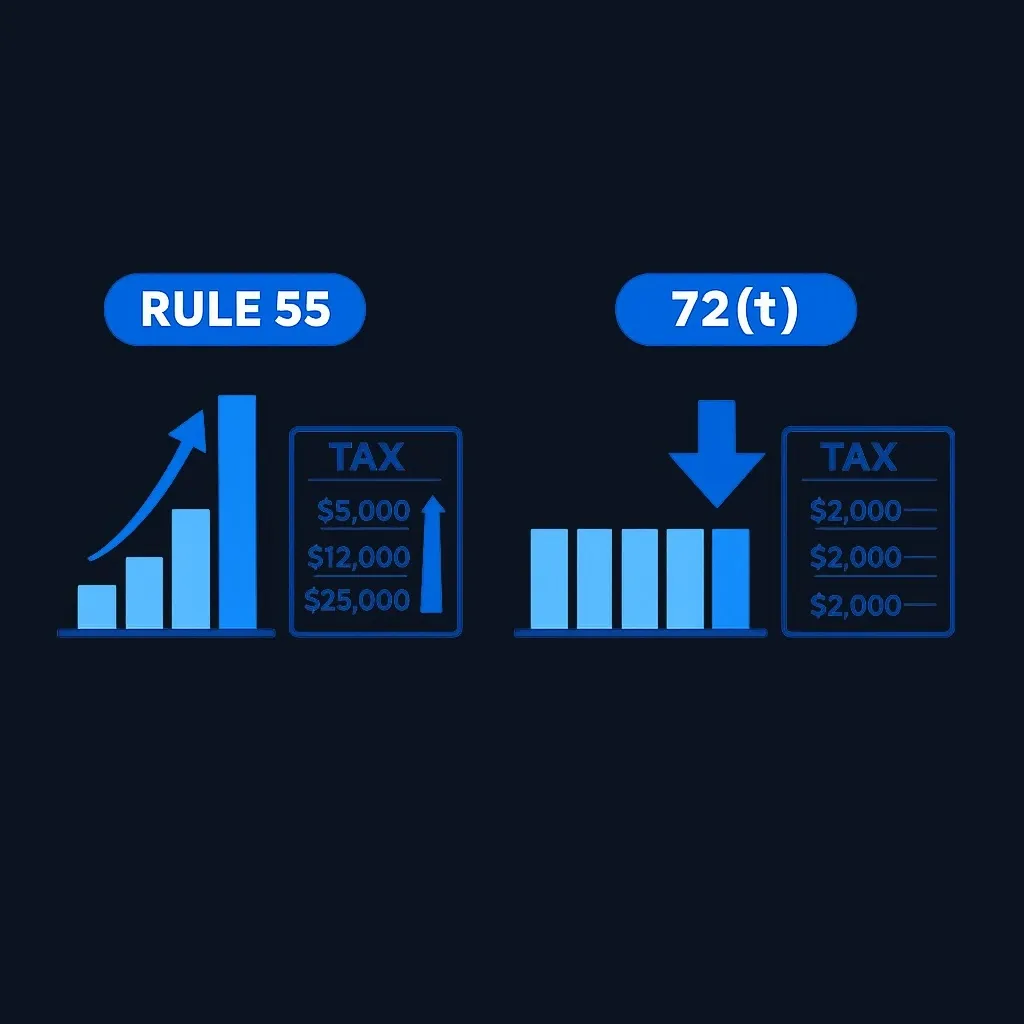
A penalty exception is not the same as a tax exemption. Fidelity notes that federal and state income taxes can apply to taxable retirement amounts Fidelity. That matters because an early withdrawal can solve a cash-flow problem while still raising your taxable income for the year.
This is where many comparisons get too shallow. The key question is not only, “Can I avoid the 10% early-withdrawal penalty?” It is also, “How much taxable income will this add, and how will that affect my full-year cash flow?”
For example, a person using the Rule of 55 for irregular living expenses may withdraw more in one year than planned. A person using 72(t) may have the opposite problem: the calculated payment may continue even when their need falls. Both can create tax and budgeting pressure.
Long-term retirement impact matters
Both routes spend retirement assets earlier than originally planned. That can reduce the money left invested and may affect later retirement flexibility. The exact impact depends on investment returns, timing, taxes, withdrawal size, and how long withdrawals continue.
Use a simple stress test before choosing either route. Compare three scenarios: the minimum amount needed, a comfortable amount, and a high-withdrawal case. Then ask whether each case still leaves enough retirement account resilience if markets are weak or expenses rise.
This is not about predicting the market. It is about seeing whether the withdrawal plan survives less favorable conditions.
When to choose each option
When the Rule of 55 may fit better
The Rule of 55 may fit when your need is tied to a recent job separation and the relevant money remains in that employer plan Fidelity. It can be especially appealing when you need flexibility rather than a rigid payment formula.
Consider a worker who leaves employment during the year they turn 56. They have a meaningful balance in that employer’s retirement plan and need a two-year bridge before other income begins. If the plan permits the needed distributions, the Rule of 55 may be simpler than setting up a SEPP schedule.
The main due diligence step is plan confirmation. Ask whether the plan allows the distribution type you need, how often withdrawals can be taken, and what tax withholding options apply. Get the answer in writing whenever possible.
When 72(t) may fit better
Rule 72(t) may fit when the Rule of 55 is unavailable or when the assets you need to access are not in the qualifying employer plan. The IRS framework allows substantially equal periodic payments, but the payments must be handled under IRS rules IRS.
Consider someone who leaves work before age 55 and needs predictable annual income. The Rule of 55 may not solve that timing issue. A SEPP arrangement may create an access path, but only if the person can commit to the payment schedule and calculation discipline.
This is where a bad fit can be costly. If your expenses are unpredictable, a fixed SEPP payment may be too rigid. If your expenses are stable, that same rigidity may help you avoid overspending.
A practical decision framework
Use this four-step framework before comparing dollar amounts:
- Confirm account location. Is the money in an employer plan, an IRA, or both?
- Confirm triggering event. Did separation from service create a Rule of 55 pathway?
- Confirm cash-flow pattern. Do you need flexible withdrawals or predictable payments?
- Confirm error tolerance. Can you maintain a SEPP schedule without accidental changes?
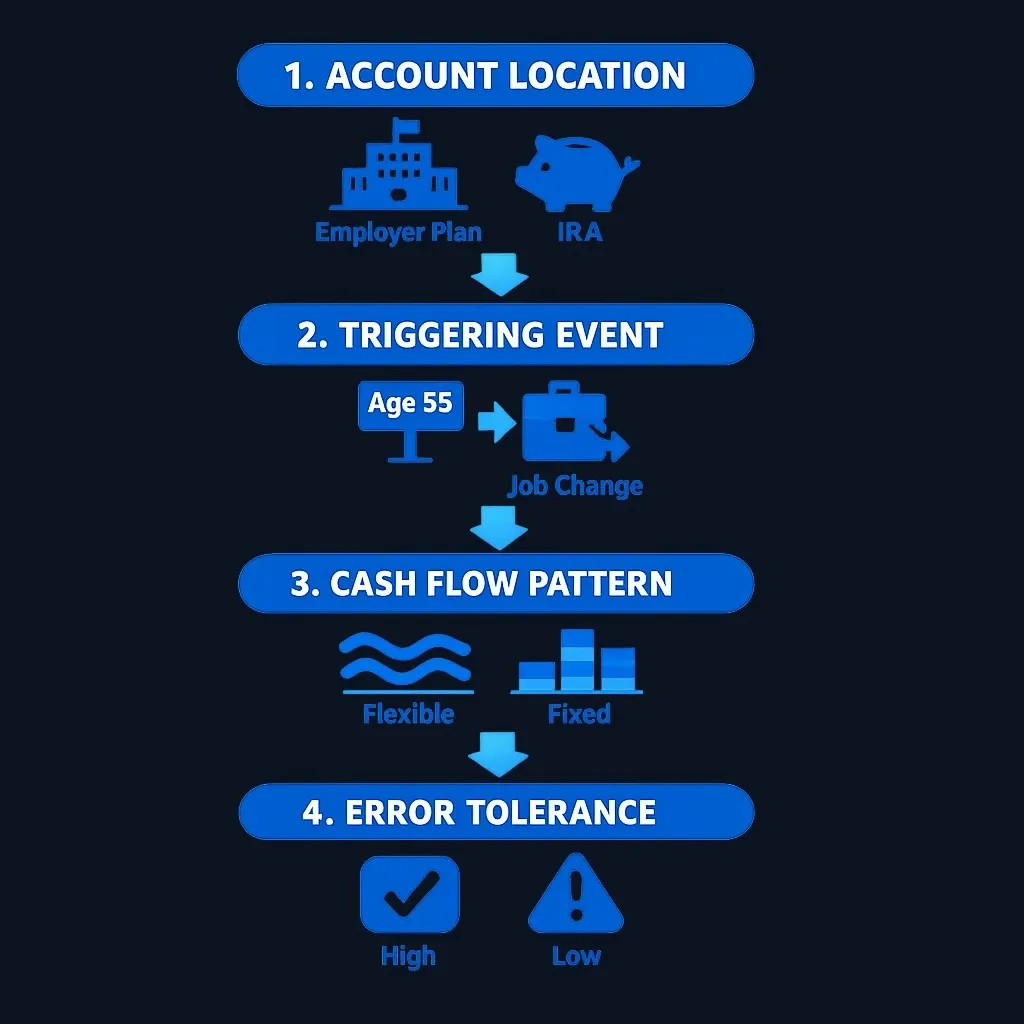
The comparison depends on those inputs. The separation-from-service exception can involve less ongoing calculation when it applies and the plan permits distributions. A 72(t) SEPP arrangement can address different account circumstances but creates a prescribed schedule and greater modification risk.
Practice investing with Finelo
Build practical investing skills with guided lessons, simulator practice, and structured challenges.
Tradeoffs and caveats
Advantages and disadvantages of the Rule of 55
The biggest advantage of the Rule of 55 is simplicity. If your facts match the rule and the employer plan permits the needed withdrawal, you may not need to build a long-term SEPP schedule Fidelity. That can make cash-flow planning easier during a short retirement bridge.
The disadvantage is limited access. The rule is tied to employer plan circumstances, not every retirement account you own. If most of your savings sit elsewhere, the Rule of 55 may not give you enough usable cash.
Another limitation is plan dependence. Two people with similar ages and balances may have different outcomes because their employer plans handle distributions differently. That is why plan documents belong near the top of your checklist.
Advantages and disadvantages of 72(t)
The biggest advantage of 72(t) is that it offers a formal early-access structure through substantially equal periodic payments IRS. It can be useful when the Rule of 55 is not available or does not cover the account you need.
The disadvantage is rigidity. The IRS rules focus on maintaining the SEPP arrangement, and the IRS provides examples involving method changes and recalculated annual amounts IRS. That level of structure can be useful, but it leaves less room for casual adjustments.
A second disadvantage is the calculation burden. Even a simple-looking example uses account balance, age, and life expectancy assumptions IRS. Small setup errors can create large tax problems later.
Common mistakes and how to avoid them
One common mistake is rolling money out of an employer plan before checking Rule of 55 eligibility. If the rule depends on that employer plan access, moving the money first can change the available options. Confirm the plan rules before initiating a rollover.
Another mistake is treating 72(t) like a flexible withdrawal strategy. It is not designed for casual, changeable withdrawals. It is a substantially equal periodic payment structure under IRS rules IRS.
A third mistake is comparing only penalty treatment. Taxes, cash-flow needs, investment risk, and account longevity also matter. A penalty-free withdrawal can still be a poor fit if it drains too much of the retirement account too early.
Copy-and-save eligibility checklist
Use this checklist before requesting a distribution or setting up SEPP payments:
- What account will fund the withdrawal?
- Is the money in an employer retirement plan, IRA, or both?
- Did you separate from service in a way that makes the Rule of 55 relevant? Fidelity
- Does the employer plan allow the distribution type you need? Fidelity
- If using 72(t), what calculation method and payment amount will apply? IRS
- Can your budget handle the SEPP payment schedule without changes?
- Have you estimated federal and state tax effects? Fidelity
- Have you modeled how withdrawals affect later retirement assets?

FAQ
What are the eligibility requirements for the Rule of 55?
The Rule of 55 is commonly discussed for people who separate from service in or after the year they turn 55 and want access to an employer retirement plan, such as a 401(k) Fidelity. The plan’s own distribution rules matter, so confirm the details with the plan document.
How do I calculate withdrawals under Rule 72(t)?
A 72(t) arrangement uses substantially equal periodic payments under IRS rules IRS. IRS examples show calculations using account balance and life expectancy factors, such as $810,250 divided by 31.6 in one RMD-method example IRS.
What are the tax implications of early withdrawals?
The main distinction is between penalty treatment and income tax treatment. Fidelity notes that federal and state income taxes can apply to taxable retirement amounts, even when an early-withdrawal exception is involved Fidelity.
Can I switch from 72(t) to another withdrawal method later?
The IRS describes a special one-time change to the RMD method in its SEPP guidance IRS. Because SEPP changes can be sensitive, verify the current IRS rules before modifying payments.
Conclusion and next steps
Rule of 55 vs. 72(t) is mainly a question of eligibility, flexibility, and error risk. If you qualify through a recent employer plan, the Rule of 55 may be simpler. If you need another access route, 72(t) may work, but it requires careful calculation and discipline.
Before acting, gather your plan document, account balances, estimated spending needs, and tax assumptions. Then compare a low, expected, and high withdrawal scenario. That gives you a clearer view of whether early access solves a short-term need without creating a long-term retirement problem.
Sources and Further Verification
More from Finelo
- 1031 Exchange vs. Opportunity Zone: Key Differences
- 83(b) Election: Deadlines, Tax Risks, and When Early Filing May Fit
- After-Tax 401(k) vs. Roth 401(k): Key Differences
Disclaimer
This article is provided by Finelo for educational and informational purposes only. Finelo does not provide financial, investment, tax, legal, or insurance advice. Consider your circumstances and consult an appropriately qualified professional before making financial decisions.
InvestingBeginner GuideFinancial Education
Practice investing with Finelo
Build practical investing skills with guided lessons, simulator practice, and structured challenges.
About the author
Finelo Team
The Finelo Team creates practical investing and trading education designed to help beginners learn faster with structured challenges, simulator practice, and bite-sized lessons.
Keep reading — Related articles

Investing
Yield to Call vs Yield to Maturity: Assumptions and Bond Risks
Yield to call (YTC) estimates a bond's yield if the issuer redeems it on an eligible call date; yield to maturity (YTM) estimates yield if it remains outstanding to final maturity.
Finelo Team

Investing
Will My Employer Know If I Take a 401(k) Loan?
Who this page is for: readers new to 401(k) loans who want a practical, privacy‑focused explanation — what your employer can see, how to limit visibility, and the financial tradeoffs to weigh.
Finelo Team

Investing
What Medical Expenses Qualify for a 401(k) Hardship Withdrawal?
Before you decide, confirm three things with your plan administrator:
Finelo Team


