Last editorial review: September 8, 2026
What Happens to a 401(k) in Divorce? QDRO Rules, Taxes, and Options

If you are asking what happens to 401k in divorce, the practical answer is that some retirement savings may be divided through a court-approved process, while state law and plan rules…
10 min read
Practice investing with Finelo
Build practical investing skills with guided lessons, simulator practice, and structured challenges.
Want to learn more?
Build practical investing skills with guided lessons, simulator practice, and structured challenges.
Explore FineloExplore Finelo's 28-day challenges
Turn learning into a daily habit with guided challenge paths.
U.S. scope: This article discusses U.S. institutions, financial products, tax rules, and dollar examples unless stated otherwise. Rules and product terms may change; verify current official guidance for your situation.
If you are asking what happens to 401k in divorce, the practical answer is that some retirement savings may be divided through a court-approved process, while state law and plan rules determine the details.
Quick answer
In a divorce, a 401(k) can be divided as part of the settlement, but a divorce decree alone does not automatically direct the plan to pay an alternate payee. A state domestic-relations order must satisfy federal requirements and be determined “qualified” by the plan administrator before it is a QDRO the plan can implement (U.S. Department of Labor).
The key point: a 401(k) usually does not split itself automatically. The divorce agreement, court paperwork, retirement plan rules, and tax handling all matter. Before moving money, treat this as an educational starting point, not legal, tax, financial, or investment advice. Retirement and investing decisions can involve loss.
Who this is for
This page is for someone who is divorcing, recently divorced, or helping a family member understand what may happen to a 401(k). You may be trying to find the account value, understand whether your spouse has a claim, or prepare questions for an attorney.
It is especially useful if you need a practical way to think through the process before a legal or tax meeting. You will leave with a clearer view of:
- How a 401(k) may be handled in settlement talks.
- Why a QDRO may be needed.
- Which documents to gather.
- What to ask before choosing a transfer, rollover, or distribution path.
- Where state rules, plan rules, and tax risk can change the result.
Practical takeaway: do not wait until the final divorce decree to understand the retirement accounts. Ask for current statements early, including the balance during the marriage and any relevant account history.
Key benefits
Understanding 401(k) division early helps you avoid three common problems: vague settlement language, surprise tax questions, and delayed plan processing. A settlement can say one spouse gets part of the other spouse’s retirement account, but the retirement plan still needs workable instructions before money can move.
A simple decision framework can help:
| Decision point | Why it matters | Practical question to ask |
|---|---|---|
| Account value | The settlement depends on what the account is worth and when it is measured. | “Which statement date or valuation date are we using?” |
| Marital portion | Some of the account may relate to work during the marriage. | “How are contributions before, during, and after marriage being handled?” |
| Payment method | Receiving money as retirement assets is different from taking cash. | “Will this be a transfer, rollover, or distribution?” |
| Plan paperwork | The plan may reject unclear or incomplete instructions. | “Does the plan have model QDRO language?” |
| Tax review | The delivery method can affect taxes. | “Who is reviewing the tax impact before anything is paid?” |
Example: if one spouse kept working while the other was not employed, the working spouse may have the only 401(k). That does not mean the account is ignored. The settlement may still account for retirement savings accumulated during the marriage, and Charles Schwab notes that a higher-balance spouse may need to transfer funds to the other spouse’s account as part of the settlement Charles Schwab.
Practical takeaway: focus on the structure, not only the headline number. A clean transfer process can matter as much as the percentage split.
How it works
How 401(k) accounts are divided in divorce
A 401(k) division usually starts with the divorce settlement. The spouses, their attorneys, or the court determine how retirement assets fit with the rest of the marital estate. A transfer from the spouse with the higher balance may be required under the settlement Charles Schwab.
The division may be expressed as a percentage, a fixed dollar amount, or an offset against another asset. For example, one spouse might keep more home equity while the other keeps more retirement savings. That tradeoff needs careful review because a retirement account and a house do not behave the same way.
Practical takeaway: compare assets by after-tax use, liquidity, risk, and timing. Equal dollar amounts on paper may not feel equal later.
What a QDRO is and how it works
A Qualified Domestic Relations Order, often shortened to QDRO, is a domestic-relations order that creates or recognizes an alternate payee's right to receive all or part of a participant's plan benefits and satisfies federal requirements. The plan administrator—not merely the court or the parties—must determine whether the order is qualified (U.S. Department of Labor).
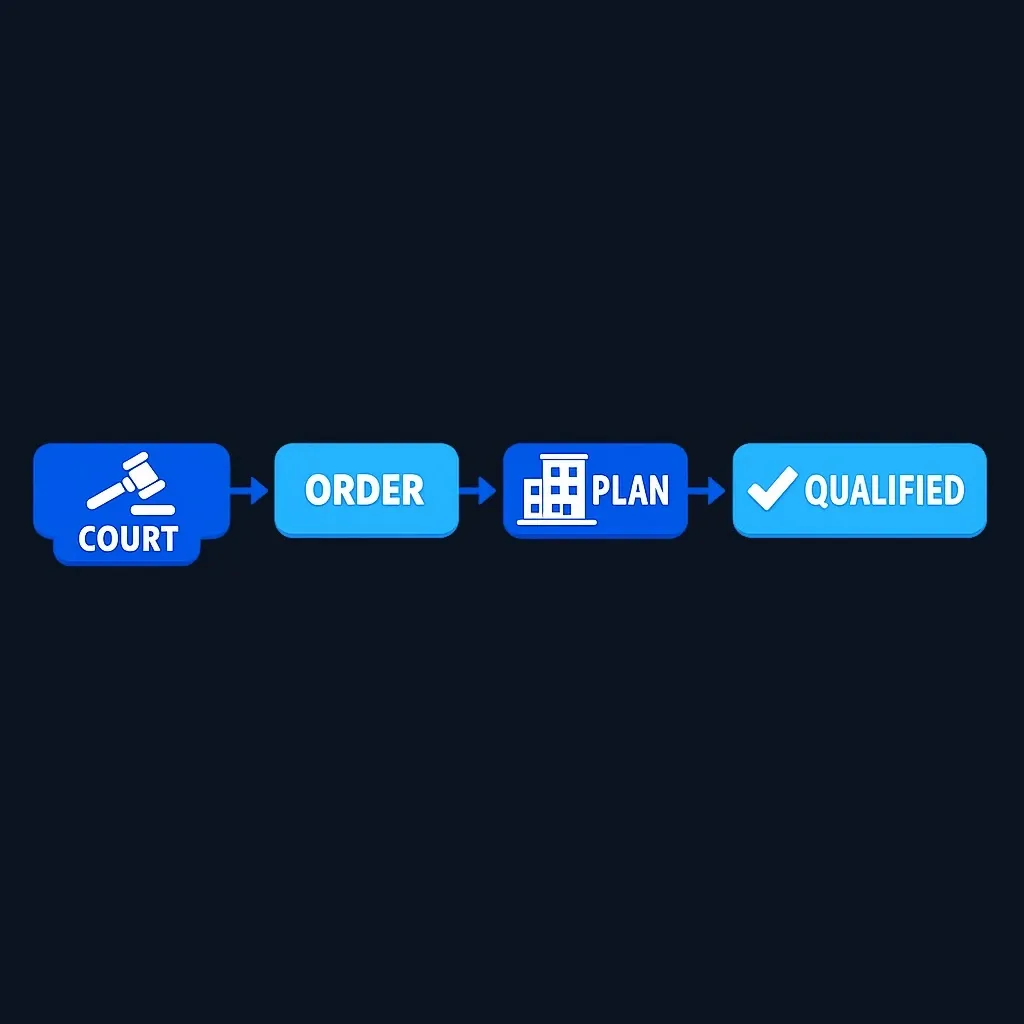
A QDRO-style process usually follows this flow:
- The settlement describes who receives what.
- A separate retirement order is drafted.
- The court or authorized state agency enters the order.
- The order is sent to the plan administrator.
- The plan follows its QDRO procedures and determines whether the order is qualified.
- Only after qualification does the plan process benefits under the order.
Example: the divorce agreement might say a former spouse receives a percentage of the 401(k) balance tied to a specific date. If the order fails to define the date, the plan may need clarification before it can act.
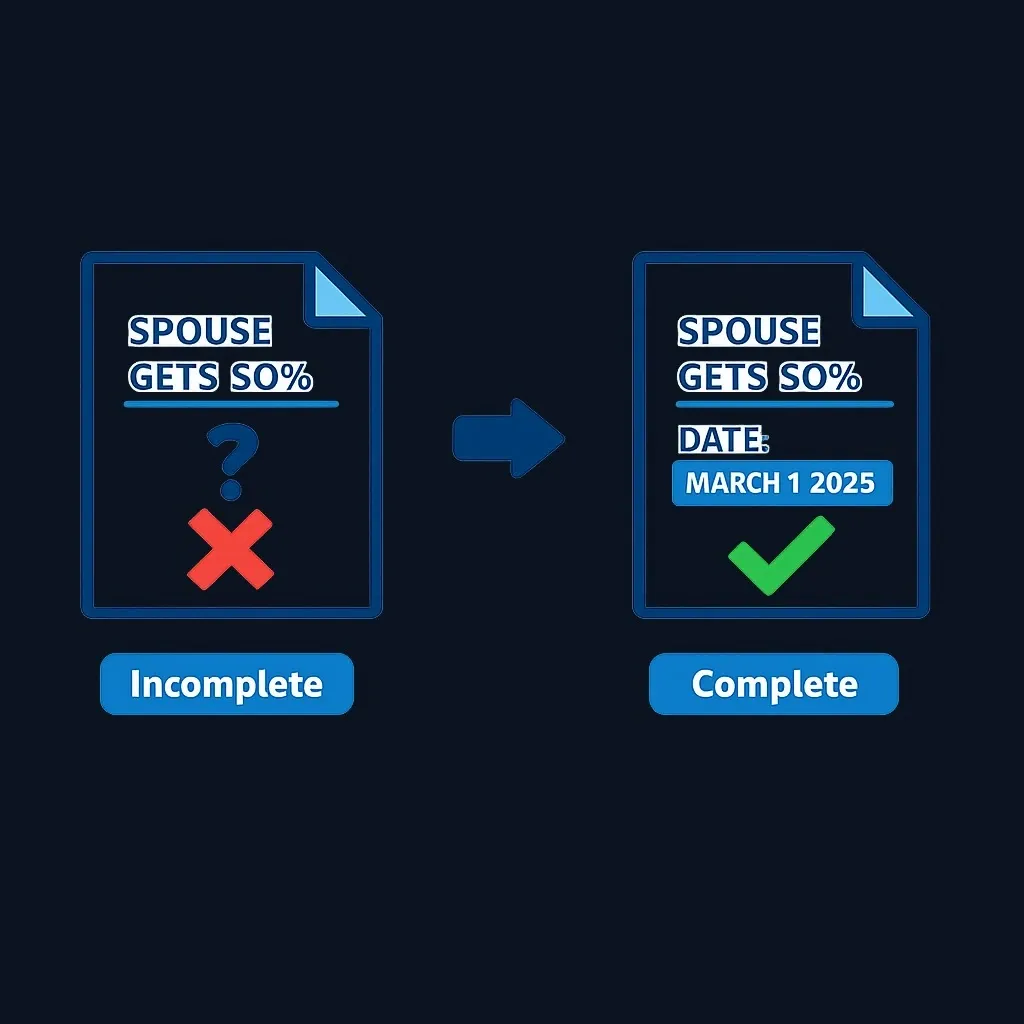
Practical takeaway: request the plan's written QDRO procedures and any model language early. Model language is not a substitute for legal review, and the plan can reject an order that requires a benefit type, amount, or option the plan does not provide (IRS).
State laws and settlement design
State law can affect what part of a 401(k) is considered divisible and how the value is allocated. The plan then applies its own administrative rules to the order it receives. That means the same account can create different negotiation issues depending on the state, the marriage timeline, and the plan’s requirements.
Here is a practical way to compare outcomes without relying on guesswork:
| Scenario | Settlement issue | Possible complication |
|---|---|---|
| Contributions began before marriage | Only part of the balance may be connected to the marriage. | The order may need a formula or cutoff date. |
| One spouse stopped working | Retirement savings may be concentrated in one name. | The settlement may need to balance retirement value against other assets. |
| Account changed employers | Records may be split across old and current plans. | Statements and rollover history may be needed. |
| Spouse refuses to cooperate | Information or signatures may be delayed. | Attorney involvement may be needed to enforce disclosure or orders. |
Example: suppose Spouse A worked throughout the marriage and Spouse B stayed home to care for children. The 401(k) may be in Spouse A’s name only, but the divorce settlement may still address retirement value. The final result depends on the settlement, state rules, and acceptable plan paperwork.
Practical takeaway: separate the legal question from the administrative question. Your attorney handles the divorce rights; the plan administrator handles whether the order can be processed.
Tax implications to check before money moves
Tax treatment depends on who receives the payment and whether it is rolled over. IRS guidance states that a spouse or former spouse who receives an eligible distribution under a QDRO generally reports it as though they were the plan participant and may be able to roll over all or part tax-free. Payments made for a child or other dependent are generally taxed to the plan participant (IRS). Do not assume that “getting your share” and “cashing out your share” are the same event.
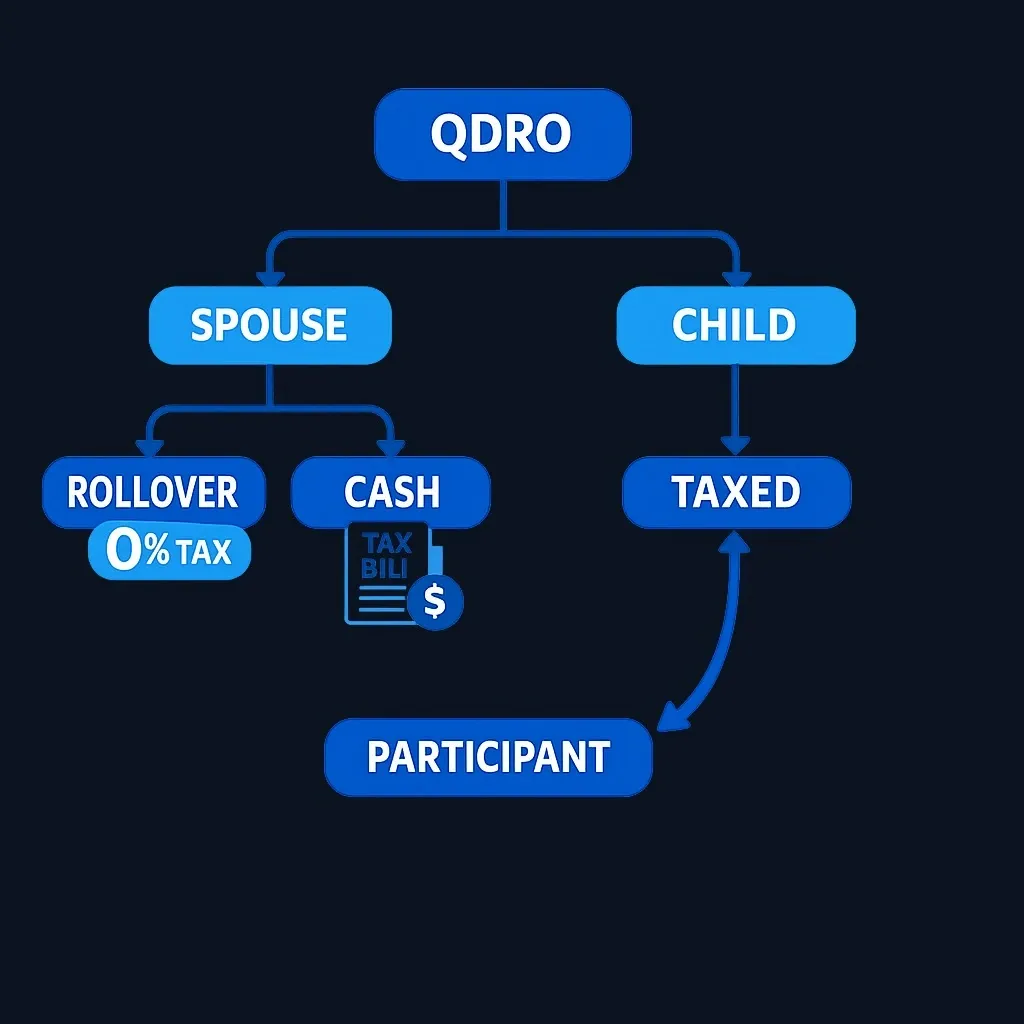
Before finalizing the delivery method, ask:
- Will the receiving spouse keep the funds in retirement form?
- Is a rollover available?
- Would taking cash create current taxable income?
- Are there penalties, withholding, or reporting requirements?
- Who is responsible for reviewing the tax outcome?
Example: a spouse who needs short-term cash may be tempted to request a distribution. That may solve one problem while creating another. A tax professional can compare the cash option with retirement-account transfer options before the order is finalized.
Practical takeaway: decide the tax path before the plan processes the order, not after.
Post-divorce checklist for your 401(k)
Use this checklist once the settlement terms are clear:
- Gather recent statements for every retirement account.
- Find statements from the marriage period if available.
- Confirm the valuation date used in the settlement.
- Ask whether a QDRO or similar retirement order is needed.
- Request the plan’s order requirements or model language.
- Review the tax handling before choosing cash or rollover treatment.
- Keep copies of the divorce decree, retirement order, plan submissions, and account confirmations.
- Update beneficiary designations where appropriate after legal review.
- Track whether the transfer was completed, rejected, or still pending.
Practical takeaway: treat the retirement split as unfinished until the plan confirms completion. A signed divorce decree may not be the final administrative step.
Practice investing with Finelo
Build practical investing skills with guided lessons, simulator practice, and structured challenges.
Worked examples and common questions
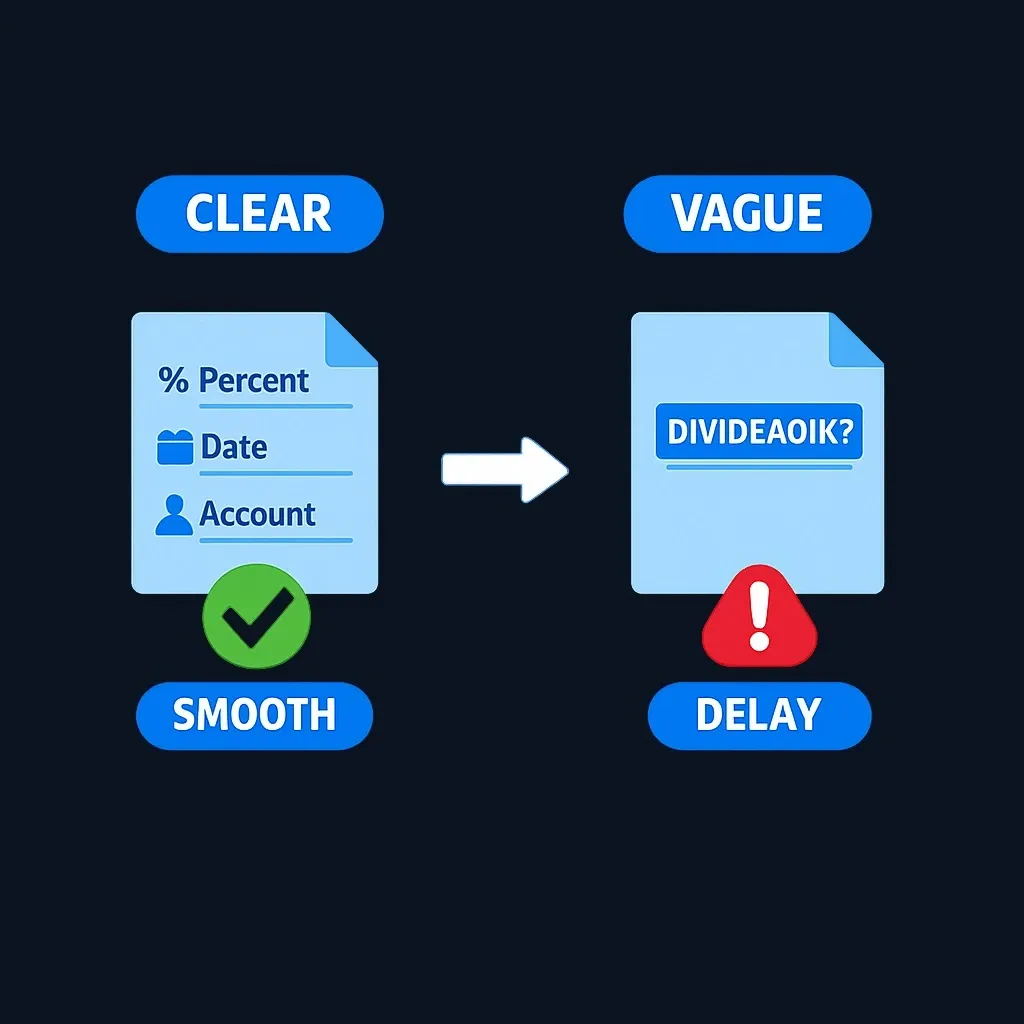
Worked example: clear order versus vague order
Imagine two couples with similar 401(k) balances.
In the first case, the settlement states the percentage, valuation date, and account being divided. The retirement order mirrors that language, and the plan has a clear instruction set. The process still requires review, but everyone knows what the order is trying to do.
In the second case, the settlement says only that the spouses will “divide the 401(k).” It does not name the plan, date, formula, or payment method. That creates room for disagreement and may force additional drafting.
Practical takeaway: vague language can turn a settled issue into a post-divorce project.
Objection: “The 401(k) is only in my name, so it is mine”
The account title matters for administration, but it may not end the divorce analysis. Retirement savings can still be addressed in a settlement, and the spouse with the higher balance may need to transfer funds to the other spouse’s account as part of the agreement Charles Schwab.
Practical takeaway: do not rely on whose name appears on the statement. Ask how the account fits into the full marital estate.
Objection: “We can just split it later”
Waiting can create avoidable confusion. Account values move, employment changes, plans merge, and records become harder to find. Even if both spouses are cooperative today, future paperwork may still require exact terms.
Practical takeaway: settle the formula, date, and payment method while the divorce file is active.
Objection: “My spouse will not cooperate”
If a spouse will not provide statements or sign needed documents, keep the issue inside the legal process. Document requests, save communications, and ask your attorney what court tools are available in your case.
For the plan itself, the practical issue is usually paperwork. The plan needs acceptable instructions before it can divide the account. A spouse’s refusal may slow the process, but it does not make retirement assets disappear.
Practical takeaway: preserve documents and move communication through counsel when cooperation breaks down.
FAQ
What is the best short answer to “what happens to a 401(k) in divorce?”
A 401(k) can be divided as part of the divorce settlement. If one spouse has a higher balance, the settlement may require a transfer to the other spouse’s account Charles Schwab. The exact result depends on the agreement, state rules, plan paperwork, and tax handling.
What is a QDRO?
A QDRO is the retirement-plan order commonly used to carry out a divorce-related division of a workplace retirement plan. It should match the settlement and give the plan administrator clear instructions.
Can I avoid taxes when dividing a 401(k)?
A spouse or former spouse who receives an eligible QDRO distribution may be able to roll over all or part to an eligible retirement plan, but eligibility and tax treatment depend on the payment and recipient. A direct cash payment can create current taxable income. Confirm the plan's options and obtain tax advice before the order is finalized (IRS).
What should I do after divorce regarding retirement accounts?
Confirm that the retirement order was submitted, accepted, and processed. Then keep final statements, review beneficiaries, and make sure your retirement plan still fits your updated income, time horizon, liquidity needs, and risk tolerance.
Sources and Further Verification
- Charles Schwab
- U.S. Department of Labor: QDROs
- U.S. Department of Labor: plan-administrator qualification process
- IRS: Qualified Domestic Relations Orders
More from Finelo
- After-Tax 401(k) vs. Roth 401(k): Key Differences
- Cash Balance Plan vs. 401(k): Limits, Costs, and Which Plan Fits
- How to Find an Old 401(k): Records, Databases, Fees, and Rollover Options
Disclaimer
This article is provided by Finelo for educational and informational purposes only. Finelo does not provide financial, investment, tax, legal, or insurance advice. Consider your circumstances and consult an appropriately qualified professional before making financial decisions.
InvestingBeginner GuideFinancial Education
Practice investing with Finelo
Build practical investing skills with guided lessons, simulator practice, and structured challenges.
About the author
Finelo Team
The Finelo Team creates practical investing and trading education designed to help beginners learn faster with structured challenges, simulator practice, and bite-sized lessons.
Keep reading — Related articles

Investing
Yield to Call vs Yield to Maturity: Assumptions and Bond Risks
Yield to call (YTC) estimates a bond's yield if the issuer redeems it on an eligible call date; yield to maturity (YTM) estimates yield if it remains outstanding to final maturity.
Finelo Team

Investing
Will My Employer Know If I Take a 401(k) Loan?
Who this page is for: readers new to 401(k) loans who want a practical, privacy‑focused explanation — what your employer can see, how to limit visibility, and the financial tradeoffs to weigh.
Finelo Team
Investing
What Medical Expenses Qualify for a 401(k) Hardship Withdrawal?
Before you decide, confirm three things with your plan administrator:
Finelo Team


