A gamma squeeze is a fast, self-reinforcing rise in a stock's price that is driven by the options market rather than by the company. It begins when traders buy a large volume of call options. The market makers who sell those calls do not want the directional risk, so they usually hedge by buying shares of the underlying stock.
Gamma Squeeze: How Dealer Hedging Can Accelerate a Rally
A gamma squeeze can occur when options dealers buy more shares as prices rise. Learn the hedging mechanism, the conditions it requires, and why the move can reverse quickly.
8 min read
Practice trading with Finelo
Practice in a simulator, learn with bite-sized lessons, and build confidence before risking real money.
Want to learn more?
Practice in a simulator, learn with bite-sized lessons, and build confidence before risking real money.
Explore FineloExplore Finelo's 28-day challenges
Turn learning into a daily habit with guided challenge paths.
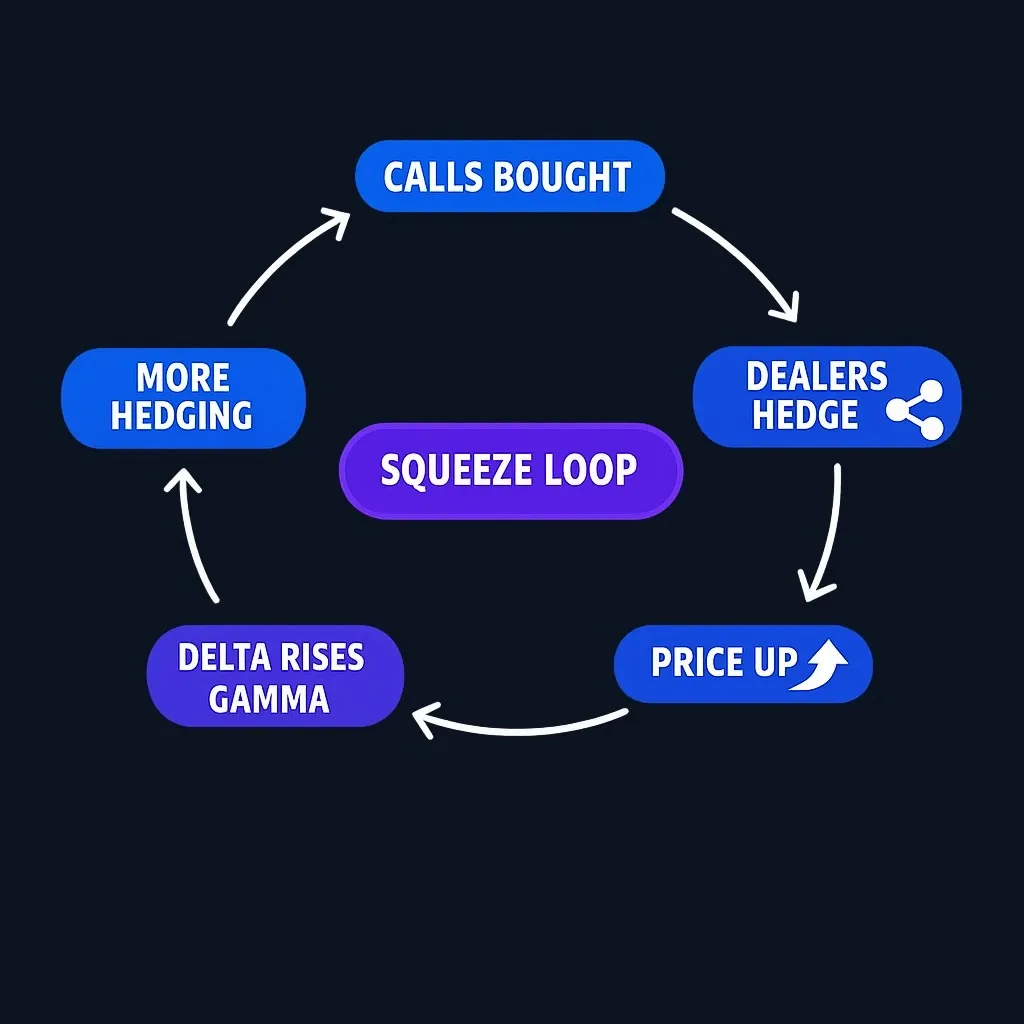
If the price rises, those calls grow more sensitive to further moves, meaning their delta increases, and the speed of that increase is called gamma. The rising delta forces the market makers to buy still more shares to stay hedged, that buying lifts the price again, and the loop feeds on itself.
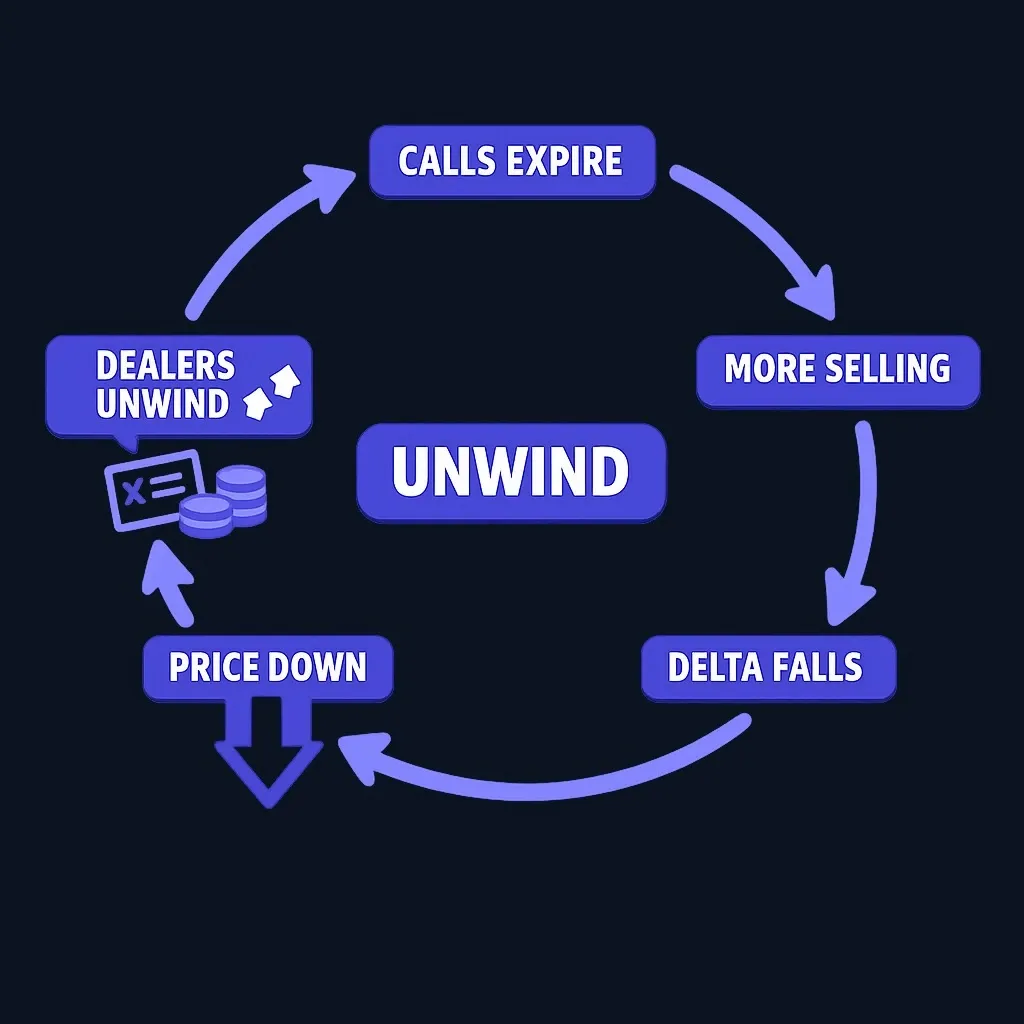
Because the fuel is mechanical hedging and not conviction, a gamma squeeze tends to unwind as quickly as it built, often the moment the options expire.
This guide is for beginners who met the term in meme-stock coverage and want the mechanism explained in plain language. It is an account of how the loop works and why it breaks, not a playbook for trading squeezes, which are among the most punishing bets a new trader can make.
If call and put options are still new to you, Finelo's options trading for beginners guide covers the basics this page assumes.
A gamma squeeze is a hedging accident, not a vote of confidence in the company.
Delta and gamma, minus the math
Two options measures drive the squeeze, and you only need the intuition behind them. Delta tells you roughly how much an option's price moves when the stock moves one dollar, and it doubles as a shorthand for share-equivalent exposure: a call with a 0.50 delta behaves about like owning 50 shares, since one contract covers 100 shares.
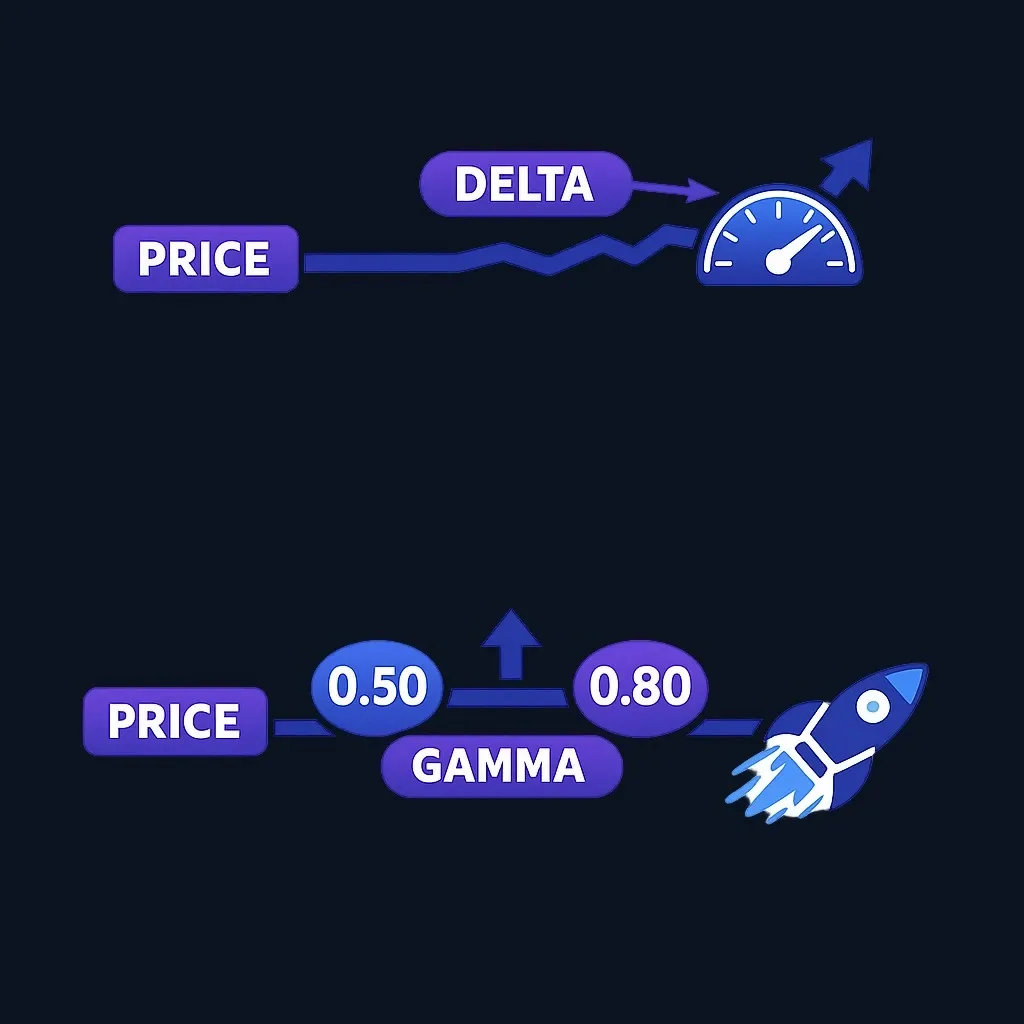
Gamma tells you how fast that delta changes as the stock moves. If delta is the option's speed, gamma is its acceleration.
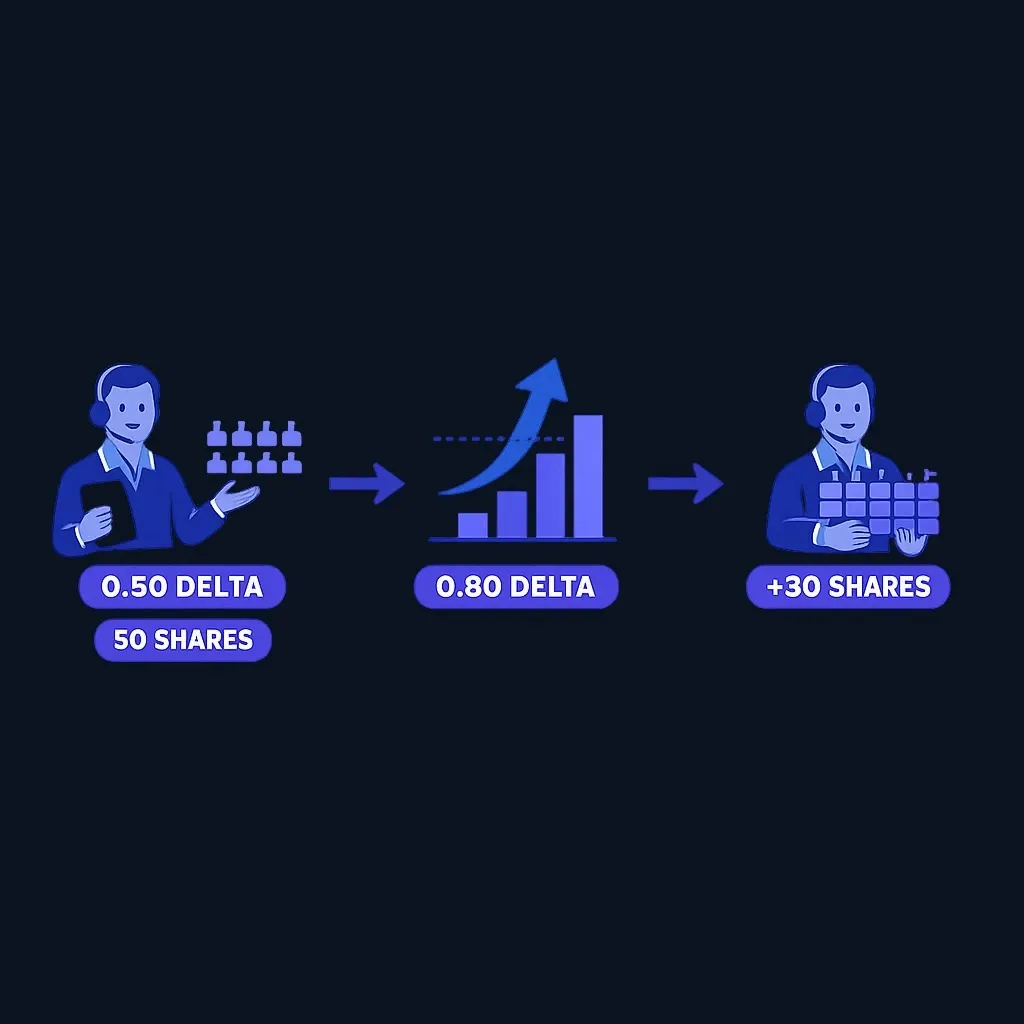
Here is why that matters, with illustrative numbers meant only to show direction. A market maker who sells you one call at a 0.50 delta typically buys about 50 shares to offset it, leaving the position roughly neutral.
If the stock climbs and that delta rises to 0.80, the same contract now behaves like 80 shares, so the dealer has to buy about 30 more just to stay neutral. Across tens of thousands of contracts, that hedging becomes a wall of buying. Gamma is largest for options priced near the current stock level and close to expiration, which is exactly where squeeze fuel gathers. The full tour of these measures lives in Finelo's option Greeks explained.
How a gamma squeeze works, step by step
The loop is easier to trust once you can narrate it in order:
- Traders pile into call options, usually cheap, short-dated calls priced near the current stock level on a stock that is drawing a crowd.
- Market makers take the other side. Selling those calls leaves the dealers with short-call exposure they would rather not carry.
- Dealers hedge by buying shares, enough to match the calls' delta, so their book stays close to neutral.
- That hedge buying lifts the price. In a thinly traded or low-float stock, hedging flows alone can move the market.
- The higher price raises delta, which is gamma at work. Every uptick makes the sold calls behave like more shares, so the dealers have to buy again.
- The loop repeats, more buying into higher prices into higher delta into more buying, until the call buying stops, the options expire, or the hedging demand is spent.
Notice what is absent from every step: any opinion about the business. The dealers are not bullish, they are neutralizing risk, and that is why a gamma squeeze can carry a stock far past anything its fundamentals justify.
In a gamma squeeze, the price is not just reacting to buyers, it is manufacturing them.
When the loop is strongest
A gamma squeeze can develop when dealers have net short-gamma exposure, call demand is concentrated near the current price, and hedge buying is large relative to available share liquidity. Short-dated options can make hedge adjustments more sensitive. Call volume and open interest alone do not reveal a dealer’s net position, because other options and hedges can offset it. A short squeeze can interact with these flows, but neither mechanism follows automatically from a rally.
Gamma squeeze vs short squeeze
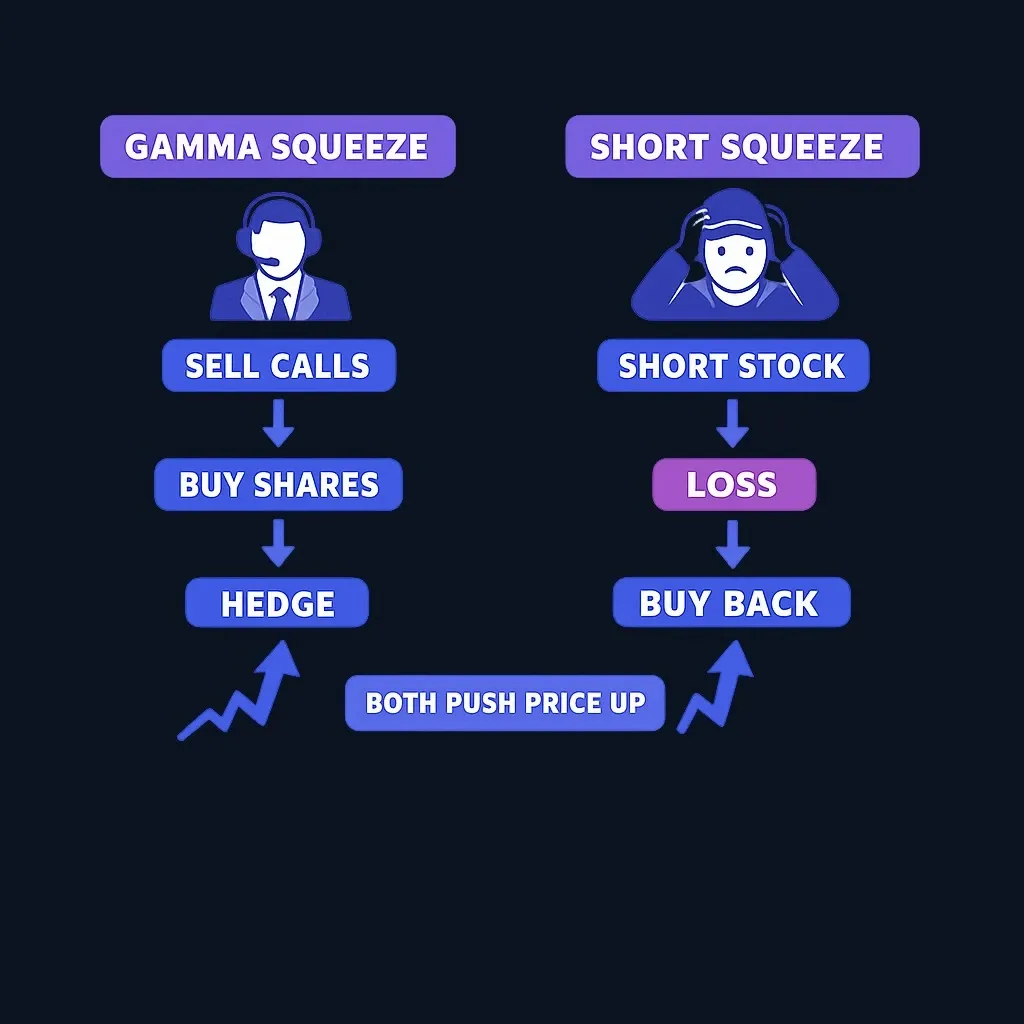
The two are cousins, not twins, and they are constantly mixed up. Both produce self-reinforcing buying that detaches a stock from its fundamentals, but the forced buyers, the trigger, and the exit are different.
| Gamma squeeze | Short squeeze | |
|---|---|---|
| Who is forced to buy | Options dealers hedging the calls they sold | Short sellers closing losing positions |
| What triggers it | Heavy call buying | A rising price on a heavily shorted stock |
| What fuels it | Mechanical delta hedging | Fear and margin pressure on shorts |
| Typical speed | Very fast, can build within one session | Fast, but often plays out over days |
| How it ends | Options expire or call buying stops, and hedges unwind | Short sellers finish covering |
| The unwind | Often reverses hard as hedges are sold back | Fades once the forced buying dries up |
The mechanisms are distinct, but they can stack: one rising price can force shorts to cover and force dealers to hedge at the same moment, each amplifying the other. Finelo's short squeeze guide covers the shorting side in depth, including signals like the short interest ratio that flag when shorts are crowded.
Practice trading with Finelo
Practice in a simulator, learn with bite-sized lessons, and build confidence before risking real money.
GameStop and the meme-stock era
The January 2021 GameStop episode is what made "gamma squeeze" a household phrase. GameStop climbed from under 20 dollars early in the month to an intraday high of about 483 dollars on January 28, 2021, a rise of more than twentyfold in a few weeks that inflicted heavy losses on funds that had shorted the stock. AMC's run later that year is often cited as a second example. (GameStop later split its stock four-for-one, so today's charts show that peak at about a quarter of the price.)
Here is the nuance most explainers skip. The SEC's October 2021 staff report examined the episode and did not find evidence of a gamma squeeze in GameStop during January 2021. Two observations drove that conclusion: the surge in retail options activity leaned toward buying puts rather than calls, and market makers were on balance buying calls rather than selling them, neither of which fits the setup a gamma squeeze requires. The report tied the sustained climb mainly to persistent buying and positive sentiment rather than to short covering or dealer hedging.
Different market forces can operate at once, but a popular label is not proof of dealer positioning. Treat GameStop as a warning against diagnosing a gamma squeeze from price and call volume alone.
GameStop made the label famous, but the evidence for it is far shakier than the confidence with which the label gets used.
Why gamma squeezes unwind fast
The loop that drives the price up runs just as well in reverse. When the options that fueled the move expire, or traders take profits and stop buying calls, the dealers no longer need their hedges. They sell the shares they bought, the falling price lowers delta, which lets them sell still more, and implied volatility collapses and guts the value of any remaining calls. Mechanical buying becomes mechanical selling.
That is why these moves rarely end in a gentle plateau. The price was propped up by hedging flows, not by investors who wanted to own the company at that level, so when the flows reverse there is little to catch it. Stocks that squeeze vertically tend to give back much of the move within days or weeks, sometimes within hours.
The risks of chasing one
Watching a squeeze unfold in real time is exciting, and that is exactly the trap. By the time a gamma squeeze is visible in headlines, most of the move has usually already happened, option premiums are bloated by the volatility spike, and the expiration clock that ends the loop is already running down. A late buyer faces a stock priced far above its fundamentals, calls that can lose most of their value even if the stock merely stalls, and reversals fast enough to jump straight through a stop-loss.
None of this makes the mechanism unworthy of study, the opposite is true. Its real value to a beginner is interpretive: recognizing why a stock is moving irrationally fast, and why that move is fragile. Acting on that recognition is speculation at its least forgiving, which is why disciplined risk management matters more here than almost anywhere.
Next steps
If you can narrate the loop, call buying, dealer hedging, rising delta, forced buying, and the same sequence in reverse on the way down, you understand gamma squeezes better than most people who use the term. To make it stick, build the two foundations underneath it: how options and their Greeks behave, and how short positioning creates squeeze fuel in the first place.
A structured path helps. Read Finelo's option Greeks explained for the delta and gamma engine, the short squeeze guide for the sibling mechanism, and options trading for beginners for the fundamentals. Inside the Finelo app, you can study how options and price action behave and practice buy, sell, and hold decisions on real market data with virtual funds. There are no deposits, no withdrawals, and no broker connection, it is a closed practice loop, so the only cost of a wrong read is the lesson.
To go deeper, Finelo publishes educational material for beginners, and you can check Finelo reviews, the About Finelo page, or the Finelo support center.
Final decisions are always yours. Understanding a mechanism is a way to think more clearly, not a reason to trade it.
Educational note: This article is for educational purposes only and does not constitute financial, investment, legal, or tax advice. Finelo is an educational product, not a brokerage or adviser. Simulator practice uses virtual funds. Investing and trading involve risk, including possible loss of principal; verify account-specific requirements with your broker.
Sources and Further Verification
Frequently asked questions
What happens in a gamma squeeze?
Heavy call buying forces the market makers who sold those calls to buy shares as a hedge. As the stock rises, the calls' delta climbs (its speed of change is gamma), so dealers must buy still more. That buying feeds on itself and can push the stock up sharply until the calls expire.
Is a gamma squeeze the same as a short squeeze?
No. A short squeeze forces short sellers to buy stock back to cap their losses, while a gamma squeeze forces options dealers to buy stock to stay hedged. Both create self-reinforcing buying detached from fundamentals, and they can happen together and amplify each other, but the forced buyers and the triggers differ.
Was GameStop a gamma squeeze?
The SEC’s October 2021 staff report did not find evidence of a gamma squeeze in GameStop during January 2021. The episode made the term widely known, but price increases and heavy options activity alone do not establish the mechanism.
How long does a gamma squeeze last?
Usually a very short time. The intense phase often plays out over hours to a few days and is frequently pinned to an options expiration date. Because the buying is mechanical hedging rather than lasting demand, the squeeze ends once the options fuel runs out.
What happens after a gamma squeeze?
The loop runs in reverse. Dealers sell their hedge shares as call demand fades or options expire, implied volatility collapses, and the stock usually gives back much of the move. Late buyers, of either the stock or the calls, tend to absorb the worst of the reversal.
Can a gamma squeeze push a stock down?
Yes, in mirror image. Heavy put buying can leave dealers hedging by shorting shares, and a falling price can force still more hedge selling. These downward spirals get far less attention than the upside version, but they follow the same mechanical logic.
Gamma SqueezeTradingBeginner
Practice trading with Finelo
Practice in a simulator, learn with bite-sized lessons, and build confidence before risking real money.
About the author
Finelo Team
The Finelo Team creates practical investing and trading education designed to help beginners learn faster with structured challenges, simulator practice, and bite-sized lessons.
Keep reading — Related articles

Trading
Understanding Walk Forward Analysis in Trading
Brief educational note: this article is educational — not investment advice — and trading involves the risk of loss.
Finelo Team

Trading
VWAP vs Moving Average: Formulas, Uses, and Limits
VWAP weights price by recorded volume over a defined period, while a moving average summarizes a sequence of prices over a rolling lookback.
Finelo Team

Trading
Volume Profile vs Market Profile: What Each Chart Measures
Volume Profile groups traded volume by price level.
Finelo Team